|
|
Honorary Board
|
Featured Books
DescriptionWhen it comes to unconditional love, Italian matriarch, Rose D'Orsi is deeply challenged. Nobody feels it more than Glory, her estranged 48-year-old lesbian daughter. Though Rose attracts the attention of Eli Fineman, a rich Bulgarian Holocaust survivor whose love, compassion, and wit affects people in unimaginable ways, he arrives too late in life to teach Rose how to be a good mother, even to Ricky, the child she favors. Meant to plant the seed where it needs to be planted most--with readers who might be believers--DeSio's award-winning debut novel, Rose's Will, is a fictionalized account of the bizarre circumstances surrounding her mother's death and the Bulgarian Holocaust survivor her mother left behind. Incidental to that, atheist and humanists should find it refreshing to see themselves in DeSio's characters. Comment"Rose's Will is a captivating family story, told from three very distinctive viewpoints. The author does a particularly great job of capturing the struggles and stresses of interpersonal relationships, especially when dealing with difficult family members. There were a number of times I literally said out loud, "Yes!" when relating to internal emotional conflicts and thoughtful observations about human behavior ... The chapters are relatively short, and you will find yourself justifying "just one more" chapter again and again. I'm really looking forward to reading other books and essays from this author." "This is the kind of book that makes you laugh out loud and also brings frequent tears to your eyes. Told through the stories of three different people: a brother and sister, and their mother's "boyfriend" (odd to think of as he's in his 80's) but the real focus of the story is the mother, Rose. Each character is trying to do the best they can - I think - and some succeed better than others. I cringed at the flashbacks the sister has of the abuse she experienced as a child at the hands of the mother, and I admired the sister's continued efforts to connect with her mother. It reminded me of how we all just want unconditional love from someone, but mostly from a parent, and how hard it is to achieve sometimes. As a former Brooklynite, I loved the little glimpses of Brooklyn life in the 50's and 60's and wanted a bit more of that. It's a fast read and an easy read, but it's the kind of book that keeps you thinking about the characters and wondering what happens next." "It was an enjoyable read and I was unable to put it down once at the half way point. This story relates so well to the many different levels of family dysfunction from sibling rivalry, divorce, mental health as well as the intimacy of final farewells in death. There are so many relatable facets to Rose's Will." "I was not able to put down Denise DeSio's book, "Rose's Will", until it was finished. I was completely drawn into her story about a girl growing up with an abusive mom and the way she and her brother each dealt with it. Denise was honest and I liked what she said. The woman struggling to find a way to be in a healing relationship with mom rather than holding onto the pain, anger, fear, and shame." "I believe Denise DeSeo has written a very compelling novel. Each character speaks in their own voice and Ms. DeSeo has developed the characters in a way that made the book feel very believable. The book delves into subject matter that hasn't been touched upon too often in the past. It's a breakthrough and I thoroughly recommend it." "Rose's Will is an amazing book. It's well and thoughtfully written, and the story itself is fascinating. The language is precise and colorful. It's extremely funny, evokes a flurry of feelings and questions, and also great empathy for the protagonists. For a first book, this is a knockout! I am certain many people will thoroughly enjoy this book."
Deconverted: A Journey from Religion to Reason DescriptionDeconverted: A Journey from Religion to Reason is a well written autobiography told with humor and heart by an "average" person. It is the story lived by many thousands of people in America and around the World every day--a story that could very well be your story of doubt and loss of religious faith. The reader will receive a first hand account of the experience of someone who was raised in a very Christian home by loving, devout, Christian parents in a majority Christian community, in the Bible Belt of Midwestern America and who, as an adult began to question his religious faith. Those who have doubts regarding their religious faith and religious dogma will find solace in knowing that it is indeed ok to question what you have been instructed to think by your parents, pastors and priests. The faithful will gain an understanding in simple terms as to why their loved ones and friends can and do quit their faith and turn away from religious dogma. Comment"'...and then Noah loaded the dinosaurs onto the ark.' Assertions like these seem comical until you realize that many Christian parents aren't kidding when they teach them to their children as facts. Every day, impressionable young minds are conditioned to blindly accept wild biblical tales of floating zoos, talking shrubbery, 900-year-old humans, the undead, curses, levitation, demon/human hybrids and men who obtain superhuman strength from the length of their hair. Allegiance to these teachings is expected, often demanded. Curiosity is muted. Doubt is frowned upon as a sin. And for those who dare to raise a dissenting hand, the threat of Hell looms ominously. A former religious radio host raised in the cradle of Christianity, Seth Andrews battled his own doubts for many years. His attempts to reconcile faith and the facts led him to a conclusion previously unthinkable, and this once-true believer ultimately became the founder of one of the most popular atheist communities on the internet, 'The Thinking Atheist.'" "Seth, like most atheists I know, did not make his decision lightly. His book tells his readers where his quest for the truth took him. I have followed Seth since his beginning into atheism and found his book to show his, honesty, compassion, courage and wit. I highly recommend this book. I started reading it and couldn't put it down until I finished it." "One of the very best of the genre of believer-to-atheist books I have read. Seth knows how to tell a story, his story. Genuine, honest, open, kind to believers but never to belief. A privilege to read." "I finished reading Seth's Deconverted the day I got the book in the mail. I was impressed seeing how long the process was for Seth as he went from televangelist radio host to the host of The Thinking Atheist. I admire Seth being able to move on and not be angry with people who made him the Evangelical he once was. This book is a great eye opener seeing the way the mind can change and how leaving religion inspired Seth to help many others leave their own religious beliefs ... This book is a great read and I suggest it even for the religious folks who are curious about the way nonbelievers view things or for a person struggling with their own faith."
DescriptionUpending Christianity's popular notion of Jesus the comforter, the good shepherd, the Lord, and the Savior, this completely new exploration of Mark's Life of Jesus reexamines the image presented in this earliest of the New Testament gospels--the mysterious stranger, the singular, abandoned, and solitary figure--and rethinks the current role of Western culture through a radically altered view of Christianity. The existential Jesus has no interest in sin, and his focus is not on an afterlife. He is anti-church, anti-establishment, anti-family, and anti-community; a teacher, with himself his only student, he gestures enigmatically from within his own torturous experience, inviting the reader to walk in his shoes and ask the question, "Who am I?" This book argues that Jesus is the West's great teacher on the nature of being. Incorporating a new translation of the Gospel of Mark from its original Greek, this radical reinterpretation identifies the philosophical and cultural significance of Jesus in the modern world, based on his life, actions, and reflections. Comment"Awesome, awe-inspiring ... The Existential Jesus is a work of genius."
"Testifies to the need for our culture to grapple once again with the Jesus of the New Testament. John Carroll is right. This task is inescapable if we wish to understand our history and the significance of our civilisation."
"This is the Gospel of Mark as you've never read it before, but Carroll's interpretation of Mark's Jesus suddenly makes sense. It's a scholarly but not forbiddingly academic study, for Carroll writes like a novelist, his passionate almost frantic style lending conviction to the story."
This is a powerful book. John Carroll is a wonderful writer, in the crazed literary critic mode, not that of the pedantic theologian, digging deep for new connections, unafraid of over-stretching the simple truths of Mark. Which he does, often. He has discovered themes, parallels, motives, metaphors and allegories that never would have occurred to me upon five readings of Mark.
Edward M. & Michael E. Buckner DescriptionOpponents attack the president of the United States for not being a real Christian. Bitter arguments erupt over whether the United States is or should be a Christian nation. Sound familiar? These contentious issues are not just recent developments but were also the topics of fierce debate in the late eighteenth century. President Thomas Jefferson had to contend with accusations that his religious convictions were questionable. Against complaints that the writers of the Constitution did not invoke God, John Adams replied, "It will never be pretended that any persons employed in that service had interviews with the gods." In Freedom We Trust covers these and other issues from the two-centuries-long debate over religion and secularism in America. Taking an unabashedly atheistic point of view, authors Edward M. and Michael E. Buckner argue that everyone--from evangelical Christian to ardent atheist--needs a secular America, and separation of church and state. They examine the decidedly unchristian roots of the Fourth of July, the important difference between "tolerance" and "toleration," the misleading confusions related to the difference between "public" and "governmental," the value of secular schooling, the erroneous contention that atheism is equivalent to immorality and therefore dangerous, and a host of other contemporary and historical topics. With a list of key dates related to the history of secular America, notes, bibliography, and glossary, In Freedom We Trust offers important facts and arguments for secular humanists and anyone with an interest in freedom of conscience. Comment"Edward and Michael Buckner know what they are talking about, and they bring the full force and depth of that knowledge to this extraordinary book. At turns passionate and reflective, serious and light, In Freedom We Trust is a major contribution to understanding how religion and government intersect in the United States--and how they do not and must not. Most of all, the Buckners make a powerful case for the importance of getting this right, in the interest of all Americans--religious and nonreligious alike." "Edward and Michael Buckner have written a rousing, lucid, and highly entertaining guide to why the United States is, and should continue to be, a secular nation that protects all its citizens' free- doms equally--be they of this religion, that religion, or no religion at all. The Buckners do a thrillingly effective demolition job on the myths and lies peddled by those who want to turn America into yet another theocracy, and spell out exactly why they are, in reality, deeply un-American." "In this readable, well-documented book, both seasoned debaters and inquiring minds will find solid arguments for why we can be either a free nation or a Christian nation--but not both--and why the religious liberty of each individual can be protected only if everyone's religious or nonreligious liberty is equally protected." "Writing with a clear voice and a generous spirit, the Buckners provide a much-needed reminder of the core value of religious freedom--including the right not to believe. This rousing defense of secular government deserves wide dissemination. I wish someone would read it to Pat Robertson!" "A must-read book for the secularist who wishes to argue on a factual basis, but even more relevant for those open-minded religionists (they are out there) who may disagree with the Buckners about the import of faith but share their priority to defend the separation of church and state."
Proving History: Bayes's Theorem and the Quest for the Historical Jesus DescriptionAn essential work on historical methods. Almost all experts agree that the Jesus of the Bible is a composite of myth, legend, and some historical evidence. So what can we know about the real Jesus? For more than one hundred fifty years, scholars have attempted to answer this question. Unfortunately, the "Quest for the Historical Jesus" has produced as many different images of the original Jesus as the scholars who have studied the subject. The result is a confused mass of disparate opinions with no consensus view of what actually happened at the dawn of Christianity. In this in-depth discussion of New Testament scholarship and the challenges of history as a whole, historian Richard C. Carrier proposes Bayes's theorem as a solution to the problem of establishing reliable historical criteria. He demonstrates that valid historical methods—not only in the study of Christian origins but in any historical study—can be described by, and reduced to, the logic of Bayes's theorem. Conversely, he argues that any method that cannot be reduced to Bayes's theorem is invalid and should be abandoned. Writing with thoroughness and admirable clarity, Carrier explains Bayes's theorem in terms easily understandable to historians and lay people alike, employing nothing more than well-known primary school math. He then explores the theorem's application to history and addresses numerous challenges to and criticisms of this application. Common historical methods are analyzed using the theorem, as well as all the major "historicity criteria" employed in the latest quest for the historical Jesus. The author demonstrates not only their deficiencies but also ways to rehabilitate them. Anyone with an interest in historical methods, epistemology generally, or the study of the historical Jesus will find Carrier's book to be an essential work. Comment"Proving History is a brilliant lesson in the proper proportioning of belief to evidence. Even minimal attention to Bayesian probability theory reveals just how much of Jesus scholarship confuses 'possibly true' with 'probably true.' The only miracle Richard Carrier has left to explain is why so few appreciate that extraordinary claims require extraordinary support." "Carrier applies his philosophical and historical training to maximum effect in outlining a case for the use of Bayes's Theorem in evaluating biblical claims. Even biblical scholars, who usually are not mathematically inclined, may never look at the 'historical Jesus' the same way again."
Evolving: The Human Effect and Why It Matters Description"Understanding evolution is the key to determining our planet's future." In this persuasive, elegantly written book, research geneticist Daniel J. Fairbanks argues that understanding evolution has never mattered more in human history. Fairbanks not only uses evidence from archaeology, geography, anatomy, biochemistry, radiometric dating, cell biology, chromosomes, and DNA to establish the inescapable conclusion that we evolved and are still evolving, he also explains in detail how health, food production, and human impact on the environment are dependent on our knowledge of evolution. Evolving is essential reading for gaining a fuller appreciation of who we are, our place in the great expanse of life, and the importance of our actions. Comment"With so many excellent books on evolution available, it's hard to imagine another one with anything new in it. Fairbanks succeeds with a whole array of original examples that demonstrate not only the truth of evolution, but also its impact on human life and society." "This book provides a compact overview of the results of many lines of research, especially in genetics, which continue to deepen our knowledge of evolution. Anyone who wonders about the practical value and importance of understanding the processes of evolution will benefit from reading it." "This is an important book. Fairbanks presents an overwhelming case for the correctness of evolutionary theory. It is engagingly written, with many personal glimpses, and the technical material is clearly presented and understandable. Evolving should be essential reading for anyone who wishes to be an informed citizen."
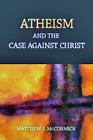
Atheism and the Case Against Christ DescriptionA novel critique that undermines Christianity and theism at their foundations. Hundreds of millions of people believe that Jesus came back from the dead. Philosopher Matthew S. McCormick presents a decidedly unpopular view in this cogent, forcefully argued book—namely, that the central tenet of Christianity, the resurrection of Jesus, is false. McCormick asks a number of probing questions: Is the evidence about Jesus as it has been relayed to us over the centuries of sufficient quantity and quality to justify belief in the resurrection? How can we accept the resurrection but reject magic at the Salem witch trials? What light does contemporary research about human rationality from the fields of behavioral economics, empirical psychology, cognitive science, and philosophy shed on the resurrection and religious belief? Can we use contemporary research about the reliability of people's beliefs in the supernatural, miracles, and the paranormal to shed light on the origins of Christianity and other religions? Does it make sense that the all-powerful creator of the universe would employ miracles to achieve his ends? Can a Christian believe by faith alone and yet reasonably deny the supernatural claims of other religions? Do the arguments against Christianity support atheism? By carefully answering each of these questions, Atheism and the Case against Christ undermines Christianity and theism at their foundations; it gives us a powerful model for better critical reasoning; and it builds a compelling case for atheism. Without stooping to condescension or arrogance, McCormick offers persuasive arguments that are accessible, thoughtful, and new. Comment"A fascinating and well-crafted collection of arguments against the resurrection of Jesus and, more broadly, against the existence of God." "McCormick's treatment of the psychological and epistemological aspects of the Christian outlook is the best I have ever seen." "An extremely good book. Without any technical flourishes, it makes the case against the Jesus story so compellingly that I cannot imagine anyone who takes the trouble to read it carefully and without prejudice being other than completely convinced." "Who should read this book? Theists, atheists, Christians, non-Christians, and those whose lives are affected by these overlapping groups—in short, everyone. It contains bold arguments ... [and is] plain speaking, fast moving, wide ranging, and hard hitting." "In my judgment Matt McCormick's book is one of the best—if not the best—critique of the core of Christianity ever written. It is clear, comprehensive, cogent, and current. McCormick writes in a clear, straightforward manner and at the same time covers all the important points comprehensively." "Finally, a first-rate philosopher weighs in and utterly demolishes any hope reasonable people have for believing Jesus was resurrected from the grave. Masterfully, he goes on to argue why atheism follows 'from the ground up' based on cognitive bias studies, religious diversity, the lack of compelling evidence, divine hiddenness, the problem of miracles, and the failure of faith. No other book presents a better case. Nothing more needs to be said." "McCormick makes a fascinating and convincing case for generalized atheism." "This book very convincingly shows that most Christians are not justified in accepting the central doctrines of Christianity. . . . [It] should be read by anyone with an interest in the philosophy and history of religion."
Christ's Ventriloquists: The Event that Created Christianity DescriptionChrist's Ventriloquists is a work of investigative history. It documents and describes Christianity's creation-event, in the year 49 or 50, in Antioch (present-day Antakya, Turkey), 20 years after Jesus had been crucified in Jerusalem for sedition against Roman rule. On this occasion, Paul broke away from the Jewish sect that Jesus had begun, and he took with him the majority of this sect's members; he convinced these people that Jesus had been a god, and that the way to win eternal salvation in heaven is to worship him as such. Paul here explicitly introduced, for the first time anywhere, the duality of the previously unitary Jewish God, a duality consisting of the Father and the Son; and he implicitly introduced also the third element of the Trinity, the Holy Ghost. This work also explains and documents the tortuous 14-year-long conflict Paul had had with this sect's leader, Jesus's brother James, a conflict which caused Paul, in about the year 50, to perpetrate his coup d'état against James, and to start his own new religion: Christianity. This historical probe documents that the four canonical Gospel accounts of the words and actions of "Jesus" were written decades after Jesus, by followers of Paul, not by followers of Jesus; and that these writings placed into the mouth of "Jesus" the agenda of Paul. Paul thus effectively became, via his followers, Christ's ventriloquist. The author explains: "What I am doing in this work is to reconstruct from the New Testament the crucial events that produced it, without assuming whether what the NT says in any given passage is necessarily true or even honest. Instead of treating the NT as a work that 'reports history,' the NT is treated as a work whose history is itself being investigated and reported." Comment"My skeptical ear detects a very distinct ring of plausibility in this gripping tale ... provocatively interesting ... and forcefully written." "A winner." "Great writing; great forensic investigation." "This book is an absolute must-read for anyone investigating the origins of Christianity ... insightful, well-written, and powerfully informative." "Presents a side of Paul that the general reader of the Bible, or even the scholars, miss." "It works for explaining Christian origins ... Paul has to do away with [Judaism's demand for] circumcision. That is so unambiguous." "It is surprising to me that this view of Paul has not been previously written ... I love your boldness." "An open-minded reader/juror will come to the conclusion that [Paul] is guilty of inventing a new religion, illegitimately appropriating Jesus."
The Code for Global Ethics: Ten Humanist Principles DescriptionHumanists have long contended that morality is a strictly human concern and should be independent of religious creeds and dogma. This principle was clearly articulated in the two Humanist Manifestos issued in the mid-twentieth century and in Humanist Manifesto 2000, which appeared at the beginning of the twenty-first century. Now distinguished economist Rodrigue Tremblay has published this code for global ethics, which further elaborates ten humanist principles designed for a world community that is growing ever closer together. In the face of the obvious challenges to international stability—from nuclear proliferation, environmental degradation, economic turmoil, and reactionary and sometimes violent religious movements—a code based on the "natural dignity and inherent worth of all human beings" is needed more than ever. In separate chapters Tremblay delves into the issues surrounding these ten humanist principles: preserving individual dignity and equality, respecting life and property, tolerance, sharing, preventing domination of others, eliminating superstition, conserving the natural environment, resolving differences cooperatively without resort to violence or war, political and economic democracy, and providing for universal education. This forward-looking, optimistic, and eminently reasonable discussion of humanist ideals makes an important contribution to laying the foundations for a just and peaceable global community. ContentsPreface: Toward a new planetary humanism Paul Kurtz Kurtz, Paul 17 Introduction: The ethical infrastructure of every society 23 Chapter 1: Dignity and equality 33 Chapter 2: Respect life and property 45 Chapter 3: Tolerance : the empathy principle 65 Chapter 4: Sharing 71 Chapter 5: No domination, no exploitation 79 Chapter 6: No superstition 85 Chapter 7: Conservation 119 Chapter 8: Violence, war, and peace 135 Chapter 9: Democracy 163 Chapter 10: Education 193 Chapter 11: Morality in everyday life 199 Conclusion: For a better and more moral future 205 Annex: Comparative moral commandments 210 Notes: 213 Appendix: Main humanist and ethical organizations 249 Books cited or recommended: 253 Index: 285 Comment"The gap in the Humanist literature concerning the explanations of how Humanists should conduct their lives is filled by The Code for Global Ethics. This book represents a valuable and indispensable guide through the complexity of modern life and moral issues facing us every day. It offers a natural and far superior alternative to traditional religious moralities." "Dr. Tremblay offers not just armchair philosophizing, but solid, historical argument and proposals for integrating humanist philosophy into both our everyday lives, and our social institutions. Policy makers, and laypersons alike should heed Tremblay's account of humanist principles, for in them lies a path to greater peace, tolerance, and societal progress." "Dr. Tremblay points out in The Code for Global Ethics that we need to abandon selective moralities and move to a higher plane in which all members of the human family are treated equally as persons. Rodrigue Tremblay eloquently defends this form of rational humanism." "The principles proposed by Dr. Tremblay are dignity and equality, respect for life, tolerance and openness, sharing, anti exploitation, reason, ecology, peace, democracy and education. This is a timely book to read." "Tremblay's ten principles provide us with a rational jumping-off point toward a new society no longer exploited by the power elites of church, state, and business."
DescriptionNow for something different: A novel by well-known author of nonfiction, Michael Martin...
Comment"A cool and quirky non-stop thriller."
DescriptionBestselling author Michael Shermer's comprehensive and provocative theory on how beliefs are born, formed, reinforced, challenged, changed, and extinguished. In this work synthesizing thirty years of research, psychologist, historian of science, and the world's best-known skeptic Michael Shermer upends the traditional thinking about how humans form beliefs about the world. Simply put, beliefs come first and explanations for beliefs follow. The brain, Shermer argues, is a belief engine. From sensory data flowing in through the senses, the brain naturally begins to look for and find patterns, and then infuses those patterns with meaning. Our brains connect the dots of our world into meaningful patterns that explain why things happen, and these patterns become beliefs. Once beliefs are formed the brain begins to look for and find confirmatory evidence in support of those beliefs, which accelerates the process of reinforcing them, and round and round the process goes in a positive-feedback loop of belief confirmation. Shermer outlines the numerous cognitive tools our brains engage to reinforce our beliefs as truths. Interlaced with his theory of belief, Shermer provides countless real-world examples of how this process operates, from politics, economics, and religion to conspiracy theories, the supernatural, and the paranormal. Ultimately, he demonstrates why science is the best tool ever devised to determine whether or not a belief matches reality. Comment"Michael Shermer has long been one of our most committed champions of scientific thinking in the face of popular delusion. In The Believing Brain, he has written a wonderfully lucid, accessible, and wide-ranging account of the boundary between justified and unjustified belief. We have all fallen more deeply in his debt." "The physicist Richard Feynman once said that the easiest person to fool is yourself, and as a result he argued that as a scientist one has to be especially careful to try and find out not only what is right about one's theories, but what might also be wrong with them. If we all followed this maxim of skepticism in everyday life, the world would probably be a better place. But we don't. In this book Michael Shermer lucidly describes why and how we are hard wired to 'want to believe'. With a narrative that gently flows from the personal to the profound, Shermer shares what he has learned after spending a lifetime pondering the relationship between beliefs and reality, and how to be prepared to tell the difference between the two." "Michael Shermer has long been one of the world's deepest thinkers when it comes to explaining where our beliefs come from, and he brings it all together in this important, engaging, and ambitious book. Shermer knows all the science, he tells great stories, he is funny, and he is fearless, delving into hot-button topics like 9-11 Truthers, life after death, capitalism, Barack Obama, Sarah Palin, and the existence of God. This is an entertaining and thoughtful exploration of the beliefs that shape our lives." "The Believing Brain is a tour de force integrating neuroscience and the social sciences to explain how irrational beliefs are formed and reinforced, while leaving us confident our ideas are valid. This is a must read for everyone who wonders why religious and political beliefs are so rigid and polarized—or why the other side is always wrong, but somehow doesn't see it." "We might think that we learn how the world works, because we take the time to observe and understand it. Shermer says that's just not so. We just believe things, and then make our world fit our perceptions. Believe me; you don't have to take my word for it. Just try clearing some space in your own Believing Brain." "The Believing Brain is a fascinating account of the origins of all manner of beliefs, replete with cutting edge evidence from the best scientific research, packed with nuggets of truths and then for good measure, studded with real world examples to deliver to the reader, a very personable, engaging and ultimately, convincing set of explanations for why we believe."
The Magic of Reality: How We Know What's Really True DescriptionMagic takes many forms. Supernatural magic is what our ancestors used in order to explain the world before they developed the scientific method. The ancient Egyptians explained the night by suggesting the goddess Nut swallowed the sun. The Vikings believed a rainbow was the gods' bridge to earth. The Japanese used to explain earthquakes by conjuring a gigantic catfish that carried the world on its back—earthquakes occurred each time it flipped its tail. These are magical, extraordinary tales. But there is another kind of magic, and it lies in the exhilaration of discovering the real answers to these questions. It is the magic of reality—science. Packed with clever thought experiments, dazzling illustrations and jaw-dropping facts, The Magic of Reality explains a stunningly wide range of natural phenomena. What is stuff made of? How old is the universe? Why do the continents look like disconnected pieces of a puzzle? What causes tsunamis? Why are there so many kinds of plants and animals? Who was the first man, or woman? This is a page-turning, graphic detective story that not only mines all the sciences for its clues but primes the reader to think like a scientist as well. Richard Dawkins, the world's most famous evolutionary biologist and one of science education's most passionate advocates, has spent his career elucidating the wonders of science for adult readers. But now, in a dramatic departure, he has teamed up with acclaimed artist Dave McKean and used his unrivaled explanatory powers to share the magic of science with readers of all ages. This is a treasure trove for anyone who has ever wondered how the world works. Dawkins and McKean have created an illustrated guide to the secrets of our world—and the universe beyond—that will entertain and inform for years to come. Comment"Exhilarating. The clearest and most beautifully written introduction to science I've ever read. Again and again I found myself saying 'Oh! So that's how genes work! (or stars, or tectonic plates, or all the other things he explains).' Explanations I thought I knew were clarified; things I never understood were made clear for the first time. My favorite adjective of praise has always been 'clear,' and this book has clarity all the way through." "I am often asked to recommend good books on science for young people. From now on, I will not have to hesitate. The Magic of Reality provides a beautiful, accessible and wide ranging volume that addresses the questions that all of us have about the universe, separating often too-little known facts from too-frequently believed fictions. For this reason it should be a powerful resource for people of all ages, written with the masterful and eloquently literate style of perhaps the best popular expositor of science, Richard Dawkins, and delightfully illustrated by Dave McKean. What more could anyone ask for?" "I wanted to write this book but I wasn't clever enough. Now I've read it, I am" "The questions have always been with us: Where did we come from? How did life begin? What makes earthquakes happen? Are we alone in the universe? Do we have a unique mission? As a scientist and science writer, Richard Dawkins approaches these questions with no less wonder than the most zealot believer or exalted mystic. 'I want to show you,' he writes, 'that the real world, as understood scientifically, has magic of its own—the kind I call poetic magic: an inspiring beauty which is all the more magical because it is real and because we can understand how it works.' An absorbing work enhanced by the imaginative paintings of award-winning artist Dave McKean." "In this outstanding 'graphic science book,' evolutionary biologist Dawkins (The Selfish Gene) teams up with illustrator Dave McKean (The Graveyard Book) to examine questions in everyday science, such as: why seasons occur; what things are made of; and whether there's life on other planets. They explain the answers from mythological and cultural points of view before diving into the chemistry, biology, and physics—all in language that advanced middle school, or most high school, students can absorb. Rather than oversimplifying things, Dawkins's explanations demonstrate that life on earth is magical enough without tricks of the eye or supernatural theories. Appearing on every page, McKean's illustrations cover the gamut from prehistoric creatures along the evolutionary chain to a sequence showing how the immune system defends the body from a flu virus. This book may be exactly what's needed to increase science literacy for readers of all ages."
DescriptionThe Fifth-Century Political Battles That Forever Changed the Church. In this fascinating account of the surprisingly violent fifth-century church, Jenkins describes in bloody detail the battles over "right belief" that had a far greater impact on the future of Christianity than the much-touted Council of Nicea convened by Constantine a century earlier. Jenkins argues that were it not for these controversies the papacy as we know it would never have come into existence and today's church could be teaching something very different about Jesus. Comment"Are you hungry for a rip-roaring tale of theological intrigue filled with conspiracies, Byzantine plots, murder, and mayhem? Or are you longing for a solid, informative, and accurate history of the development of Christian orthodoxy? If your answer is yes to both, Philip Jenkins' Jesus Wars ... is your book." "In showing general readers how he finds fresh ideas and the resurrections of past teachings invigorating to religious studies, Jenkins provides an accessible book ... [which] enlightens readers on the backstory to current Christian divisions." "Jenkins ... has done a remarkable job of documenting this little-understood slice of history. There's lots of excitement and plenty of intrigue, and Jenkins does a fine job in his recitation of this strange story." "Jenkins condenses centuries of church and imperial strife with admirable clarity." "Jenkins manages to explain very clearly why people in the early Christian era were so passionately concerned with issues of high theology."
DescriptionIn this successor volume to his critically acclaimed first anthology, The Christian Delusion: Why Faith Fails, John Loftus—a former minister and now a leading atheist spokesperson—has assembled a stellar group of respected scholars to continue the critique of Christianity begun in the first volume. The contributors include Victor Stenger, Robert Price, Hector Avalos, Richard Carrier, Keith Parsons, David Eller, and others. Loftus is the author of Why I Became an Atheist: A Former Preacher Rejects Christianity. Taken together, the Loftus trilogy poses formidable challenges to claims for the rationality of the Christian faith. The first part considers the wildly improbable nature of basic Christian tenets; the lack of agreement among diverse Christian sects regarding the essential Christian message; and a counter argument to the popular Christian claim that it was incredible that the Christian faith arose if it wasn't true in the first place. The second part analyzes the role of ancient Near Eastern myth in the creation of the Bible, revealing that the image of God depicted there is a projection of evolving human needs during the Iron Age beginning with polytheism. In the third part, the contributors critique the Christian doctrines of the atonement, hell, and the resurrection. The final part considers the incompatibility of religion and science, reviews claims for intelligent design and life after death, and advances the proposition that science can help discover morality. Students and scholars with an interest in the philosophy of religion will find this compilation of incisive critical essays to be intellectually stimulating and deeply thought-provoking. Comment"This book is well worth reading. I am happy to endorse it. Initially, I was concerned that it was a rehash of other works or ideas but found it refreshingly informative and challenging. I am pretty well read and educated in the field and felt I was learning much of the time, or getting a new and interesting angle on an old idea. The creative ideas explored by the authors show how little Christianity has to offer our culture. Indeed, it is time for it to end." "No collection better demonstrates how taking Christianity seriously reveals its all too human origin. This superb, often witty, and exceedingly well-researched collection explains how early Christianity is only a pale resemblance of any of the diverse Christian sects today. As well, the authors reveal how vastly improbable Christian dogmas are: such as the notion that a god designed the universe; that life replete with personal identity continues after death; that hell represents divine justice; and the claim that morality is exclusively Christian. Overall, very sobering for Christians, and so wonderfully delightful for the rest of us." "Like everything else, religions evolve under pressure. The cultural environment for Christianity is currently as rigorous and demanding as ever. Perhaps the 'End of Christianity' should take the form of extinction, as this book's authors portend. At the very least Christianity's theological defense mechanisms are proven inadequate by the sharpest set of intellectual criticisms found under the cover of a single volume. The end of Christianity cannot be predicted, but it can be helped along by a careful reading of this tremendously useful book." "Should Christianity end? I think not. But unthinking Christianity definitely should. For that reason I am grateful to the authors of this outstanding collection of essays." "The End of Christianity reads like a family reunion which brings together the family of disbelieving intellectuals that we've grown to love and respect. The stories that form the great narrative of the history of unbelief find in this book fresh voices with new and exciting angles. Loftus and his friends annihilate the Christian Goliath with their disputatious sling shots. The reader will probably hope that believers will not shy away from this text if only so that Loftus will soon publish yet another exciting anthology." "A blurb does not do this fascinating book justice with its beefy arguments as well as tasty tidbits of information all geared to show that when it comes to 'God talk' and the 'revealed religion' known as Christianity, the questions outnumber the certainties. And though Christianity and religion in general will certainly endure long enough for John Loftus to edit additional works, that sort of blessing does not appear to be one for which some Christians will be eager to thank God." "The Christian Delusion is the first book I give to anyone who wants to understand why I am no longer a Christian. Loftus and company have returned with The End of Christianity, which will now be the second book I give to anyone who wants to read a substantive case against Christian faith."
The Case Against the Case for Christ: A New Testament Scholar Refutes the Reverend Lee Strobel DescriptionLee Strobel arguably is now the leading apologist in America for evangelical, fundamentalist, benighted forms of Christianity. Although not an authority himself in any of the fields in which he defends his faith, he has produced a series of best-selling The Case For... books in which he consults alleged experts to obtain "evidence" and problematic information with which to prop up dubious beliefs he has adopted. He does not appear to have done any competent investigation on his own or consulted any genuine authorities on the relevant subjects. It is fair to say that all of Strobel's books are long exercises in applying the fallacy of informal logic known as "The appeal to authority." Originally published in 1998, The Case For Christ "has now bamboozled and hornswoggled the better part of a generation of Americans. Something needed to be done!" Professor, author, and New Testament scholar Robert M. Price—one of America's leading authorities on the Bible—has taken umbrage at the cavalier manner in which Christian apologist Lee Strobel has misrepresented the field of Bible scholarship in his book The Case for Christ. Because Strobel has drawn upon the best known and prolific apologists alive today and brought their arguments together for easy reading, Dr. Price has used the opportunity to wipe out the entire field of apologetics in the course of refuting Lee Strobel. With penetrating humor, Price has created a book that can be used as a handbook by anyone who is troubled by the claims and importuning of Christian apologists. Comment"I would like it if my book could wind up in the hands of anyone who has read Strobel's The Case for Christ! I just hate to see so many truth-hungry, well-intentioned people swindled by phony scholarship no better, really, than the drivel in The Da Vinci Code. Actually, it hardly matters whether one has read Strobel, since he is simply passing on material by numerous conservative Christian apologists. I would love it if apologists and their fans read my book and were prompted to reexamine the issues." "This book incinerates Lee Strobel's book along with the evangelical apologists he interviews, including Craig L. Blomberg, Gregory Boyd, Ben Witherington III, D.A. Carson, William Lane Craig, Gary Habermas, J.P. Moreland, and others." Bob is preaching to the choir for the most part, or at least people willing to learn. But what a wonderful sermon it is! It'll make you laugh as well as think, which is what a good sermon ought to do. Too bad these apologists can only make us laugh—at themselves. Price makes the case against Strobel's case in such a convincing manner that these apologists must be willfully ignorant." "The Case Against The Case for Christ by Dr. Robert M. Price ... is nothing short of an intellectual breath of fresh air." "A nice point-by-point refutation of born-againer nonsense, focusing on the writing of Lee Strobel."
The Fallacy of Fine-Tuning: Why the Universe Is Not Designed for Us DescriptionDrawing on the findings of modern physics and cosmology, numerous authors have argued that it would have taken only slight changes to some of the universe's physical parameters to make life, as we know it, extremely unlikely or even impossible. But does the seemingly "fine-tuned" nature of the universe also suggest that there must be a creator god who intentionally calibrated the initial conditions of the universe to assure that life on Earth and the evolution of humanity would inevitably emerge? Some influential scientists, such as National Institutes of Health Director Francis Collins, think so. Others go even further, asserting that science "has found God." In his in-depth and highly accessible discussion of this fascinating and controversial topic, physicist Victor J. Stenger looks at the same body of evidence and comes to the opposite conclusion. He states at the outset that as a physicist who is dedicated to the scientific method he will go wherever the evidence takes him, even if it leads him to God. But after many years of research in particle physics and cosmology and careful thought about their implications, he finds that the observations of science and our naked senses not only show no evidence for God, they provide evidence beyond a reasonable doubt that God does not exist. Dr. Stenger argues that many of the claims made by theists are based on misunderstandings of the science. He looks at the specific parameters that brought about our universe and the life forms that inhabit Earth and shows that plausible reasons can be found within the existing standard models of physics and cosmology for the observations of science and the conclusions it has reached about our origins. These models are introduced in detail so that readers will gain the background needed to understand the role of the cosmic components that theists claim to be fine-tuned and to judge the veracity of the arguments on both sides of the issue. He also sheds much-needed light on related topics such as whether or not the universe had a beginning and what quantum mechanics implies about the involvement of human consciousness in affecting reality. Although Dr. Stenger has touched on the subject of fine-tuning in other books, this is his most thorough exploration of the topic, one that continues to intrigue scientists and the lay public alike.
Forged: Writing in the Name of God--Why the Bible's Authors Are Not Who We Think They Are DescriptionIt is often said, even by critical scholars who should know better, that "writing in the name of another" was widely accepted in antiquity. But New York Times bestselling author Bart D. Ehrman dares to call it what it was: literary forgery, a practice that was as scandalous then as it is today. In Forged, Ehrman's fresh and original research takes readers back to the ancient world, where forgeries were used as weapons by unknown authors to fend off attacks to their faith and establish their church. So, if many of the books in the Bible were not in fact written by Jesus's inner circle—but by writers living decades later, with differing agendas in rival communities—what does that do to the authority of Scripture? Bart D. Ehrman, the New York Times bestselling author of Jesus, Interrupted and God's Problem reveals which books in the Bible's New Testament were not passed down by Jesus's disciples, but were instead forged by other hands—and why this centuries-hidden scandal is far more significant than many scholars are willing to admit. A controversial work of historical reporting in the tradition of Elaine Pagels, Marcus Borg, and John Dominic Crossan, Ehrman's Forged delivers a stunning explication of one of the most substantial—yet least discussed—problems confronting the world of biblical scholarship. Ehrman's fascinating story of fraud and deceit is essential reading for anyone interested in the truth about the Bible and the dubious origins of Christianity's sacred texts. CommentThe evocative title tells it all and hints at the tone of sensationalism that pervades this book. Those familiar with the earlier work of Ehrman, a distinguished professor of religious studies at the University of North Carolina, Chapel Hill, and author of more than 20 books including Misquoting Jesus, will not be surprised at the content of this one. Written in a manner accessible to nonspecialists, Ehrman argues that many books of the New Testament are not simply written by people other than the ones to whom they are attributed, but that they are deliberate forgeries. The word itself connotes scandal and crime, and it appears on nearly every page. Indeed, this book takes on an idea widely accepted by biblical scholars: that writing in someone else's name was common practice and perfectly okay in ancient times. Ehrman argues that it was not even then considered acceptable—hence, a forgery. While many readers may wish for more evidence of the charge, Ehrman's introduction to the arguments and debates among different religious communities during the first few centuries and among the early Christians themselves, though not the book's main point, is especially valuable. So what is the book about? It is about forgery in early Christianity, with primary (but not exclusive) interest in the New Testament. The most distinctive component is summed up well by the book's title: Ehrman argues throughout that the attempt to sugar-coat pseudepigraphy as something acceptable, non-deceptive—in short, something other than forgery—is problematic. As Ehrman himself puts it, "The Bible ... contains what almost anyone today would call lies. That is what this book is about" (p.5). The irony that Christianity historically presents itself as being focused on and offering "the Truth" is highlighted throughout. According to leading biblical scholar Bart Ehrman, many of his contemporaries have it wrong when it comes to the Bible. Instead of calling biblical forgeries what they are—lies—they often fall back on safer scholarly terms, stopping just short of the word "forgery." Ehrman, however, is not afraid of breaking rank with his fellow scholars and speaking the truth. In his new book, Forged: Writing in the name of God--Why the Bible's Authors Are Not Who We Think They Are (HarperOne; April 2011), the New York Times bestselling author debunks many popular myths about the Bible's forged books and letters, including the idea that "writing in the name of another" was a common, accepted practice in antiquity. According to Ehrman, forgery was just as disgraceful then as it is today. "Ehrman's career is testament to the fact that no one can slice and dice a belief system more surgically than someone who grew up inside it ... There's something delicious (for nonbelievers, anyway) about the implacable, dispassionate way that Ehrman reveals how the supposedly 'divine truth' of Christianity was historically constructed." "Ehrman's clarity is something to emulate."
The Legacy of Jihad: Islamic Holy War and the Fate of Non-Muslims DescriptionThis book reveals how, for well over a millennium, across three continents—Asia, Africa, and Europe—non-Muslims who were vanquished by jihad wars, became forced tributaries (called dhimmi in Arabic), in lieu of being slain. Under the dhimmi religious caste system, non-Muslims were subjected to legal and financial oppression, as well as social isolation. Extensive primary and secondary source materials, many translated here for the first time into English, are presented, making clear that jihad conquests were brutal, imperialist advances, which spurred waves of Muslims to expropriate a vast expanse of lands and subdue millions of indigenous peoples. Finally, the book examines how jihad war, as a permanent and uniquely Islamic institution, ultimately regulates the relations of Muslims with non-Muslims to this day. Scholars, educators, and interested lay readers will find this collection an invaluable resource. Comment"[P]rovides a comprehensive history of jihad." "Bostom's book amply documents the systematic and destructive character of Islamic jihad, refuting the much-repeated argument that jihad is a "rich" concept that has many meanings and that jihad first of all signifies "inner struggle." Jihad is first of all war, bloodshed, subjugation, and expansion of the faith by violence. The book implicitly devastates the fashionable but uninformed opinion that all religions are elaborations of the Golden Rule. Jihad is everything the Golden Rule is not." "[A]n impressive compendium that meticulously documents the terror that is jihad ... an unparalleled documentary history of nearly fourteen centuries of jihad, and of the non-Muslims who have been subjugated as a result of that relentless campaign. His account is a sober warning of the mortal challenge posed to free societies by the ongoing jihad of the militants." "Bostom's 759-page volume ... could be called 'Everything Westerners Need to Know about Jihad—But are Afraid to Ask.' Often letting the jihadists' ferocious words speak for themselves, the book chronicles thirteen centuries' worth of Islamic attempts to conquer and slaughter non-Muslims. The scholarly articles and original documents—some published in English for the first time —debunk the popular ahistorical, superficial explanations for the current Islamicist terror wave ... [an] invaluable volume."
The God Debates: A 21st Century Guide for Atheists and Believers (and Everyone in Between) DescriptionThe existence of God is a subject that has occupied individual thinkers and entire schools of philosophy for thousands of years, and it remains one of the greatest debates of our day. In The God Debates: A 21st Century Guide for Atheists and Believers, John Shook, Director of Education and Senior Research Fellow at the Center for Inquiry, and a self-professed "fair and open-minded skeptic," explains prominent arguments about God's existence in a nontechnical manner and justly analyzes the chances of their success. Shook challenges believers and nonbelievers alike to engage in an informed dialogue about the existence of God. All major traditional and contemporary arguments for God are included in the following sections: This book is aimed at people who want to know what is going on with all the God debating, people who want to learn the arguments, and their pros and cons, as efficiently as possible without encountering too much technical philosophy or theology. Comment"The God Debates is a clear, accessible, up-to-date account of philosophical wrangles about the existence of God. Shook reorganizes the arguments in an interesting way ... [and] takes on more-esoteric arguments such as the claim that we must presuppose the existence of God if we are to engage in reasoning and scientific inquiry. In all, this is a lucid, concise, up-to-date, yet comprehensive account of intellectual debates about the existence of God. It is easy enough to be used by senior high school students, and could certainly be useful in undergraduate courses in philosophy of religion." "If you've been puzzled by the complexity of the recent debates for and against God, this is the place to start. Shook lays out the questions, controversies, and schools of thought with amazing clarity, gradually building his case for a 'staunchly naturalistic yet faithfully ethical humanism' ... Clear and blunt, with a light touch of irony." "Knowing for sure is not necessarily a virtue. By mapping scriptural, intellectual, and mystical theologies as well as naturalistic ethical worldviews, John Shook helps us to understand the rich range of human ideas and arguments, and hence ourselves and our neighbors. Shook invites us all to become winners when he writes in the preface 'real winners are those who think about the questions, reflect on proposed answers, and come up with new questions.' A most interesting and valuable book." "The Center for Inquiry's John Shook, author of The God Debates, will discuss effective ways for nonbelievers to engage believers over that very question: 'Does a god exist?' Maybe it's not the old, familiar arguments themselves, but new strategies and tactics that make the atheist message get heard and produce results."
Doubting Jesus' Resurrection: What Happened in the Black Box? DescriptionThis book considers the historical veracity of Jesus' resurrection with special emphasis on the rise of the earliest known Christian beliefs and traditions: Jesus died for our sins, was raised on the third day, and appeared to many people (1 Corinthians 15:3-7). ContentsChapter 1: The Discovery of an Empty Tomb, Fact or Fiction? Comment"Rare is it when a lay author puts in the effort of wide research, gathers the references to every point together, interacts with the leading disputes, and offers something soundly argued that hadn't been so well argued before. Komarnitsky does all of that and presents a surprisingly excellent demonstration of how belief in the resurrection of Jesus could plausibly have originated by natural means. Though I don't always agree with him, and some issues could be discussed at greater length, everything he argues is plausible, and his treatise as a whole is a must for anyone interested in the resurrection." "If you liked my book Beyond Born Again, you're going to love this one by Kris Komarnitsky! He shows great acuity of judgment and clear-eyed perception of the issues. He does not claim to have proof of what happened at Christian origins, but he does present a powerfully plausible hypothesis for what might have happened, which is all you need to refute the fundamentalist claim that things can only have gone down their way. By now it is a mantra—it is also nonsense, and Kris shows that for a fact." "Komarnitsky is addressing an important topic in a considered and rational way. This book offers the open-minded reader an opportunity to work through some of the key questions surrounding the Easter mystery that lies at the heart of Christian faith." "Clearly written and well argued, Doubting Jesus' Resurrection lays out a plausible and intriguing case for a non-supernatural explanation of the New Testament resurrection accounts. Don't be put off by the fact that Komarnitsky is not a scholar—his book makes a solid contribution to the historical-critical understanding of these immensely important texts. This book deserves serious attention from scholars and all those interested in Christian Origins." "Proving the exception, this book shows that if a layman takes the time to investigate a topic, including learning how the relevant disciplinary tools are applied and familiarizes themselves with what experts have already written on a subject, they can draw balanced and even insightful conclusions that enhance the conversation. Those interested in a plausible natural explanation for the birth of Christianity will want to seriously consider this book." "A well researched book that should be valuable to individuals or study groups interested in how the resurrection tradition may have originated."
Decoding the Language of God: Can a Scientist Really Be a Believer? DescriptionIn his bestselling book, The Language of God, Francis Collins—the scientist who led the National Institutes of Health's Human Genome Project—attempted to harmonize the findings of scientific research with Christian belief. In this response to Collins's work, fellow geneticist George C. Cunningham presents a point-by-point rebuttal of The Language of God, arguing that there is no scientifically acceptable evidence to support belief in a personal God and much evidence that discredits it. Written with admirable clarity for the nonscientist, Decoding the Language of God covers much of the same ground addressed by Collins in his book:
Cunningham also devotes chapters to the unreliability of the Bible as a basis for belief; the conflict between naturalistic explanations of reality, which are anchored in scientific research, and supernatural interpretations, which are not; and the many difficulties in conceptualizing the origins of the universe in terms of a personal God. Unlike recent hostile attacks on religious belief, Cunningham's respectful, well-reasoned discussion will appeal to open-minded people across the whole spectrum of belief and unbelief. Comment"This is a wonderful book—sound, elegant, and readable. If you are looking for a common-sense explanation for matters generally taken on faith, this is it."
"The Language of God by Francis Collins is a good example of how a minority of scientists compartmentalize their thinking and blinker themselves to the contradictions between their faith and their science. This timely and complete analysis lays bare the many weaknesses in Collins' thinking and the paucity of his knowledge of theology, philosophy, and any science outside of his own narrow speciality."
"I have to admit that at some points while reading this book, I felt so much sympathy for Collins that I didn't want to read on. Cunningham absolutely eviscerates him."
50 Voices of Disbelief: Why We Are Atheists Russell Blackford, Udo Schuklenk (Eds.) Description50 Voices of Disbelief: Why We Are Atheists presents a collection of original essays drawn from an international group of prominent voices in the fields of academia, science, literature, media and politics who offer carefully considered statements of why they are atheists. • Features a truly international cast of contributors, ranging from public intellectuals such as Peter Singer, Susan Blackmore, and A.C. Grayling; novelists, such as Joe Haldeman; and heavyweight philosophers of religion, including Graham Oppy and Michael Tooley. • Contributions range from rigorous philosophical arguments to highly personal—even whimsical—accounts of how each of these notable thinkers have come to reject religion in their lives. • Likely to have broad appeal given the current public fascination with religious issues and the reception of such books as The God Delusion and The End of Faith. Comment"In their excellent collection of essays exploring and defending the philosophical stance of atheism, Russell Blackford and Udo Schuklenk had an inclusive vision. Contributors to the book range from those with science-fiction backgrounds to modern-day philosophy."
"By turns witty, serious, engaging and information, it is always human and deeply honest, and immensely rewarding to read."
"The contemporary relevance,and timeliness of this book is unsurpassed. It is ... an account of various well known nonbelievers [and] personal viewpoints, directed at a popular audience. Very approachable at all levels, containing a wide range of stories, anecdotes and personal statements about why each of the authors considers themselves to be a non believer. Overall, this book is well suited for a mainstream audience interested in questioning the power that religion holds over our lives. It [also] has good references ... which will also serve to guide the reader if further information is wanted. Thus, I recommend this book to anyone (regardless of their views concerning religion) interested in understanding why different people hold certain views concerning religion."
"For many who have spent some time involved in any form of engagement in these matters, the names should appear familiar: from the great AC Grayling to the revolutionary Maryam Namazie. Finally, in one book we can hear their stories—if not about themselves, then about the aspects of religion or lack thereof they find most important. If all these contributors were speakers at a convention, it would be sold out many times over."
"I am strongly recommending it as a present for anyone who has an interest in atheism/theism from either side of the debate. It's just a great read, from great authors."
"It's a very good book, and I recommend it for all of us godless ones—or those who are considering abjuring the divine. It's far more than just a collection of stories about 'How I came to give up God.' Many of the writers describe the philosophical and empirical considerations that led them to atheism. Indeed, the book can be considered a kind of philosophical handbook for atheists."
"Wow! A book about atheism and it's not written by Dawkins, Hitchens, Dennett or Harris! So this book is welcome partly because it helps break that knee-jerk reaction. But it's also welcome because many of its contributors advance interesting ideas. There's plenty to choose from. And one advantage of a collection like this is that you can dip into it wherever you want. There is something for everyone. And there is the opportunity to discover new ideas."
"In more than 50 brief statements organized by Blackford and philosopher Schuklenk ... contributors share views—their routes toward nonbelief and their feelings about the place of religion in the world ... including James (the Amazing) Randi, a well-known magician and debunker of spurious psychic phenomena. Considering the popularity of Richard Dawkins's The God Delusion, Christopher Hitchens's God Is Not Great, and Sam Harris's The End of Faith, [these] memoirs and observations will be of interest to disbelievers."
The Christian Delusion: Why Faith Fails DescriptionIn this anthology of recent criticisms aimed at the reasonableness of Christian belief, former evangelical minister and apologist John W. Loftus, author of the critically acclaimed Why I Became an Atheist, has assembled fifteen outstanding articles by leading skeptics, expanding on themes introduced in his first book. Central is a defense of Loftus' "outsider's test of faith," arguing that believers should test their faith as if they were outsiders with the same skeptical standards they use to evaluate the other faiths they reject. Experts in medicine, psychology, and anthropology join Loftus to show in four chapters why, when this test is applied to Christianity, it becomes very difficult to rationally defend. Three chapters follow that demonstrate errors and superstitions throughout the Bible, making any claim of the Bible being God's word nearly impossible to sustain. Two chapters expose the immorality of the biblical God, with an innovative argument from animal suffering and a cogent reply to Christians who attempt to defend the depravity of the Bible's God. Three chapters then focus on why it is unreasonable to believe that Jesus is the risen son of God. Finally, three popular Christian claims are dispatched. The contributors show why Christianity does not provide the basis for morality, why atheism was not the reason Hitler murdered so many, and why Christianity was not responsible for modern science. Collectively, these articles reveal that popular Christian beliefs tend to rely on ignorance of the facts. Drawing together experts in diverse fields, including Hector Avalos, Richard Carrier, David Eller, and Robert Price, The Christian Delusion deals a powerful blow against Christian faith. Comment"I'm quoted in this book as saying that treating the arguments of others fairly is simply an application of the Golden Rule. Christians regularly ask atheists to listen to their arguments and read their books. If a Christian wishes to return the favor, this volume offers atheist views on a range of subjects, presented respectfully (for the most part) yet with conviction. Christians who wish to critically examine and reflect on their beliefs will benefit from the outsider perspectives offered here. I join with its authors in encouraging you to dare to doubt. If you follow that courageous path, you may at times draw the wrong conclusions. If you do not, you will certainly be wrong at least as often."
"The contributors to this book have interesting, important, and controversial things to say to conservative Christians: It isn't true that modern society has Christian foundations; it isn't true that there is significant historical evidence for the Resurrection; it isn't true that scripture portrays a perfectly good God; it is untenable to suppose that the Bible is the Word of God; and there are many new challenges to the believability of Christianity in contemporary sciences: psychology, sociology, cognitive science, archaeology, and the like. This book is a fitting successor to Loftus' book Why I Became an Atheist, and merits a similarly broad readership."
"John Loftus and his distinguished colleagues have certainly produced one of the best—and arguably the best—critique of the Christian faith the world has ever known. Using sociological, biblical, scientific, historical, philosophical, theological and ethical criticisms, this book completely destroys Christianity. All but the most fanatical believers who read it should be moved to have profound doubts."
Not the Impossible Faith: Why Christianity Didn't Need a Miracle to Succeed Book DescriptionNot the Impossible Faith is a tour de force, dissecting and refuting the oft-repeated claim that Christianity could not have succeeded in the ancient world unless it were true. Dr. Carrier surveys a whole range of topics regarding the origin of Christianity and its cultural context, demonstrating that its success has entirely natural explanations and nothing to do with whether its supernatural claims were true. Though framed as a detailed rebuttal to Christian apologist J.P. Holding (author of The Impossible Faith), Carrier takes a general approach, answering many questions on the history and sociology of the ancient world, making this a valuable work for understanding the religion and society of that time. Along the way, many questions are answered, such as: How did Christians approach evidence? Was there a widespread prejudice against the testimony of women? Was resurrection such a radical idea? Who would worship a crucified criminal? And much more. Even if you have no interest in the refutation of an already dubious Christian apologetic, you will find this book both fascinating and illuminating. Written with occasional humor and an easy style, thoroughly referenced, and with many entertaining "gotcha!" moments, Not the Impossible Faith is a must-read for anyone interested in the origins of Christianity. Extended ContentsIntroduction...9
1. Who Would Believe in a Crucified God?...17
2. Who Would Follow a Man from Galilee?...51
3. Was Resurrection Deemed Impossible?...85
4. Was the New Always Bad?...129 5. Who Would Join a Moral Order?...135
6. Who Would Join an Intolerant Cult?...147
7. Was Christianity Vulnerable to Disproof?...161
8. Who Would Want to be Persecuted? 219
9. Was a God Incarnate Always Repugnant? 247
10. Would Groupthinkers Never Switch Groups? 259
11. Did No One Trust Women? 297
12. Did No One Trust Illiterate Laymen? 323 13. Would the Facts Be Checked? 329
14. Who Would Follow an Ignorant Savior? 369 15. Who Would Follow an Executed Criminal? 373 16. Were Christian Teachings Too Radical? 375
17. Did Christians Encourage Critical Inquiry? 385
18. How Successful Was Christianity? 407
Extended Contents 449 Comment"This book is a fascinating look into early christian history and at the dishonest tactics Christian apologists use. Highly recommended!"
"As a former evangelical fundamentalist Christian I was humbled in reading this book. So many of the 'assumptions' I accepted from popular Christian apologists are based upon nothing more than shoddy historical research. I lost my faith in the bible as 'divinely inspired truth' due to things I learned in Cosmology. However, for a while I still didn't know what to do with Jesus and the resurrection. 'How did this belief system just pop out of nowhere?' It just so happens that Richard Carrier is a scholar in the field of history from this time and sees right through these arguments that once led me captive. I was impressed by his knowledge of the subtleties of thought and customs that would make certain arguments that seem strong by todays standards, completely worthless. But this is what happens when one has a proposition (like the historicity and resurrection of Jesus) that they want to prove and defend; they scour ancient sources, lifting convenient quotes, while ignoring details that would weaken their efforts. I recommend this book to anyone interested in really getting to know the truth about Christian origins. This book has only made me look forward with even greater anticipation toward his forth coming work: On the Historicity of Jesus Christ. "I was not expecting much from this book. In the introduction we learn that this book was the product of an internet debate with J.P. Holding. I typically do not expect much from internet debates, even when I'm one of the debaters. But I was pleasantly surprised. This book is a careful and scholarly consideration of the question of whether the historical truth of the resurrection of Jesus Christ is at all necessary to explain the growth and ultimate success of Christianity.
"Carrier takes his lead from points of Holding's argument by heading each chapter with a question raised (e.g., "Was Resurrection Deemed Impossible?" "Did No One Trust Women?"). In the course of responding to these questions we get an erudite examination of many lines of evidence of relevance. Carrier weighs in on the historical reliability of the Gospels, comparing them with the methods of critical historians of antiquity. He considers with considerable care the likely demographics of Christians in the first century. He reveals the prevalence of resurrection stories in ancient times, both within Judaism and within the wider Greco-Roman world ..."
DescriptionPicking up where Bible expert Bart Ehrman's New York Times bestseller Misquoting Jesus left off, Jesus, Interrupted addresses the larger issue of what the New Testament actually teaches--and it's not what most people think. Here Ehrman reveals what scholars have unearthed:
These are not idiosyncratic perspectives of just one modern scholar. As Ehrman skillfully demonstrates, they have been the standard and widespread views of critical scholars across a full spectrum of denominations and traditions. Why is it most people have never heard such things? This is the book that pastors, educators, and anyone interested in the Bible have been waiting for--a clear and compelling account of the central challenges we face when attempting to reconstruct the life and message of Jesus. Contents Preface ix
Comment"A MIND-BLOWING, Shocking work, grounded in solid scholarship." "Amazing... Bart Ehrman has created yet another 'can't put it down' book on the most influential subject of the western world--Jesus. Jesus, Interrupted pulls back the curtain on what you thought you knew about the bible and reveals a fresh, eye-opening perspective.
Godless: How an Evangelical Preacher Became One of America's Leading Atheists Book DescriptionAfter 19 years as an evangelical preacher, missionary, and Christian songwriter, Dan Barker "threw out the bathwater and discovered there is no baby there." Barker, who is now co-president of the Freedom From Religion Foundation (America's largest organization of atheists and agnostics), describes the intellectual and psychological path he followed in moving from fundamentalism to freethought. The four sections in Godless--Rejecting God, Why I Am An Atheist, What's Wrong With Christianity, and Life is Good!--include chapters on bible problems, the historicity of Jesus, morality, the Kalam Cosmological argument, the unbelievable resurrection, and much more. Barker relates the positive benefits from trusting in reason and human kindness instead of living in fear of false judgment and moral condemnation. Godless expands the story told in Dan's 1992 book, Losing Faith in Faith: From Preacher to Atheist--the two books overlap about 20%--but a lot has happened in 16 years, and Dan updates the story with four new chapters, including "The New Call" (lessons from the debate circuit), "Adventures in Atheism," and "We Go To Washington" (FFRF's Supreme Court lawsuit, in which Dan was a plaintiff). ContentsForeword by Richard Dawkins
Comment"Valuable in the human story are the reflections of intelligent and ethical people who listen to the voice of reason and who allow it to vanquish bigotry and superstition. This book is a classic example." - Christopher Hitchens, author of God Is Not Great: How Religion Poisons Everything "The most eloquent witness of internal delusion that I know--a triumphantly smiling refugee from the zany, surreal world of American fundamentalist Protestantism--is Dan Barker." - Richard Dawkins, author of The God Delusion "In Godless, Barker recounts his journey from evangelical preacher to atheist activist, and along the way explains precisely why it is not only okay to be an atheist, it is something in which to be proud." - Michael Shermer, publisher of Skeptic Magazine "This book profoundly affected me. It's funny, and poignant,and most importantly, true! You must read this book." - Julia Sweeney comedian, actress, Saturday Night Live alum, author of Letting God of God "Dan Barker's esteemed reputation is richly deserved. I recommend getting three copies. You will need one as a source of evidence to which you will frequently refer. There sill be miles and miles of underlining as you mark the pages of special interest to you. You will need your second to lend to others. You will be enthusiastic about this book, and you will want to share its wisdom with family and friends. Others will likewise want to share it, and the book will never be returned to you. Finally, you will want a third copy to be in pristine condition on your bookshelf, since Dan Barker has created a volume which will only grow in its historical significance." - David Mills, author of Atheist Universe: The Thinking Person's Answer to Christian Fundamentalism "Godless is a fascinating memoir and a handbook for debunking theism. But most of all, it is a moving testimonial to one man's emotional and intellectual rigor in acclaiming critical thinking." - Robert Sapolsky, author of Why Zebras Don't Get Ulcers "Godless was a revelation to me. I don't think anyone can match the (devastating!) clarity, intensity, and honesty which Dan Barker brings to the journey--faith to reason, childhood to growing up, fantasy to reality, intoxication to sobriety." - Oliver Sacks, author of Musicophilia |
|||
| Top of Page | ||||