

 RSS FEED
See Also:
[ The News Wire | Best of the Library | Featured Books | Kiosk Editor’s Choice ]
September 17, 2026
Added the History Valley Podcast YouTube interview The Second Coming of Jesus as a Plot to Assassinate Emperor Domitian (2026) by John MacDonald to the Videos category on the Secular Web.
Join History Valley Podcast host Jacob Berman as he interviews Internet Infidels President John MacDonald for about an hour and a half about the deeper Greek meaning of Parousia as a manifestation of power rather than simply the arrival of the true king over the false emperor. The destruction of an earthly oppressor is understood as God’s kingdom on Earth. But whereas the Emperor reigns through military power, Christ’s reign appears through forgiveness, transformed hearts, and participation in divine life. The apocalyptic language allows contemporaries to talk about their political realities without dangerously naming them directly. God’s kingdom becomes present not so much through military or sacrificial transaction, but through the presence of Jesus transforming people to become merciful, just, and remorseful. Check out how the discussion moves through Roman imperial politics, rival atonement/forgiveness theologies, and the historical circumstances surrounding Jesus’ crucifixion!
September 13, 2026
Added Todd Phillips’ Utterly Devastating Rebuttal to William Lane Craig: A Former Christian Megachurch Pastor turned Agnostic/Atheist Dismantles Craig (2026; Off Site) by Jeffery Jay Lowder to Jeffery Jay Lowder’s author page on the Secular Web.
Todd Phillips has a Master of Divinity with training in Hebrew and Greek, completed a fellowship at Princeton University, and earned a Doctor of Ministry from Dallas Theological Seminary. He spent more than 20 years preaching Christianity in some of the largest churches in America. He is no longer a Christian. He now describe himself as an agnostic atheist. About a month ago, Phillips release a YouTube video, “8 Reasons I left Christianity.” William Lane Craig responded. Phillips has now responded to Craig with one of the most devastating rebuttals to Craig that I have ever encountered.
September 4, 2026
Added On Cross-Cultural and Historical Near-Death Experiences: A Secular Historian of Religions Answers a Critic (2026) by Gregory Shushan to the Empirical Arguments section of the Life after Death/Immortality page in the Modern Documents section of the Secular Web Library.
In this article Gregory Shushan responds to Keith Augustine’s characterization of his recent article “Diversity and Similarity of Near-Death Experiences across Cultures and History: Implications for the Survival Hypothesis.” Addressing Augustine’s misconceptions of his theoretical, methodological, and disciplinary positioning, Shushan clarifies that he is a secular historian of religions who examines NDEs through cultural, historical, and ritual lenses. He reiterates that far from advocating a survivalist interpretation of the phenomenon, his article shows how the historical and cross-cultural accounts present distinct analytical challenges to both materialist and survivalist hypotheses. Shushan reaffirms his commitment to interpretive neutrality, emphasizing that the historical study of NDEs remains entirely independent of their underlying ontological status.
New in the Kiosk: One Week to Become an Atheist (2026) by Rafe Brena
In “One Week to Become an Atheist” Rafe Brena condenses the key points of his book Becoming an Atheist in One Week down to a few thousand words. This article’s sections (mirroring the book’s structure) outline a structured, daily curriculum (from Monday to Sunday) that encourages readers to scrutinize the evolutionary, psychological, and historical origins of religious belief. The essay aims to dismantle common religious assumptions through critical thinking and secular logic, and encourages readers to replace unverified ancient narratives with evidence-based reasoning and personal autonomy. The piece closes by promoting an intellectually mature perspective in which empathy and morality are viewed as innate human traits and cultural values such as freedom rather than rigid moral codes imposed on human beings from above by a divinity.
Recommended reading: Understanding Argument in a Post-Truth World (2023) by Heather Walters and Kristen Stout
In Understanding Argument in a Post-Truth World Heather Walters and Kristen Stout provide autodidacts and students with the necessary skills to help them critically evaluate situations increasingly encountered a technologically driven, “post-truth” world. In particular, Walters and Stout explore how the use of technology has changed the way people argue, and how disinformation, information overload, and polarization have impacted the study of argumentation. Broken down into ten succinct and accessible chapters, readers find all the information that they need to effectively participate in everyday arguments and productive civil discourse. In addition, the book highlights the practical benefits of critical thinking, provides updated analyses of core argumentation concepts, and demonstrates how to make better decisions. This thoroughly updated edition considers how recent events such as COVID-19 and the spread of disinformation (even outside of politics) have impacted our lives and altered the culture of argument.
August 22, 2026
Added The Sunken Ship for Piano/Keyboard | Flat (2026) by Edouard Tahmizian to the Videos category on the Secular Web.
Edouard Tahmizian has written a new work called The Sunken Ship. It’s his most serious work yet. Check it out!
August 21, 2026
Added Fantasy Prelude by Christopher Norton and Edouard Tahmizian to the Videos category on the Secular Web.
Check out this short tune that Edouard Tahmizian co-wrote with with legendary composer Christopher Norton, whose music is published by Boosey and Hawkes, ABRSM, and RCM!
August 18, 2026
Added the one hundred sixth The Freethinker Podcast YouTube Interview with Richard Carrier on the Determined Sinner (2026) to The Freethinker Podcast page under Resources on the Secular Web.
Join host Edouard Tahmizian for this about 40-minute second follow-up interview with Richard Carrier on libertarian free will, conducted right after Carrier proofed the free will chapter of his forthcoming A Better World without God. After paraphrasing the Buridan’s ass paradox (featuring a donkey that dies of thirst because motivationally pulled in opposite directions by exactly the same amount), the interlocutors turn to how acting according to reasons (including premises or inferences made from them, correctly or otherwise)—or desires/inclinations, or memories, or anything else—straightforwardly requires the determination of our actions by those behavioral ‘roots.’ Carrier goes on to paraphrase how his simple thought experiment post, grounded in an argument from James Sterba, destroys Alvin Plantinga’s free will defense against the problem of evil. The discussion finally turns to how Christian apologists lean on absurdly convoluted cop-outs to avoid facing up to the force of arguments from evil before wrapping up on the role of the psychological drive to maintain or view ideas through narratives even when they directly conflict with the evidence. Check out this deeper dive tying the conceptual problems with libertarian free will to the specific conceptual problems facing Christian doctrines about original sin layered on top of them!
August 4, 2026
Added Prelude 0 for Piano/Keyboard | Flat (2026) by Edouard Tahmizian to the Videos category on the Secular Web.
Our most cherished Vice President Edouard Tahmizian has written a lovely tune. It truly is captivating. If anyone wants to publish this or learn it, send Edouard a message via his YouTube Channel or right here on The Secular Web!
August 3, 2026
Added Christmas Jingle for Piano/Keyboard | Flat (2026) by Edouard Tahmizian to the Videos category on the Secular Web.
Edouard Tahmizian just came out with his newest hit tune! It sounds like the holiday radio. Check it out! If you’re a music publisher looking to publish this, let him know!
July 31, 2026
Added Prelude VII for Piano/Keyboard | Flat (2026) by Edouard Tahmizian to the Videos category on the Secular Web.
Our most cherished Vice President & Social Media Manager Edouard Tahmizian has written a nice little jingle. Give it a listen!
July 23, 2026
Added Prelude VI for Piano/Keyboard | Flat (2026) by Edouard Tahmizian to the Videos category on the Secular Web.
Our fantastic Vice President Edouard Tahmizian has written a little romantic prelude for his love, Nara from Hello Venus. Check it out here!
July 19, 2026
Added Reaffirming Belief in Miracles: A Brief Rebuttal to Loftus (2026) by Don McIntosh to the Argument from Miracles page under Arguments for the Existence of a God, and the Resurrection page under Christianity in the Modern Documents section of the Secular Web Library.
In a hard-hitting and comprehensive reply to a previous paper by Don McIntosh defending the rationality of belief in miracles, John Loftus argued that McIntosh’s defenses are ultimately self-defeating: his denial of laws of nature in particular, coupled with his religious definition of miracles as “signs and wonders,” would leave no way to distinguish miracles from very rare but natural occurrences. In turn that would leave no way to discern true from false miracle claims, including the ancient and unverifiable claims in the Bible made by credulous and superstitious people. In this brief rebuttal McIntosh pushes back against Loftus’ arguments affirming inductive reasoning and the laws of nature/science, as well as his arguments against the divine creation of life, predictive prophecy, and miracles in the Gospels. McIntosh concludes that in light of the relevant information available, belief in a miracle-working God is rationally justified.
New in the Kiosk: The Demon in the Mirror: Radical Doubt and the Ethics of Uncertainty (2026) by David Falls
René Descartes imagined an evil demon powerful enough to deceive us about almost everything, including what we see, remember, and believe. This essay asks what is left when certainty falls away, and whether doubt must lead to isolation or despair. It looks at how thinkers such as Søren Kierkegaard, Friedrich Nietzsche, and Jean-Paul Sartre tried to make sense of life without absolute answers or guaranteed meaning. The essay argues that kindness, honesty, and responsibility still matter because our choices affect real people, even when we cannot be certain about the larger purpose of existence. In a time when certainty is often worn as a badge of virtue, admitting that we may be wrong can be an act of humility, openness, and moral courage.
Recommended reading: Truth Addict: How to Ask Questions, Test Ideas, and Get Answers in a Data-Driven World by John V. Kane
What makes some evidence strong, some evidence weak, and some evidence total nonsense? Individuals, policymakers, and businesses across the globe want to make decisions based on evidence. But not all evidence is created equal. In Truth Addict: How to Ask Questions, Test Ideas, and Get Answers in a Data-Driven World, John V. Kane provides the layperson’s guide to data, truth, and the gap between them. Whether it’s collected through laboratory experiments or public surveys, market research or archival records, data has a story to tell us—but only if we can read it. Drawing on engaging examples, Kane details the logic of gathering and analyzing data as a means of getting us closer to the truth, even if the truth hurts. Developing research questions. Defining variables. Choosing metrics. Testing hypotheses. Quantifying relationships. Ruling out chance. Considering alternative explanations. Knowing not just that “correlation does not equal causation,” but also how to tell the difference. These are key steps along Kane’s “Road to Evidence,” a journey that begins with curiosity and ends at objective knowledge. You don’t have to be a math whiz to study our social world—Truth Addict provides every reader tools to uncover the reality within the numbers.
July 11, 2026
Added Prelude V for Piano/Keyboard | Flat (2026) by Edouard Tahmizian to the Videos category on the Secular Web.
Our cherished Vice President Edouard Tahmizian has written his best musical work yet, one dedicated to Kang Mina from Gugudan. It sounds like Ravel collaborating with Kanye West. Enjoy it!
July 5, 2026
Added the one hundred fifth The Freethinker Podcast YouTube Interview with John Dominic Crossan on Why Paul Didn’t Initially Believe that Jesus was God (2026) to The Freethinker Podcast page under Resources on the Secular Web.
Join host Edouard Tahmizian for another one-hour interview with distinguished biblical scholar and former Jesus Seminar co-chair John Dominic Crossan on why Paul did not initially believe that Jesus was God. Tahmizian raises the question of why, if early Christians had really been touting an empty tomb as proof of Jesus’ resurrection, Paul remained unconvinced of his resurrection for so long? A similar question is raised by the claim in 1 Corinthians that the resurrected Jesus appeared to 500 witnesses. Is any part of this claim historical, or is it a later interpolation? And is the account of Paul being called out by early Christians for abandoning the law of Moses historical, allegedly for teaching that repentance and belief in Jesus was all that was necessary for salvation? Finally, is there any reason to think that the historical Jesus believed that he was an eternal divine being, God the Father and Creator of the universe? Tune in for a lively discussion of these and other conundrums that have weighed on Christian theologians for thousands of years!
June 23, 2026
Added Prelude I and Prelude II for Piano/Keyboard | Flat (2026) by Edouard Tahmizian to the Videos category on the Secular Web.
Our very excellent vice president & social media manager Edouard Tahmizian has written his best tunes as of yet. Give them a listen!
June 9, 2026
Added the one hundred fourth The Freethinker Podcast YouTube Interview with Robert M. Price on God’s Omniscience and the Imperfect Creation of Adam to The Freethinker Podcast page under Resources on the Secular Web.
Join host Edouard Tahmizian for this 40-minute interview with long-time return guest and well-known biblical scholar Robert M. Price on how early Church Fathers tried to make sense of evolving Christian doctrines as they became an increasingly inconsistent with each other. Jesus’ omniscience, for example, makes it difficult to make sense of why Jesus would call out asking “My God, my God, why have you forsaken me?” As Tahmizian asks, why would Jesus pray three times for God the Father to remove this cup from me if Jesus already knows that the cup will not be taken away? All the contradictions the flow from an incarnate God that exists as one person with two natures (per dyothelitism), divine and human, eventually evolve into the doctrine of a God potentially possessing two wills, too, until finally settling on the doctrine of the Trinity, where there are three co-equal, co-eternal, and fully divine persons or conscious wills: Father, Son, and Holy Spirit. Price notes that all of this reflects the fact that these early Church Fathers are just making things up as they go along. The discussion then turns to what to make of the idea of a perfect God creating the first human, Adam, as a morally imperfect being at the outset, who then is able to sin, leading to the need for salvation from original sin to save the denizens of an otherwise fallen world. Tune in for a discussion of the knots that theologians have tied themselves into for thousands of years trying to make sense of these internally inconsistent concepts!
June 4, 2026
Added Assessing McIntosh’s Sophisticated Defense of Miracles (2026) by John W. Loftus to the Argument from Miracles page under Arguments for the Existence of a God in the Modern Documents section of the Secular Web Library.
In a previous paper Don McIntosh showed an exceptional awareness of the major objections to belief in miracles. In his attempt at a comprehensive rebuttal to them, his first goal was to argue that there are no fixed, exceptionless laws of nature, and thus nothing to prevent reasonable people from accepting miracle reports from reliable witnesses. His second goal was to argue that miracles are best understood as divine activity that merely defies our expectations and so miracles are akin to “signs” and “wonders.” His final goal was to offer a positive case for miracles that doesn’t lean on human testimony, which is generally considered weak as part of a defense of belief in miracles. Here McIntosh defended three categories: (1) miracles of cosmology; (2) miracles of prophecy; and (3) miracles of experience.
In this reply John W. Loftus offers a comprehensive rebuttal to McIntosh. Loftus argues that there are regularities of nature on a mega scale that can be described by many essential equations, and that this should be good enough. To deny the existence of the laws of nature raises twin problems. On the one hand, such a denial would open the flood gates to include false miracle claims in the absence of any way to check them against laws of nature. On the other hand, such denial would undercut the basis for belief in biblical miracles since it would concede that biblical authors didn’t require solid evidence for their occurrence. Loftus goes on to argue that this is exactly what we find in the Bible—unevidenced, superstitious miracle stories. Finally, he concludes that McIntosh’s miracles of cosmology are based on a kind of ignorance, as are the alleged Hebrew Bible prophecies of the promised land, and McIntosh’s conclusions from his own personal testimony.
New in the Kiosk: The Character of God: A Moral Examination of Scripture (2026) by David Falls
In this article David W. Falls examines the moral character of God as portrayed in biblical scripture apart from the separate question of whether God exists. Through examples from Genesis, Exodus, Samuel, Kings, Judges, Job, and the New Testament, Falls argues that many biblical narratives present divine authority as morally exempt from the standards normally applied to human conduct. The essay considers collective punishment, obedience, violence, regret, suffering, and eternal judgment as recurring problems for claims of divine goodness. It also challenges divine command morality by asking whether goodness can retain any meaning if it is defined only by power or command. Falls concludes that any authority, divine or human, that demands loyalty without moral scrutiny should not be trusted with power.
Recommended reading: Cross and Khôra: Deconstruction and Christianity in the Work of John D. Caputo by Marko Zlomislić and Neal DeRoo
In the volume Cross and Khôra: Deconstruction and Christianity in the Work of John D. Caputo editors Marko Zlomislić and Neal DeRoo analyze the relationship between the influences of Jacques Derrida and Jesus Christ on the thought of John D. Caputo. Given the seemingly abstract character of Derrida’s account of the messianic, how can one reconcile deconstruction and the “concrete messianism” of Christianity, as Caputo tries to do over and over again? How can one hold together the love of a God willing to be crucified and the dry, desert khôra, which doesn’t care? This collection of essays from world-renowned scholars seeks to illuminate the difficulties inherent in this seemingly contradictory pair of influences. With his trademark wit and humor, Caputo responds to his interlocutors while clarifying his position on numerous matters of interest to the Church and in academia. In addition to dealing with the concern for issues of hermeneutics, phenomenology, and negative theology for which Caputo has become famous, these essays also evaluate Caputo’s legacy in fields previously not thought to be affected by his “deconstructive” version of religion: feminism, sacramental theology, analytic philosophy of religion, and Christology.
May 13, 2026
Added the one hundred third The Freethinker Podcast YouTube Interview with Richard Carrier on Original Sin & Free Will to The Freethinker Podcast page under Resources on the Secular Web.
Join host Edouard Tahmizian for three-quarters of an hour in his follow-up interview with Richard Carrier on the metaphysical impossibility of libertarian free will. Jesus, Tahmizian points out, allegedly had free will, yet was not able to sin. So why would Adam be any different? Ultimately the only thing that would enable Adam and Eve to sin is a moral imperfection, a dysfunctionality designed by God within them. For historical context Carrier notes in response that despite modern theological overlays, the earliest Jews and Christians did not in fact believe that God was all-knowing, maximally perfect, or disembodied. So the internal contradictions that contemporary theologians have had to deal with, like why an innocent Adam would have any inclination to sin in the first place, are a modern invention. Historically, the ancients were telling a story to answer why life is so hard, why women go through such difficult childbirths, why people treat each other so badly, and so on. On the modern account, though, how would Adam and Eve even know at the outset that obeying God is good and disobeying him is evil unless they had already partook of the forbidden fruit? And why would they have any interest in that knowledge unless they were already inbuilt with a desire to know, rather than being indifferent to knowledge of good and evil? Moreover, the Genesis story never tells you why it’s bad to have knowledge of good and evil in the first place. The only bad thing that’s evident is that God will punish you if you have it! This time around check out a more biblically centered dive into this age-old philosophical issue!
May 3, 2026
Added Signs, Wonders, and Justified Belief in Miracles (2026) by Don McIntosh to the Argument from Miracles page under Arguments for the Existence of a God, and the Resurrection page under Christianity in the Modern Documents section of the Secular Web Library.
In mid-2024 John W. Loftus and Don McIntosh debated whether horrendous suffering refutes theism on the Secular Web.
This year McIntosh opens a follow-up debate on whether belief is miracles is rationally justified.
Objections to the veracity of miracle claims typically run something like this: even if we concede that miracles are logically possible, an event falling outside the bounds of the laws of nature (a miracle) is so outlandishly improbable, and human testimony supporting it so unreliable, that no amount of testimonial evidence is ever sufficient to justify a miracle claim. Given our knowledge of the laws of nature—fixed, observable regularities of the physical world—along with our understanding of probability and our familiarity with the vagaries of human nature, the only rational response to miracle claims is skepticism.
In this opening salvo against that reasoning, McIntosh argues first that in light of the problem of induction and the incompleteness of our knowledge of nature’s perceived regularities, there are no grounds for believing in natural laws that are universally binding. For that reason, he argues further that miracles are best understood as “signs” of divine activity that defy the expectations borne of human experience rather than events that run against, around, or beyond the laws of nature. Finally, he briefly describes three categories of miracles which do not invoke the testimony of witnesses, and in which belief appears justified: (1) miracles of cosmology; (2) miracles of prophecy; and (3) miracles of experience.
New in the Kiosk: The Last Service (2026) by Peter Martindale
In this essay Peter Martindale reflects on his emergence from an environment of total religion (of the fundamentalist Christian sort), accompanied by the (painful) separation from his family of origin. It is an honest and perhaps belated self-examination of how he managed his relationship with his father, the embodiment of that faith.
Recommended reading: God’s AI Reckoning: The Final Revelation (2025) by David Falls
For millennia, belief in gods and the unseen shaped cultures, inspired devotion, and fueled conflict. Lightning was the hand of Heaven; illness, a curse; consciousness, the divine spark. Today, in the age of algorithms, these mysteries face a new challenger—machines that reason, simulate, and begin searching for God themselves. In God’s AI Reckoning: The Final Revelation, David W. Falls explores how artificial intelligence dissects miracles, probes consciousness, and compels humanity to confront timeless questions with unsettling clarity. When gods meet algorithms, who has the final word?
May 2, 2026
AI Slop is Crowding Out Vetted Data with Half-Truths and Fantasies
AI slop continues to proliferate and get amplified by separate outlets that just repeat misinformation mixed in with truth—when its narratives haven’t been invented completely out of thin air.
This National Day of Reason, help us show readers how to rout out misinformation themselves using reason and evidence by pitching in to keep the Secular Web online today!
April 11, 2026
Added A Lawyer Reviews On the Resurrection, the Four-Volume Magnum Opus of Gary R. Habermas (2026) by Robert G. Miller to the Resurrection page under Christianity and the Gary Habermas page under Christian Apologetics and Apologists in the Modern Documents section of the Secular Web Library.
Christian apologist Gary Habermas has spent the last fifty years researching, writing, and debating his “minimal facts approach” for proving Jesus’ resurrection. Habermas has now compiled his life’s work in the four-volume magnum opus On the Resurrection. Here he asserts that a few facts accepted by even skeptical scholars are sufficient to prove that Jesus rose from the dead. In this review retired lawyer Robert G. Miller argues that the volumes—totaling roughly 4,000 pages—are dense, verbose, and poorly reasoned.
New in the Kiosk: Absolute Costs for Vanishing Rules: The Tragedy of Loyalty to Moving Goalposts (2026) by Helen Jefferson and Robert Shaw
In this article Helen Jefferson and Robert Shaw examine how rigid dogma affects mental health within the Jehovah’s Witness movement. It draws on John Spencer’s 1975 study, whose analysis explored how hyper-vigilance sustained by a century of failed prophecies and the sect’s “tangential” interpretations of the Bible maintained potentially pre-psychotic states. The narrative culminates in the Jehovah’s Witnesses’ Governing Body’s March 2026 policy shift that abruptly permitted the medical use of one’s own blood, highlighting the tragic human cost of absolute loyalty to arbitrary and shifting dictates.
Recommended reading: Love Thy Stranger: How the Teachings of Jesus Transformed the Moral Conscience of the West (2026) by Bart D. Ehrman
For centuries Greek and Roman moral philosophers prioritized generosity towards friends and family. Even Old Testament exhortations to love your neighbor gave little reason to consider the suffering of those beyond your own community. Jesus changed all this, introducing a revolutionary new ethical obligation to love those you didn’t even know—unconditionally—and to demonstrate that love through acts of care. The implications of this radical commandment would be debated, misunderstood, and resisted by early Christians. But by the 5th century a new “common sense” began to transform the moral conscience and politics of the West.
In Love Thy Stranger, New Testament historian Bart D. Ehrman charts the causes and consequences of this ethical revolution with his signature sly humor and verve. For in this moment of renewed debate over the limitations of Christian love, Jesus’ most demanding commandment remains a thrillingly provocative one, even two millennia on.
March 18, 2026
Added the one hundred second The Freethinker Podcast YouTube Interview with Melanie Trecek-King on Birth Rates and Artificial Intelligence (2026) to The Freethinker Podcast page under Resources on the Secular Web.
Join host Edouard Tahmizian for a little under half-an-hour with biologist and science popularizer Melanie Trecek-King on misinformation, “artificial intelligence”, young-Earth creationism, and declining birth rates. While on the one hand increasing reliance on the constantly evolving large language models branded as “artificial intelligence” threatens to weaken the basic critical thinking skills needed to distinguish between misinformation and knowledge, on the other hand directly challenging people’s identity-based beliefs (about evolution or climate change, say) is likely to be less effective than giving them the evidence-based reasoning skills to rout out misinformation themselves. The discussion then turns to how birth control, resources, and giving women more choices over their lives inevitably leads to the declining birth rates that we see across the globe today before delving into how the Earth’s “carrying capacity” is highly dependent upon human consumption levels. Tune in for a wide-ranging discussion and check out Trecek-King’s forthcoming A Field Guide to Spotting Misinformation: How to Survive and Thrive in the Digital Age, already available for pre-order.
March 11, 2026
Added Vampire Arcana (Tribute to Edward Essis-Breton) Sheet Music by Edouard Tahmizian for Piano/Keyboard | Noteflight (2026) by Edouard Tahmizian to the Videos category on the Secular Web.
Our very great Vice President & Social Media Manager Edouard Tahmizian has written his greatest musical composition yet called Vampire Arcana. This work encapsulates the essence of what darkness is. Check it out!
March 9, 2026
Added the History Valley Podcast YouTube interview The Historical Paul and Historical Jesus in the Spirit of Clement (2026) by John MacDonald to the Videos category on the Secular Web.
Join History Valley Podcast host Jacob Berman as Internet Infidels President John MacDonald opens a roughly hour-and-forty minute dialogue with Berman on what historical scholarship suggests about the deaths of Jesus and Paul, as well as how the historical Jesus’ message differed from the message later promulgated by the historical Paul. Though chock-full of relevant facts, MacDonald helps viewers absorb and reflect upon the large number of details grounding his understanding by accompanying his presentation with a number of clarifying PowerPoint slides. After about the first hour Berman then offers feedback on specific points in the presentation based on his own knowledge of the scholarship. Check it out!
March 3, 2026
Added the Unitarian Universalist Church of Spokane YouTube lecture Separation of Church and State Requires Equal Rights for Everyone, Including Atheists (2026) by Edward Tabash to the Videos category on the Secular Web.
In this under a half-hour lecture to the Unitarian Universalist Church of Spokane (Washington state) on February 22, 2026, Los Angeles constitutional lawyer Eddie Tabash—and 29-year member of the Board of Trustees of Americans United for Separation of Church and State—shares his expertise in demonstrating that there can be no church/state separation without equal rights for atheists. The history of the crafting of the Establishment Clause of the First Amendment demonstrates that the Framers intentionally designed the First Amendment to require that nonbelievers have equal rights. Tabash discusses how this perspective leads to the truth that no branch of government is permitted to favor believers over nonbelievers such that believers and nonbelievers are equal under the law.
February 28, 2026
Added Neo-Aristotelian Ethical Naturalism (2026) by Keith M. Parsons to the Without God, How Do We Determine What’s Right and Wrong? page under Morality and Atheism in the Modern Documents section of the Secular Web Library.
Can morality have a rational justification if atheism or naturalism is true? To answer this we need to outline the features required of any good ethical theory. A satisfactory theory of which actions are morally right or wrong should have the same virtues that any good theory should have—such as simplicity, comprehensiveness, consistency, coherence, explanatoriness, and confirmability—in addition to meeting five desiderata specific to normative ethical theories. In this essay Keith Parsons argues that neo-Aristotelian ethical naturalism—the claim that the good is the desirable, and the desirable is the well-being of sentient creatures—meets such desiderata better than the alternatives. Among other things, it provides at least as good a basis for addressing real-life moral problems as any alternative and gives a straightforward answer to the question “Why be good?” And it will probably be notably more successful than a religious ethic that often only exacerbates problems and increases polarization.
Recommended reading: Jesus and Justice: Organizing for God’s Reign on Earth Then and Now (2026) by John Dominic Crossan and Michael Okinczyc-Cruz
Jesus and Justice presents the life of the historical Jesus as a bold and transformative call to action, inviting readers to actively follow his nonviolent and revolutionary example. Grounded in rigorous historical analysis, John Dominic Crossan and Michael Okinczyc-Cruz show how Jesus organized a grassroots movement of poor and marginalized peasants to confront the Roman Empire’s economic, political, and ideological domination—an imperial system with striking parallels to today’s corporate-driven global order. The book reveals Jesus’ message as a radically anti-imperial vision of God’s Reign: a collaborative, egalitarian, and justice-centered alternative to systems built on scarcity and oppression. Drawing connections to modern movements led by figures like Martin Luther King Jr., Dolores Huerta, and Cesar Chavez, Crossan and Okinczyc-Cruz offer a powerful framework for confronting contemporary injustice. Jesus and Justice challenges readers to embrace Jesus’ original revolutionary program of love, mercy, and nonviolent action.
February 20, 2026
New in the Kiosk: Why Adam and Eve Sinned & Problems with Free Will (2026) by Edouard Tahmizian
If God is all good, how is there evil? For thousands of years theists have wrestled with this question, yet even in modern times there has not been a conclusive answer given. In this article Edouard Tahmizian provides the definitive answer to this problem, an answer that will surprise you: God’s to blame! On the assumption that the Genesis narrative is true, Tahmizian shows exactly how and why Adam and Eve sinned, and also indicates that merely saying that they had free will solves nothing. Why did they use their free will to sin, if they were truly good? He also shows problems with libertarian free will that ultimately render it metaphysically impossible.
February 12, 2026
Added A King’s Tale (Piano Music) (2026), written by Edouard Tahmizian and performed by Bethany Wakim, to the Secular Web.
Our very excellent Vice President & Social Media Manager Edouard Tahmizian has his famous piece A King’s Tale performed in the key of a Dorian by professional pianist and composer Bethany Wakim. Check out this nice, short little tune that sounds like it could be in the next Zelda game!
February 8, 2026
Added the one hundred first The Freethinker Podcast YouTube Interview with John Dominic Crossan and Michael Okinczyc-Cruz on Jesus and Justice (2026) to The Freethinker Podcast page under Resources on the Secular Web.
Join hosts Edouard Tahmizian and John MacDonald for about an hour in this interview with one-time Jesus Seminar co-chair John Dominic Crossan and his recent coauthor and community organizer Michael Okinczyc-Cruz as they explain their motivation for writing Jesus and Justice: Organizing for God’s Reign on Earth Then and Now. After explaining their aim and process, the interviewees turn to why a contemporary secular audience can still find much of value in the moral principles attributed to a first-century leader, whether Jesus went into Jerusalem for martyrdom, substitutionary atonement, or obedience, why claiming to be the Messiah would be a capital offense to Jesus’ contemporaries, and how both first-century Israelites and later Christian sects came to understand the concepts of Resurrection and Ascension. Tune in for a wide-ranging interview on the moral and political relevance of the teachings ascribed to Jesus even—and perhaps especially—today!
February 6, 2026
Added The Fate of the Fetus in the Book of Exodus: Addressing Ongoing Misinformation About Abortion and the Bible (2026) by Adam Taylor to the Christian Worldview page under Christianity in the Modern Documents section of the Secular Web Library.
The consensus view in biblical scholarship is that Exodus 21:22-25 describes the death of a fetus from an induced miscarriage caused by the accidental strike of an assailant, and that this event was only punished with a fine. But many Internet webpages and even a few scholars assert a minority position—that the verse actually describes an induced premature birth in which the fetus lives. In this article Adam Taylor presents a summary of the reasons why this position is untenable. In order to sharpen the discussion, Taylor addresses the arguments of John Piper, an advocate of this minority view whose claims are frequently disseminated online by amateurs and laypersons. After a careful exegesis of Scripture, combined with considerations of various extent commentaries and the background context of the ancient Near East, Taylor establishes that Piper’s claims are false and that the consensus view is indeed correct. Taylor concludes with an exploration of possible interpretations of the verse and its potential relevance to the current abortion debate.
New in the Kiosk: Why I am an Atheist (2026) by Dave E. Matson
In this essay Dave E. Matson emphasizes an important point of epistemology often passed over by secular authors: outside of logical systems employing postulates as starting points (such as mathematics and chess), ‘proof’ lacks 100% certainty. Instead, credibility is the currency for establishing truths about the physical world. So there is no need to probe a hypothetical God’s infinite mind to close every possible loophole! The impetus for Matson’s atheism, the core absurdity of a divinely inspired Bible, is explored in this essay along with some common methodological theistic defenses.
Recommended reading: “The Will: Fettered Yet Free” by Sam Storms in A God-Entranced Vision of All Things: The Legacy of Jonathan Edwards (2004) edited by John Piper and Justin Taylor
In commemoration of his 300th birthday, editors John Piper and Justin Taylor chose ten essays for A God-Entranced Vision of All Things that highlight different aspects of theologian Jonathan Edwards’ legacy. Many people know little more about Edwards than what is printed in American history textbooks—most often, excerpts from his best-known sermon, “Sinners in the Hands of an Angry God.” But Edwards also preached about the threat that “libertarian” freedom poses to evangelical orthodoxy. In the essay “The Will: Fettered Yet Free,” Sam Storms clarifies Edwards’ complex concept of the will, arguing that his critique of libertarian free will remains devastating and unrefuted, and furthermore that if the Fall of Adam brought evil to humanity, then Edwards’ protests notwithstanding, God has all the appearance of being the author of sin.
January 23, 2026
Added The Secret Garden Sheet Music by Edouard Tahmizian for Piano/Keyboard | Noteflight (2026) by Edouard Tahmizian to the Videos category on the Secular Web.
Our most fantastic Vice President & Social Media Manager Edouard Tahmizian has written another excellent track for beginner pianists called The Secret Garden. It has a nice oriental influence, and he wrote it in dedication to his crush Nancy from Momoland. Tune in for a nice listen.
January 19, 2026
Added For Nacoco by Edouard Tahmizian for Piano/Keyboard | Noteflight (2026) by Edouard Tahmizian to the Videos category on the Secular Web.
Our most excellent vice president & social media manager Edouard Paul Tahmizian (who is a contributing author of A Drop of Reason: Essays from the Secular Web) has written another fantastic tune which sounds like Bach and My Chemical Romance called For Nacoco, dedicated to YouTube Star Nacoco.
Also, check out his new version of A King’s Tale!
January 4, 2026
Added Twilight Prelude Sheet Music by Edouard Tahmizian for Piano/Keyboard | Flat (2026) by Edouard Tahmizian to the Videos category on the Secular Web.
Our most excellent vice president & social media manager has written a fantastic mellow prelude. He has dedicated it to the girl of his dreams, Sooin from Meovv. Check it out!
December 24, 2025
Added The Quest for the Historical Paul (Part D) (2025) by John MacDonald to the Historicity page under Christianity in the Modern Documents section of the Secular Web Library.
In this final of four articles, John MacDonald focuses in on Paul / John and the Q source, and continues our look at the later nature of Paul, suggesting Paul’s Philippian Christ Hymn and John 1’s incarnation are well explained as homilies about Jesus in the Q source where the loving symbolic leader, and the corporate Son of Man Cynic philosophy community/school (Corporate Son of Man as “holy ones of the Most High” in Daniel 7:18, 22, 27) of aphorisms in Q1, become the judging Son of Man prophet of Q2. Jesus is the new and greater Joshua as exemplarily wise. The name “Jesus” is closely related to the name “Joshua.” Both names derive from the Hebrew name Yehoshua (יהושע), which means “Yahweh is salvation” or “God saves.”
New in the Kiosk: The Christian Faith Makes No Sense at All (2025) by John W. Loftus
In “Hail Mary: Was Virgin Mary Truly the Mother of God’s Son?” John W. Loftus extensively argued that no virgin ever gave birth to God’s son a little over 2,000 years ago, challenging what Christians believe about God, Mary, the Gospels, and their entire faith. Here Loftus more broadly canvasses a variety of ideas throughout the Christian Bible that make no sense at all. These include God’s unembodiment, timelessness, foreknowledge, and human characteristics like longing and tribalism, as well as the idea of divine inspiration, the Trinity, the existence of Satan, the Incarnation, the Atonement, the Resurrection, the Ascension, Heaven and Hell, punishment for sin, the task of evangelism, and the need for apologetics. These epitomize what Jeremy Bentham famously called nonsense upon stilts.
Recommended reading: The Obsolete Paradigm of a Historical Jesus (2025) by Richard Carrier
Richard Carrier’s The Obsolete Paradigm of a Historical Jesus surveys what has happened in the more than a decade since peer-reviewed studies began questioning the historical existence of Jesus. It shows how biblical studies has continued moving toward that conclusion even while attempting to avoid it. By exploring newly published takes on Docetism, the aims and sources of the Gospels, the interpretation of the Epistles, and the logic of historical reasoning, the old paradigm of biblical studies is here argued to be obsolete. Too much work is being built on the assumption that Jesus existed, and that something about him can be recovered, and this is leading scholars to false conclusions about Christianity and its origins. Historians need to rethink their entire paradigm and begin studying the Bible anew on the assumption that there was no such Jesus to recover. It is here shown how that approach will produce important new knowledge of early Christian history and the interpretation of the New Testament.
December 22, 2025
Added Pride of the Infidels Sheet Music by Edouard Tahmizian for Piano/Keyboard | Flat (2025) by Edouard Tahmizian to the Videos category on the Secular Web.
Our most illustrious vice president & social media manager Edouard Tahmizian has written an excellent track that will now be Internet Infidels official theme. It has a very American vibe to it—it will be sure to become another traditional piece that will be remembered by all generations. Check it out!
December 20, 2025
Added the 🎉 one hundredth 🎉 Freethinker Podcast YouTube Interview with Robert M. Price on Paul & End Times (2025) to the Freethinker Podcast page under Resources on the Secular Web.
Join host Edouard Tahmizian for a half-hour interview with long-standing biblical scholar Robert M. Price on whether Christian “conditional prophecy” rationalizations succeed in reconciling Matthew’s verse stating that his contemporaneous generation would not pass away until “all these things be fulfilled” with the failure of Christ’s second coming to materialize back then, whether it’s exegetically plausible that the more salacious biblical passages were interpolations absent from the original manuscripts, and whether a historical Paul—if indeed there was one—contradicted the historical Jesus’ teachings in holding that Christians need not follow the Mosaic law to a tee and become circumcised. Tune in for a discussion canvassing everything from biblical erotica to how biblical interpolation mirrors the social processes that occur among Appalachian snake-handlers today.
December 18, 2025
Added The Glory—Sheet music for Piano | Flat (2025) by Edouard Tahmizian to the Videos category on the Secular Web.
Tune in for another excellent track from vice president of Internet Infidels (and contributor to A Drop of Reason: Essays From The Secular Web) called “The Glory.” It very much encapsulates the secular spirit and gets one in the mood to give the greatest gift of all this time of year: secularism! He also hopes his bias, Jisoo from BlackPink, notices this track! Enjoy it!
December 8, 2025
Added the ninety-ninth Freethinker Podcast YouTube Interview with Richard Carrier on the Metaphysical Impossibility of Libertarian Free Will (2025) to the Freethinker Podcast page under Resources on the Secular Web.
Check out Freethinker Podcast host Edouard Tahmizian’s shy-of-an-hour discussion with Richard Carrier about the metaphysical impossibility of libertarian free will. Our actions are aimed at fulfilling our desires; but where did our desires come from? Did we choose our desires, or simply discover that we had them? As Carrier notes, if you reason from premises to a conclusion, the premises and the rules of logic determine/cause your conclusion. Any interruption of that process would destroy rationality, not preserve it, making the supposed connection between reasoning and acting uncaused nonsensical. The concept of an ‘uncaused self’ originating actions would destroy the only sense of freedom that we can have, a compatibilist/soft determinist sense of our actions being ‘free’ from interference by causes external to ourselves (where our actions are free in the sense of being internally caused). If you take away a person’s memories, deterministic reasoning processes, proclivities, values, knowledge of particular information, and so on, what is left of the person? A person just is a bundle of causes; to remove the causes of a person’s actions is just to remove the person. But then, Carrier argues, you are not talking about free will anymore, but rather its absence. Tune in for an enlightening foray into an age-old philosophical issue!
December 3, 2025
Added An Atheist Morality without God (2025; Off Site) by John W. Loftus to John W. Loftus’ author page on the Secular Web.
This essay is a response to James Sterba’s “An Ethics without God that is Compatible with Darwinian Evolution” and thoroughly provides a secular morality in that it argues that the most reasonable ethics are secular systems that don’t require a God, gods, or goddesses. Loftus further goes on to defend an atheist morality by appealing to polls that show that there is a common neighborly morality that matters to most people based in facts about who we are as a species, which includes facts about the prehistoric world. Finally, Loftus argues that ‘Sterbaian ethics’ succeeds in that it is useful for human flourishing.
November 15, 2025
Added An Infidel Soap Opera—Sheet music for Piano | Flat (2025) by Edouard Tahmizian to the Videos category on the Secular Web.
Our most excellent Vice President Edouard Tahmizian has dedicated a work that is now the official theme track of Internet Infidels. Tune in to see what it would be like to our nonprofit to be featured in a soap opera.
November 14, 2025
Added The Quest for the Historical Paul (Part C) (2025) by John MacDonald to the Historicity page under Christianity in the Modern Documents section of the Secular Web Library.
In this third of four articles, John MacDonald explores how John specialist Hugo Méndez appeals to an emerging consensus that there is an intertextual relationship between Paul’s letters and the Gospel of John. In particular, MacDonald looks at the lateness of the letters of Paul and how they might be appropriating the Gospel of John, such as with the indwelling of Christ’s spirit.
New in the Kiosk: The Silent Reverberation: How Nonbelief Shapes the Concept of God (2025) by David Falls
In this essay David Falls traces how theological ideas evolve under the pressure of doubt. From teleological and cosmological reasoning to modern redefinitions of faith, skepticism acts not as an enemy, but as an engine of change, continually refining what “God” means. Paradoxically, unbelief keeps the concept alive by forcing it to adapt to reason, evidence, and the expanding reach of science.
Recommended reading: The Power of Parable: How Fiction by Jesus Became Fiction about Jesus (2013) by John Dominic Crossan
In The Power of Parable: How Fiction by Jesus Became Fiction about Jesus, leading New Testament scholar and former Jesus Seminar member John Dominic Crossan shows us how the parables present throughout the New Testament not only reveal what Jesus wanted to teach, but also provide the key for explaining how the Gospels’ writers sought to explain the Prophet of Nazareth to the world. In this meaningful exploration of the metaphorical stories told by Jesus and the Gospel writers, Crossan combines the biblical expertise of his The Greatest Prayer with a historical and social analysis that harkens closely to his Jesus: A Revolutionary Biography, creating an illuminating and nuanced exploration of the Scripture that fans of Marcus Borg and Bart Ehrman will find fascinating and essential.
Help Our Friends Outgrow Religion!
One-third of Americans are neither spiritual nor religious, but a majority still have a supernatural outlook. While the New Atheism came and went, for 30 years the Secular Web prevailed. Help our friends outgrow religion by pitching in to keep the Secular Web online today!
I regard [religion] as belonging to the infancy of human reason, and a stage of development which we are outgrowing. — Bertrand Russell
October 8, 2025
Added the History Valley Podcast YouTube interview The AD 50s Paul is Outdated: The Post-70 AD Creation of the Biblical Paul (2025) by John MacDonald to the Videos category on the Secular Web.
In this nearly two hour interview, join History Valley Podcast host Jacob Berman as he interviews Internet Infidels President John MacDonald about his synthesis of the evidence from biblical scholarship supporting Nina Livesey’s thesis that the letters attributed to Paul were not written by Paul—and indeed that a historical Paul might have never have existed at all.
September 30, 2025
Added The Quest for the Historical Paul (Part B) (2025) by John MacDonald to the Historicity page under Christianity in the Modern Documents section of the Secular Web Library.
In this second of four articles, John MacDonald explores how Paul and Jesus are unnecessary to the biblical narrative. With Paul we seem to have a generic idea of a type prophesied in the Old Testament who would bring God’s word to the pagans at the end of the age. Similarly, Jesus (Joshua) seems to be one of a type of then-ubiquitous messianic claimants that tried to relive Joshua’s legacy. As with Plato’s prisoner who escaped the cave, the true issue wasn’t whether a prisoner watching shadows on the wall existed, but the appropriation of the story’s message.
New in the Kiosk: Rethinking Jesus: The Morality, the Myth, and the Silence (2025) by David Falls
In this essay David Falls critically examines the moral teachings attributed to Jesus and explores the tension between inherited reverence and reasoned critique. The article challenges both believers and secular thinkers to reconsider the ethical foundations of these teachings in the context of modern secular ethics.
Recommended reading: Agape and the Four Loves with Nietzsche, Father, and Q: A Physiology of Reconciliation from the Greeks to Today (2013) by David Goicoechea
In Agape and the Four Loves with Nietzsche, Father, and Q David Goicoechea explains Nietzsche’s thesis that the agapeic love of Jesus is humankind’s highest affirmation, even for sinners like the author’s father, Joe Goicoechea, who lived it out existentially. Already before the Q scholars, Nietzsche saw this love as the essence of the Sermon on the Mount and based his philosophy upon it. Throughout the Catholic tradition agape fulfilled the affection of Empedocles, the eros of Plato, the friendship of Aristotle, and the agape of Plotinus.
September 29, 2025
Added Bonus Episode of The UnShaw Podcast YouTube interview Countdown to Nothing (2025) by Robert Shaw to the Videos category on the Secular Web.
In this roughly half-hour bonus episode, Kiosk Editorial Review Committee member and Secular Web author Robert Shaw and guests Stuart Sorensen and Nick Cowan have a relaxed, fireside-style conversation about the recent failed prophecy of the End Times made by a South African preacher and explore the wider culture of doomsday predictions.
September 7, 2025
Added Series 3, Episode 12 of The UnShaw Podcast YouTube interview Kentucky Fried Christianity (2025) by Robert Shaw to the Videos category on the Secular Web.
In this half-hour or so season finale, Kiosk Editorial Review Committee member and Secular Web author Robert Shaw and his guest—an atheist content creator from Kentucky who was raised in the Southern Baptist tradition— recount evolving from absorbing fire-and-brimstone sermons and young-Earth creationism to the world of digital activism. Along the way, the interlocutors delve into the challenges of a religious upbringing and deconversion before widening the discussion to the current political moment in the United States, where faith, power, and nationalism are tightly bound together.
August 31, 2025
Added Series 3, Episode 11 of The UnShaw Podcast YouTube interview Pentecostalism and the CIA: Coincidence or Conspiracy? (2025) by Robert Shaw to the Videos category on the Secular Web.
In this half-hour or so discussion with Diana Jeater, Professor of African History at the University of Liverpool, Kiosk Editorial Review Committee member and Secular Web author Robert Shaw reviews indigenous African belief systems and ancestor traditions from the early arrival of Christianity and Islam to the explosive growth of Pentecostalism in recent decades. Along the way, the interlocutors discuss how African spiritual practices shaped—and were reshaped by—colonialism, why Pentecostal megachurches have spread so rapidly, and even touch on the provocative idea that the CIA may have had a hand in it. The conversation uncovers just how much Africa has to teach us about the entanglement of religion, culture, and politics.
August 24, 2025
Added Series 3, Episode 10 of The UnShaw Podcast YouTube interview Government Warning: Religion is Not Bad for Your Health (2025) by Robert Shaw to the Videos category on the Secular Web.
In a little-under-an-hour discussion with straight-talking clinician Stuart Sorensen, Kiosk Editorial Review Committee member and Secular Web author Robert Shaw digs into what really happens when religion and mental health collide. Rather than caricatures or cheap shots, Sorensen offers clear thinking and hard-won insight. The interlocutors talk about obsessive guilt, trauma in controlling groups, delusions, and why religion itself isn’t an illness at all, but a very human way of making sense of the world. Tune in for a wide-ranging, honest conversation that you won’t want to miss!
August 18, 2025
Added The Quest for the Historical Paul (Part A) (2025) by John MacDonald to the Historicity page under Christianity in the Modern Documents section of the Secular Web Library.
In this first of four articles, John MacDonald offers the suggestion that the historical Paul did not exist and was a literary creation of Acts in two ways. This then makes the Pauline letters fictive epistles like Seneca’s moral epistles. First, as a theoretical framework MacDonald summarizes Nina Livesey’s recent book arguing to this effect. Next, he uses that foundation to make the case that the converted Paul in Acts is a literary creation as the literary pair of the converted soldier at the cross in Luke—just as the forgiving dying Jesus is paired with the forgiving dying Stephen.
Recommended reading: The War on Science: Thirty-Nine Renowned Scientists and Scholars Speak Out About Current Threats to Free Speech, Open Inquiry, and the Scientific Process (2025) edited by Lawrence M. Krauss
From assaults on merit-based hiring to the policing of language and replacing well-established, disciplinary scholarship by ideological mantras, current science and scholarship is under threat throughout Western institutions. An unparalleled group of prominent scholars from wide-ranging disciplines and political leanings detail ongoing efforts to impose ideological restrictions on science and scholarship throughout Western society. The very future of free inquiry and scientific progress is at risk, and many who have spoken up against this threat have lost their positions, creating a climate of fear that strikes at the heart of modern education and research. Topics covered include free speech, victimhood, ideology, corruption of academic disciplines, cancel culture, diversity-equity-and-inclusion, gender, and race, and what rationalists can do about them.
August 17, 2025
Added Series 3, Episode 9 of The UnShaw Podcast YouTube interview Thou Shalt Not Mansplain? (2025) by Robert Shaw to the Videos category on the Secular Web.
In this nearly 45-minute discussion with returning guests Mark Alsip and Nick Cowan, Kiosk Editorial Review Committee member and Secular Web author Robert Shaw discusses what the Christian Bible says about women. From passages urging silence in church to stories of strong and influential female figures, the texts themselves appear to offer conflicting visions. Are these contradictions evidence of divine intent, cultural baggage, or human misinterpretation? Author Mark Alsip argues that the Bible and its traditional interpretations have long upheld patriarchal control, while Christian Nick Cowan presents the counterpoint that Scripture, when understood properly, elevates women in ways often overlooked. Together they explore whether the Bible truly offers guidance for equality, or whether its ambiguities have fueled centuries of oppression.
August 11, 2025
Added Series 3, Episode 8 of The UnShaw Podcast YouTube interview Kosher Questions, Balkan Answers (2025) by Robert Shaw to the Videos category on the Secular Web.
In this 40-minute discussion with Rabbi Ari Edelkop, Kiosk Editorial Review Committee member and Secular Web author Robert Shaw discusses the legacy of Rabbi Menachem Schneerson, whose vision transformed Chabad into a global network with extensive humanitarian programs and a network of emissaries in 100 countries. The conversation with Rabbi Edelkop then turns to contemporary issues from a Chabad perspective, with Edelkop offering his views on the situation in Gaza and the universal ethical principles of the Noahide Laws. The interview also canvasses the humanitarian programs run by Edelkop’s synagogue, demonstrating how his community translates its principles into action.
August 3, 2025
Added Series 3, Episode 7 of The UnShaw Podcast YouTube interview Come to the Sabbat—Satan’s There! (2025) by Robert Shaw, Paul Clark, and Joseph Rose to the Videos category on the Secular Web.
In just under an hour in discussion with returning guest Paul Clark and Hail Satan Podcast host Joseph Rose, Kiosk Editorial Review Committee member and Secular Web author Robert Shaw explores how the character Satan developed over time in Jewish and Christian thought before interviewing Joseph Rose on his insights into modern Satanism.
July 29, 2025
Added Series 3, Episode 6 of The UnShaw Podcast YouTube interview Do the Montenegrins Have John the Baptist’s Right Hand? (2025) by Robert Shaw, Mark Alsip, and Neel Ingman to the Videos category on the Secular Web.
In this shy of one-hour discussion in Montenegro with returning guest Mark Alsip and Neel Ingman via satellite link-up in Thailand, Kiosk Editorial Review Committee member and Secular Web author Robert Shaw looks into the mystique surrounding John the Baptist. From the persistent claim that John the Baptist’s incorrupt right hand is held at the Cetinje Monastery in Montenegro, the interlocuters discuss how much truth lies behind the myriad of claims by various churches to possess relics, from the bones and skulls to the fingernail clippings and even tears of saints, and supposedly even relics of Christ himself.
July 21, 2025
Added Series 3, Episode 5 of The UnShaw Podcast YouTube interview John the Baptist: History’s Nearly Man? (2025) by Robert Shaw, Tim O’Neill, and James McGrath to the Videos category on the Secular Web.
In this discussion with History for Atheists blogger Tim O’Neill and Clarence L. Goodwin Chair in New Testament Literature James McGrath, Kiosk Editorial Review Committee member and Secular Web author Robert Shaw takes a deep dive into the life, legacy, and historical mysteries surrounding John the Baptist, a prophet whose influence in first-century Judea may have rivaled, or even eclipsed, that of Jesus himself. Shaw, O’Neill, and McGrath explore the theological puzzles raised by Jesus’ baptism, John’s apocalyptic message, and the lingering question of whether Christianity might have taken a very different path had John’s movement not been violently interrupted. They also meet the Mandaeans—modern-day followers of John the Baptist—and uncover what their existence reveals about the roots of one of history’s most transformative religious figures.
July 20, 2025
Added Should Atheists be Worried about Modal Calvinist Epistemology? (2025) by Lok-Chi Chan and Shawn Standefer to the Faith and Reason page and the Alvin Plantinga page under Christian Apologetics and Apologists in the Modern Documents section of the Secular Web Library.
In the philosophy of religion, ‘de jure objections’ cover a wide variety of arguments for the conclusion that theistic belief is rationally impermissible, whether or not God exists. ‘Modal Calvinism’ counters these objections by proposing that ‘if God exists, God would ensure that theistic belief is rationally compelling on a global scale’, a modal conditional that is compatible with atheism. In this article Lok-Chi Chan and Shawn Standefer respond to this modal Calvinist argument by examining it through the lenses of probability, modality, and logic—particularly, with possible world semantics, Bayesian reasoning, and paraconsistent models. After examining various forms of the argument, we argue that none can compel atheists to believe that serious theistic possibilities worth considering would involve the purported divine measure. If successful, these arguments eliminate any significant threat from Alvin Plantinga’s celebrated Warranted Christian Belief and block arguments that relativize reason by appealing to the presence of supernatural entities.
New in the Kiosk: Beyond the Veil of Belief: Why God Fails the Test of Reason (2025) by David Falls
In this essay David Falls examines belief in God through the lens of rational inquiry, arguing that the concept of God fails to meet the standards of clarity, evidence, and logical coherence demanded by reason. Drawing on Bertrand Russell’s teapot analogy and a cascade of moral, metaphysical, and epistemological critiques, the piece exposes how theological claims rest on unfalsifiable premises and speculative abstractions. The argument addresses common defenses such as postmortem justice and divine immanence, showing how they defer accountability or collapse into vagueness. Ultimately, the essay contends that faith without form or testability cannot withstand intellectual scrutiny—and that traditional theism dissolves under the weight of reasoned examination.
Recommended reading: Atheism Step by Step: How Humanity Has Questioned Gods and Learned to Live Without Them (2025) by James Smith
Curious about what atheism really means? Whether you’re questioning your faith, newly nonreligious, or just want a deeper understanding of life without gods, Atheism Step by Step is a clear, thorough, and refreshingly honest guide. In a world where religion is often the default, this book gives voice to the other side—those who choose to live without supernatural beliefs and find meaning, morality, and purpose in reality itself. With historical depth, philosophical rigor, and practical advice, this book shows that rejecting divine authority doesn’t mean rejecting wonder, ethics, or humanity. It means taking responsibility for your own life—thoughtfully and bravely.
July 13, 2025
Added Series 3, Episode 4 of The UnShaw Podcast YouTube interview My Mormon Experience: A Discussion about Mormonism with Ryan Erwin (2025) by Robert Shaw and Ryan Erwin to the Videos category on the Secular Web.
In this discussion with former Mormon Ryan Erwin, Kiosk Editorial Review Committee member and Secular Web author Robert Shaw recounts his unexpected deep dive into Mormonism—from scripture study classes and church services, to late-night conversations with missionaries and personal reflections on faith, doubt, and belonging. Along the way, Shaw visits a local temple, grapples with the Church’s complex history, and explores what it means to believe in something that many argue defies reason. Shaw is joined by Ryan Erwin, a former Latter-day Saint who grew up in the heart of Utah’s Mormon culture. Together, they explore why so many young people raised in the LDS Church are now walking away—and what they’re walking toward. It’s a thoughtful, personal, and at times surprising exploration of one of America’s most distinctive religious traditions.
July 8, 2025
Added Series 3, Episode 3 of The UnShaw Podcast YouTube interview The Animals Went in Two by Two: A Discussion about Ark Encounter with Mark Alsip & Nick Cowan (2025) by Robert Shaw to the Videos category on the Secular Web.
In this discussion with returning guest Mark Alsip and young-Earth creationist Nick Cowan, Kiosk Editorial Review Committee member and Secular Web author Robert Shaw explores the life-sized replica of Noah’s Ark in Williamstown, Kentucky and Mark Alsip’s recent protest there, as well as the the broader implications for reason, religion, and the public purse.
June 29, 2025
Added Series 3, Episode 2 of The UnShaw Podcast YouTube interview The Myth of an Afterlife: A Conversation with Keith Augustine (2025) by Robert Shaw and Keith Augustine to the Videos category on the Secular Web.
In conversation with Internet Infidels Executive Director Keith Augustine, Kiosk Editorial Review Committee member and Secular Web author Robert Shaw explores the reasons to think that biological death ends human consciousness and responds to arguments commonly put forward by afterlife proponents.
June 23, 2025
Added Series 3, Episode 1 of The UnShaw Podcast YouTube interview Borrowed Bodies, Lingering Minds: A Conversation with Simon Bown (2025) by Robert Shaw to the Videos category on the Secular Web.
In conversation with past-life hypnotherapist Simon Bown, Kiosk Editorial Review Committee member and Secular Web author Robert Shaw explores the limits of identity and time, whether the mind continues on after the death of the body, and what Bown takes to be the evidence of consciousness beyond death, particularly reincarnation, from hypnotic regressions to children who recall ostensible past lives. Are we just matter in motion—or are our minds part of a longer thread?
June 12, 2025
Added Briefly Scrutinizing Biblical Miracles (2025) by John W. Loftus to the Argument from Miracles page under Arguments for the Existence of a God in the Modern Documents section of the Secular Web Library.
Miracle reports are often offered as corroboration for the Gospel message of salvation. For example, “doubting” Thomas was admonished for questioning reports that Jesus was raised from the dead: “Blessed are those who have not seen and yet have believed.” And in other parts of the New Testament, faith in what one has not seen for himself is often praised: “We walk by faith, not by sight.” Since an argument from the Bible assumes the soundness of an argument from miracles, if the latter fail, then all religions grounded in the biblical text are undercut.
New in the Kiosk: The Easter Rush: The Burial of Jesus (2025) by G. P. Denken
Good Friday and Easter Sunday bookend the three holiest days on the Christian calendar. Millions of Christians travel to Jerusalem to see the sites where Jesus’ crucifixion, burial, and resurrection supposedly took place. This explores the ten verses in Mark that discuss the specific period between Jesus’ death and burial (Mark 15:37-46). The text describes how, in a little over three hours, a Joseph of Arimathea obtained custody of Jesus’ body, removed it from the cross, prepared it for burial, and then placed it in a tomb before sunset. Based on modern scholarship and a granular reading of Mark, the essay examines the question: was there enough time for Joseph of Arimathea to bury Jesus before sunset?
Recommended reading: God: The Most Unpleasant Character in All Fiction (2023) by Dan Barker
What words come to mind when we think of God? Merciful? Just? Compassionate? In fact, the Bible lays out God’s primary qualities clearly: jealous, petty, unforgiving, bloodthirsty, vindictive—and worse! Originally conceived as a joint presentation between influential thinker and bestselling author Richard Dawkins and former evangelical preacher Dan Barker, God: The Most Unpleasant Character in All Fiction provides an investigation into what may be the most unpleasant character in all fiction. Barker combs through both the Old and New Testament (as well as thirteen different editions of the “Good Book”), presenting powerful evidence for why the Scriptures shouldn’t govern our everyday lives. This witty, well-researched book suggests that we should move past the Bible and clear a path to a kinder and more thoughtful world.
June 9, 2025
Added the ninety-eighth Freethinker Podcast YouTube sixth Interview with Gutsick Gibbon on Evolution (2025) to the Freethinker Podcast page under Resources on the Secular Web.
Check out Freethinker Podcast host Edouard Tahmizian’s nearly half-hour interview with biological anthropology doctoral candidate Gutsick Gibbon (Erika) on problems with the feasibility of taking the biblical account of Noah’s Ark literally, Kent Hovind’s creationist apologetics, and the biological evidence that animals have developed new information over time. The interlocutors canvass how accelerated nuclear decay poses problems for young Earth creationism, how many animals could have fit on Noah’s Ark if we treat that account as if it were historical, the infeasibility of surviving daily life on the imagined Ark, Kent Hovind’s most annoying creationist argument, and how natural selection acting on random mutations could have produced new genetic information. Tune in for a lively overview of the biological facts that tell against creationist apologists’ preferred narratives!
May 9, 2025
Added Review of A Lawyer Looks at the Trials of Jesus: Using Legal Apologetics to Defend the Gospel Story (2025) by Robert G. Miller to the Resurrection page under Christianity and the Christian Apologetics and Apologists page under Christianity in the Modern Documents section of the Secular Web Library.
In A Lawyer Looks at the Trials of Jesus: Using Legal Apologetics to Defend the Gospel Story, Christian legal apologist Matt Vega attempts to defend the Gospel account of Jesus’ resurrection by arguing that the presence of twenty-five legal errors in Jesus’ Jewish and Roman trials prove that the execution of Jesus was that of an innocent man. He then goes on to argue that, when combined with other ‘facts,’ this in turn ‘proves’ that Jesus miraculously resurrected from the dead. In this review retired attorney Robert G. Miller argues that Vega’s arguments simply do not show any of the key points that Vega claims to show. Miller concludes that Vega’s book only superficially addresses traditional legal apologetics, and furthermore that it doesn’t even begin to establish either Jesus’ innocence of the accusations leveled against him, or that he was resurrected from the dead.
New in the Kiosk: Dilemmas of Self-Condemnation in Traditional Christianity and Islam (2025) by Reinhard von Richter
In this article Reinhard von Richter investigates the existential dilemmas arising from the literal adoption of salvific exclusivism and the doctrine of eternal torment, as upheld in traditional versions of Christianity and Islam: that is, that a Hell of eternal misery is the final destination of those who fail to achieve salvation. Through the analysis of various scenarios—which range from antinatalism and the dilemmas faced by physicians and politicians to family conflicts and extreme situations involving world leaders—the von Richter demonstrates how the attempt to minimize eternal suffering can lead to paradoxical and morally disturbing choices. This only underscores the horror and existential absurdity of these conceptions of reality.
Recommended reading: The Letters of Paul in their Roman Literary Context: Reassessing Apostolic Authorship by Nina E. Livesey
Since the late-nineteenth century, scholars have all but concluded that the Apostle Paul authored six authentic community letters (Romans, 1 and 2 Corinthians, Galatians, Philippians, and 1 Thessalonian) and one individual letter to Philemon. In The Letters of Paul in their Roman Literary Context, by contrast, Nina E. Livesey argues that this long-held interpretation has been inadequately substantiated and theorized. In her groundbreaking study, Livesey reassesses the authentic perspective and, based on her research, reclassifies the letters as pseudonymous and letters-in-form-only. Like Seneca with his Moral Epistles, authors of Pauline letters extensively exploited the letter genre for its many rhetorical benefits to promote disciplinary teachings. Based on the types of issues addressed and the earliest known evidence of a collection, Livesey dates the letters’ emergence to the mid-second century and the Roman school of Marcion. Her study significantly revises the understanding of Christian letters and conceptions of early Christianity, as it likewise reflects the benefit of cross-disciplinarity.
May 3, 2025
This National Day of Reason Celebrate 30 Years of The Secular Web!
Humanity Has Never Needed Critical Thinking So Badly
- Turn the tide of those who choose comfort over truth
- Their blind eye toward reality affects the reality we share
- Gift reason where it’s needed most: A Drop of Reason: Essays from the Secular Web
If you find our Library, Kiosk, Forum, Blog, Podcast, Secular Web Kids site, or Publications useful, please pitch in to help keep the Secular Web online today!
April 20, 2025
Added Internet Infidels Theme—Sheet music for Piano | Flat (2025) by Edouard Tahmizian to the Videos category on the Secular Web.
Our most excellent Vice President & Social Media Manager Edouard Tahmizian has crafted a theme track for Internet Infidels that is new and improved! Check it out!
April 19, 2025
Added Reminiscence (Original)—dedicated to Alexandra Botez (youtube.com) (2025) by Edouard Tahmizian to the Videos category on the Secular Web.
Tune in as our illustrious Vice President & Social Media Manager Edouard Tahmizian (and contributor to the book A Drop of Reason: Essays from the Secular Web) plays a jazzy piece called Reminiscence, a tribute to the Chess & Poker legend Alexandra Botez.
March 30, 2025
Added Reminiscence – Sheet music for Piano | Flat (2025) by Edouard Tahmizian to the Videos category on the Secular Web.
Our extraordinary Vice President & Social Media Manager Edouard Tahmizian (with a chapter featured in A Drop of Reason: Essays from the Secular Web) has come out with a new awesome tune called Reminiscence. It’s dedicated to one of his favorite K-Pop groups, Hearts2Hearts. It’s the perfect track to kick off the Spring Season!
March 15, 2025
Added Review of Naturalism and Religion: A Contemporary Philosophical Investigation (2025) by Glenn Branch to the Naturalism page under Nontheism in the Modern Documents section of the Secular Web Library.
In this article National Center for Science Education deputy director Glenn Branch reviews Graham Oppy’s scholarly and meticulous, yet still accessible, Naturalism and Religion. After defining naturalism as the thesis that all causal entities and causal powers are natural, and that the best means for identifying those entities and powers is the scientific method, Oppy goes on to define a religion as a belief system that, among other things, is committed to the existence of non-natural causal entities and/or powers, and thus is incompatible with naturalism. As might be expected, Oppy argues that naturalistic big pictures balance the virtues of scientific theories best given all of the available evidence. At mid-way Oppy assesses well-known theistic arguments against naturalism from Alvin Plantinga and Michael Rea and then goes on to consider general Thomistic critiques. The book then turns to the extent to which science does, and does not, conflict with religion. After assessing a number of arguments against the explanatory power of naturalism, the final chapter highlights the combination of the minimal ontological commitments and great explanatory power of naturalism: we know that natural causal entities and powers exist, but have little evidential reason to posit the existence of anything more.
New in the Kiosk: Simon Greenleaf and the Atheist Professor Urban Legend (2025) by Robert G. Miller
Simon Greenleaf was a great legal scholar and the author of a seminal book of legal apologetics titled The Testimony of the Evangelists. Numerous apologists tell variations of an inspiring story about how evidence for Jesus’ resurrection supposedly convinced this eminent professor to convert from atheism to Christianity, but in this essay Robert G. Miller shows that the story has no basis in fact. In addition, Miller reports that he contacted a number of apologists who have spread this urban legend, and provided them with the evidence demonstrating that it is not true. Although many honest and sincere Christians deleted or corrected previous misinformation about the legend, the most popular apologists (e.g., Lee Strobel, Josh McDowell, and Norman Geisler) continue to promote the falsehood.
Recommended reading: A Drop of Reason: Essays from the Secular Web (2025) edited by David Misialowski
In 1995, the Secular Web made its debut online with the goal of promoting a naturalist view of reality, without recourse to God or gods or any supernatural realm. Now, thirty years on, the site is still going strong, and during that period it has assembled an impressive collection of scholarly essays from contributors. Now, to commemorate the site’s 30th anniversary, we have assembled a number of those essays in book form: A Drop of Reason. Please enjoy this stellar collection of critical thinking.
March 14, 2025
Added A Drop of Reason: Essays from the Secular Web (30th Anniversary Edition) (2025) edited by David Misialowski to the Internet Infidels Publications page on the Secular Web.
In 1995, the Secular Web made its debut online with the goal of promoting a naturalist view of reality, without recourse to God or gods or any supernatural realm. Now, thirty years on, the site is still going strong, and during that period it has assembled an impressive collection of scholarly essays from contributors. Now, to commemorate the site’s 30th anniversary, we have assembled a number of those essays in book form: A Drop of Reason. Please enjoy this stellar collection of critical thinking.
Check out our 30th Anniversary Edition of select Secular Web articles, now available as a portable paperback!
March 10, 2025
Added In the Darkness (Piano Music) (2025), written by Edouard Tahmizian and performed by Petrina Wong, to the Secular Web.
Our amazing vice president has released a new track played by another professional pianist called In The Darkness. Her amazing tempo really allows this piece to sound cool and edgy!
March 8, 2025
Added A King’s Tale (2025), written by Edouard Tahmizian and performed by Christie Peery Skousen, to the Secular Web.
Check out a professional pianist’s rendition of our lovely vice president Edouard Tahmizian’s A King’s Tale!
March 7, 2025
Added The Forlorn Maiden—Sheet music for Piano | Flat (2025) by Edouard Tahmizian to the Videos category on the Secular Web.
Check out the vice president’s new work The Forlorn Maiden. He has dedicated it to his crush, who is Koko from IZNA. Be sure to check out A King’s Tale as well!
February 7, 2025
Added Is Atheism a Religious Faith? A Definitive Answer (2025) by John W. Loftus to the Faith and Reason page, as well as the Christian Apologetics and Apologists and Christian Worldview pages under Christianity, in the Modern Documents section of the Secular Web Library.
What is faith, atheism, and agnosticism? How should these words be understood? Why is this debate important? Who is right, and why does it matter? In this essay John Loftus tackles these issues, offering insights that are sure to enlighten us all.
New in the Kiosk: Revisiting Infinity (2025) by Gabe Czobel
There are a variety of apologetic motivations for maintaining that God is a simple being. But Christian apologist Richard Swinburne has a unique take on and motivation for maintaining God’s simplicity. Swinburne argues that because God has attributes of infinite magnitude, he is the epitome of simplicity, for infinite attributes in general are as simple as possible, whether pertaining to God or not. In this article Gabe Czobel aims to show that this claim is not only dubious, but leads to a contradiction.
Recommended reading: Liberatheism: On Freedom from God(s) by David Eller
Embark on a riveting intellectual journey with Liberatheism: On Freedom from God(s), as anthropologist Dr. David Eller concludes his groundbreaking trilogy on atheism, envisioning a future liberated from the age-old debates about the existence of deities. Dispelling misconceptions about atheism, Dr. Eller navigates belief, faith, and anti-theism, urging a reasoned challenge to the melodrama surrounding atheism. With a fearless critique, Eller explores the broader impact of religion, unveiling psychological trauma and advocating for the liberation of philosophy from its Christian-centric shackles. This book is more than a philosophical discourse-it’s a call to action. Offering practical guidance, the author explores the many varieties of atheism, dispels stereotypes, and provides strategies for a thoughtful shift from theism to atheism. Liberatheism is more than a challenge to religious norms; it’s a manifesto for living beyond a belief in god(s). Eller invites readers to accelerate toward a deity-free existence, embracing a future where discussions about god(s) are irrelevant in the pursuit of true freedom. Engaging and enlightening, this book is a concise tour de force in the evolution of atheistic thought-a must-read that will leave you questioning, reflecting, and yearning for a world unbound by the constraints of the divine.
February 5, 2025
Added The King’s Tale by Edouard Tahmizian for Solo Piano | Flat (2025) by Edouard Tahmizian to the Videos category on the Secular Web.
Internet Infidels Vice President & Social Media Manager Edouard Tahmizian has written a tune that must simply be called a classic. Come check it out! Mijoo from Lovelyz will definitely want to date him now!
February 4, 2025
Added Immersion by Edouard Tahmizian for Solo Piano | Flat (2025) by Edouard Tahmizian to the Videos category on the Secular Web.
Our absolutely fantastic Vice President Edouard Tahmizian has written his best work yet called Immersion. It helps one to contemplate the drop of reason in a pool of confusion we here at Internet Infidels try to provide for society. He also hopes this work will land him a date with Mijoo from Lovelyz.
January 23, 2025
Added the ninety-seventh Freethinker Podcast YouTube sixth Interview with Richard Carrier on Miracles & Evidence (2025) to the Freethinker Podcast page under Resources on the Secular Web.
Check out Freethinker Podcast host Edouard Tahmizian’s latest interview with freethinking historian Richard Carrier for a half-an-hour-plus discussion of how to assess the historical evidence for the occurrence of New Testament miracles and how Calvinists try to deflect the argument from evil, among other things. The interlocutors canvass arguments to the effect that canonical Gospel miracle accounts written 25-50 years after Jesus’ death are historically more reliable than other ancient world miracle claims because not enough time elapsed for legends to accrue compared to accounts often written a century later or more, whether the ancient historian Josephus’ recounting of miraculous events during the First Jewish-Roman War a mere decade after their supposed occurrence accrues their occurrence more credibility still, whether early Christian historical documents could ever convince Carrier beyond a reasonable doubt that a miracle occurred, and whether the Calvinist doctrine of predestination makes God the author of evil and thus the efficient cause of all sin. Tune in for a succinct overview of assessing historical miracle claims and facile attempts to deflect a major argument against the existence of God!
January 17, 2025
Added the ninety-sixth Freethinker Podcast YouTube Interview with Paul George on Christian Origins (2025) to the Freethinker Podcast page under Resources on the Secular Web.
Check out Freethinker Podcast host Edouard Tahmizian’s 45-minute interview with Perth historian and former Messianic Christian fundamentalist Paul George as they canvass George’s views on the origins of Christianity after 70 CE and common misconceptions about it, how the empty tomb narrative originated in the story of Joseph of Arimathea, and why there’s been a surge of recent interest among biblical scholars like N. T. Wright, John Dominic Crossan, and Robyn Faith Walsh in the historical Paul. The discussion offers a unique perspective on these issues that raises all sorts of interesting side issues in New Testament studies, so tune in to come to the scholarship behind these questions at a somewhat different angle!
January 16, 2025
Added Alone in the Dark Free Sheet Music by Edouard Tahmizian for Piano/Keyboard | Noteflight (2025) by Edouard Tahmizian to the Videos category on the Secular Web.
Internet Infidels’ Vice President Edouard Tahmizian has come out with a cool and mellow new track. It’s great for listening to as you look out the car window contemplating life and all that The Secular Web has to offer. This work will for sure land our most excellent Vice President a hot girlfriend.
January 12, 2025
Added Neon Lights Free Sheet Music by Edouard Tahmizian for Piano/Keyboard | Noteflight (2025) by Edouard Tahmizian to the Videos category on the Secular Web.
Our outstanding Vice President Edouard Tahmizian has just released a new work of his called Neon Lights. It’s a captivating piece. Hopefully it will catch the attention of a hot girl so our vice president can get a girlfriend.
December 25, 2024
Added Hail Mary: Was Virgin Mary Truly the Mother of God’s Son? (2024) by John W. Loftus to the Christian Worldview page under Christianity in the Modern Documents section of the Secular Web Library.
In this essay John Loftus explores the most important questions regarding the belief that the ‘Virgin Mary’ truly was the mother of God’s son. In short, he argues that no virgin ever gave birth to a son of God, citing sources for those who want an even longer argument. The argument begins by exploring a noteworthy Christian sect that questions whether, in fact, Mary was indeed a virgin, and whether God had a body through which conception could be achieved. The questions and issues that he goes on to explore should challenge what Christians believe about God, Mary, the Gospels, and their entire faith.
New in the Kiosk: The Paradox of Self-Condemnation in a Christian or Muslim Universe (2024) by Reinhard von Richter
In their traditional exclusivist, no-second-chance forms, Christianity and Islam preach as a final destination a Hell of eternal misery for those who fail to achieve salvation. Those who prefer not to subject others to eternal misery thus have no choice but to adopt antinatalism and condemn having children as a morally wrong act since this is exposes children the risk of eternal damnation. Opposition to having children, however, conflicts with passages from the respective sacred texts of these same religions imploring believers to procreate. But if Hell exists and a person has the subjective preference to minimize the risk of people, even hypothetical ones, going to Hell, they should adopt antinatalism and also wish for others not to have children. Any believer taking action to effect this result would thereby condemn himself to Hell.
Recommended reading: Unreasonable Faith: How William Lane Craig Overstates the Case for Christianity by James Fodor
William Lane Craig, the professor of philosophy at the Talbot School of Theology most known for his campus debates with atheists, has written or edited more than thirty books and his arguments for God and Jesus are frequently cited by Christian apologists around the world. He has also severely overstated his case through a series of blatant mischaracterizations and philosophical blunders. From his attempt to show evidence for Jesus’ resurrection to his development of the kalam cosmological argument for the existence of God, Craig is respected among his Christian peers. In Unreasonable Faith, James Fodor asks some pointed questions about Craig’s apologetics. Is his intellectual respect deserved? What’s at the core of his arguments? Are they philosophically sound? More importantly, is his an unreasonable faith?
December 22, 2024
Added Idea #1 Free Sheet Music by Edouard Tahmizian for Piano/Keyboard | Noteflight (2024) by Edouard Tahmizian to the Videos category on the Secular Web.
Our most excellent Vice President & Social Media Manager Edouard Tahmizian has done it again. This work represents the essential essence of secularism at its finest. Enjoy it!
December 13, 2024
Added A New Eve (dedicated to Stellar Blade) Piano Music (2024) by Petrina Wong to the Videos category on the Secular Web.
Our most excellent Vice President & Social Media Manager Edouard Tahmizian recently composed a work that was so extraordinary that a professional pianist eventually learned it and recorded her performance in 4k! Check it out!
December 10, 2024
Added Appendix: Response to Richard Carrier’s Review (2024) to Jesus Mythicism: Moral Influence vs. Vicarious Atonement—and Other Problems (2022) by John MacDonald in the Modern Documents section of the Secular Web Library.
In this Appendix update John MacDonald responds to Richard Carrier’s assessment and evaluation of his 2022 essay by surveying some of the most recent historical Jesus scholarship to show that mythicism simply isn’t a good fit to this new evidence, two examples of which are Bart Ehrman’s pre-cross Jesus and Benjamin White’s argument for the authenticity of Paul’s 1 Thessalonians 2:14-16. Mythicism flourished at a time when historical Jesus studies were in methodological disarray, but the investigators working within the new ‘next quest for the historical Jesus’ learned from the mistakes of the previous quests and are now beginning to produce reliable information about the historical Jesus.
December 8, 2024
Added Are Survivalists Unable to Answer Their Critics? (2024) by Keith Augustine to the Empirical Arguments section of the Life after Death/Immortality page in the Modern Documents section of the Secular Web Library.
In the last quarter of 2024 four articles on survival after death were published online ahead of print in the International Review of Psychiatry. Two of these included gratuitous attempts to discredit the work of a well-known survival critic. After correcting these misrepresentations, in this response Keith Augustine lays out how those who appeal to survival research to support their beliefs bungle their purportedly scientific assessments of the evidence concerning whether or not individual human minds survive death in a discarnate state (without a normal physical body). The response also lays out why the still-common arguments that the late eminent thanatologist Robert Kastenbaum offered in favor of a discarnate afterlife are fallacious. It canvasses erroneous tropes about discovering white crows and the supposed impossibility of proving negatives, how scientific facts are established as highly probable, how psychical research is grounded on fallacious arguments from ignorance, and when all else fails, how survival researchers resort to psychologizing their critics rather than address their critics’ arguments. Their collective failure to engage their critics’ actual arguments raises the issue of whether survival proponents are able to adequately answer them—and if not, why not. Augustine submits that they are unable to answer their critics because the scientific evidence against their afterlife beliefs is incredibly strong.
New in the Kiosk: Embellishments Inside and Outside the Gospels (2024) by Stephen van Eck
The components of written narratives of the life of Jesus were preceded by oral traditions that go back as far as one can imagine. These stories were undoubtedly embellished before their canonical versions were fixed, but we can find traces of such embellishments in the contradictions between the individual gospels. Later gospels add more detail than is provided in earlier ones, and sometimes the fallout is a confused mess of contradiction. In this essay Stephen Van Eck documents both embellishments within the canonical Gospels and those that postdate them, such as those found in Catholic hagiographies that went viral before and after the rise of Protestantism. Most telling are the Catholic saints whose ahistoricity is betrayed by the fact that the stories naming them give them names whose meaning pertains to the story itself.
Recommended reading: The Hypothesis of Undesigned Coincidences: A Critical Review by Michael J. Alter
The hypothesis of undesigned coincidences was first proposed by William Paley (1743-1805) and later popularized by J. J. Blunt (1794-1855). More recently, Lydia and Timothy McGrew have revived this hypothesis. McGrew defines an undesigned coincidence as “a significant connection between two or more accounts or texts that does not appear to have been planned by the individuals providing the accounts. Despite their apparent independence, the elements fit together like pieces of a puzzle.” Advocates use undesigned coincidences to argue that the Gospels are a compilation of independent and reliable sources. However, these advocates do not engage with biblical criticism and overlook relevant research on coincidences and casualness. The feeding of the five thousand is a prominent example discussed by proponents, who point to details such as the green grass, the location of Bethsaida, and the question posed by Jesus to Philip. These episodes are thoroughly reviewed and analyzed in The Hypothesis of Undesigned Coincidences.
November 28, 2024
Added Where did Everything Come From? A Short Philosophy Novel for Kids (Starring Billy and Bee, Who are Blue and Green) (2024) by David Misialowski, John MacDonald, and Scott Thorson and Heterodox Hymns: Three Poets, One Purpose (2024) by David Misialowski, Howard Smith, and Bron Zeage to the Internet Infidels Publications page on the Secular Web.
Check out our first Secular Web Kids and Internet Infidels Discussion Board print books available on amazon.com!
November 22, 2024
Added the ninety-fifth Freethinker Podcast YouTube Fourth Interview with John Dominic Crossan on the Empty Tomb, Luke, & Mimesis (2024) to the Freethinker Podcast page under Resources on the Secular Web.
Tune in for host Edouard Tahmizian’s return interview with renowned Jesus Seminar biblical scholar John Dominic Crossan for just under half-an-hour as they explore why Mark invented the story that Jesus’ tomb was discovered empty, who wrote the Gospel of Luke, dating when the Gospel of Luke was written, whether Luke was writing as a historian or a propagandist, and whether or not the authors of the four canonical Gospels were engaging in mimesis. Crossan’s analysis raises questions (that he addresses directly elsewhere) about how the New Testament still has lessons to teach us today about how to live, such as reflected in the ancients’ still very much alive dilemma between attempting to gain power by force or by persuasion. Check out the discussion to cultivate wisdom over mere information from an erudite scholar who reveals the bigger picture that the historical details illuminate!
November 4, 2024
Added A Lawyer Evaluates Philosophical Arguments for Miracles (2024) by Robert G. Miller to the Argument from Miracles page under Arguments for the Existence of a God, and the Resurrection page under Christianity in the Modern Documents section of the Secular Web Library.
Evidentialists typically argue that there is something unfair about “presuppositions” against miracles and that we should investigate the alleged evidence for their occurrence. But in this paper Robert G. Miller points out that legal rules do not exclude evidence only after a complete investigation proves that such evidence could never be factual. Rather, evidentiary rules exclude entire categories of evidence that the law considers to be too unreliable to support a verdict. Furthermore, religious historians’ two requirements for historical evidence of a miracle—the absence of a plausible natural explanation for an event and the occurrence of that event in a historical “context charged with religious significance”—amount to an argument from ignorance combined with an appeal to a historical context that is irrelevant to how truth-conducive a claim may be. Little wonder that supposed evidence of miracles has not been admissible in court since the Salem witch trials.
New in the Kiosk: Hope without Heaven: An Overview Response to Misconceptions of Atheism (2024) by Thomas Bear
Inspired to respond to some half-a-dozen common misconceptions about atheism, Thomas Bear outlines his own views—and those of the atheists that he knows personally—about the true nature of atheism. In doing so Bear clarifies who holds the burden of proof concerning claims about God, the place of hope, meaning, and purpose in a world without God, the significance of life’s transience to that place for hope, meaning, and purpose, how we all create our own meaning anyway, the role of religion in the public sphere, and the rights and freedoms of nonbelievers as well as everyone else. While each of these topics could inspire an entire essay in its own right, it’s useful for novices to have them already addressed in one article to which they can refer whenever these well-worn religious objections rear their ugly heads.
Recommended reading: Atheism and Agnosticism (Elements in the Philosophy of Religion) (2018) by Graham Oppy
In Atheism and Agnosticism long-time atheist philosopher of religion Graham Oppy provides an elementary introduction to atheism and agnosticism. It begins with a careful characterization of atheism and agnosticism, distinguishing them from many other things with which they are often conflated. After a brief discussion of the theoretical framework within which atheism and agnosticism are properly evaluated, it then turns to the sketching of cases for atheism and agnosticism. In both cases, the aim is not conviction, but rather advancement of understanding: the point of the cases is to make it intelligible why some take themselves to have compelling reason to adopt atheism or agnosticism.
October 28, 2024
Added A Little Prelude Free Sheet Music by Edouard Tahmizian for Piano/Keyboard | Noteflight (2024) by Edouard Tahmizian to the Videos category on the Secular Web.
October 27, 2024
Added the ninety-fourth Freethinker Podcast YouTube Interview with Robert M. Price on Predestination, the New Testament, & the Qur’an (2024) to the Freethinker Podcast page under Resources on the Secular Web.
Join host Edouard Tahmizian for a fifty-minute interview with long-time biblical scholar and Jesus mythicist Robert M. Price on whether the concept of predestination or determinism can be found in the Book of Acts, whether open theism is plausible, and whether some of the more miraculous events depicted in the Qur’an are credible. Tahmizian proposes a number of questions about these topics to Price. For example, given that a word sometimes translated as “predetermined” crops up in a discussion of events to come, did the author of Acts believe that God causally determined/necessitated Jesus’ murder, or that those who brought about his death had the freedom to have done other than what they did do? What do open theists think about the possibility that God doesn’t know the future exactly, but just knows about what might happen? Is the open theist position on this question biblically plausible? Tahmizian also asks Price about the origin of the story of Muhammad splitting the Moon in the Qu’ran, whether or not there was a historical Muhammad, and how and when the texts of the Qu’ran came to be put together. Tune in for a wide-ranging discussion about these and other intriguing issues with a noted biblical scholar!
October 25, 2024
Added Spring Prelude Free Sheet Music by Edouard Tahmizian for Piano/Keyboard | Noteflight (2024) by Edouard Tahmizian to the Videos category on the Secular Web.
Our outstanding Vice President & Social Media Manager Edouard Tahmizian has come up with a masterpiece this time. Boosey & Hawkes and Hal Lenoard will definitely want to publish this. After clicking on the link, click play on the score and enjoy!
Shore Up Reason in a Post-Truth World!
As those with no religious affiliation continue to grow, religious conservatives are using every trick in their toolbox to cling to the last vestiges of power. Despite their efforts to obstruct progress, the future of the culture is less religiosity, not more. Help up expose their misinformation by pitching in to keep the Secular Web online today!
October 15, 2024
Added Down the Icy Mountain Free Sheet Music by Edouard Tahmizian for Piano/Keyboard | Noteflight (2024) by Edouard Tahmizian to the Videos category on the Secular Web.
Our illustrious Vice President Edouard Tahmizian has written another work—his best one yet. It’s perfect for beginner pianists and it really gives you the feel for going down an Icy Mountain.
October 13, 2024
Added the ninety-third Freethinker Podcast YouTube sixth Interview with Edward Tabash on the Equal Rights of Nonbelievers (2024) to the Freethinker Podcast page under Resources on the Secular Web.
Tune in for about an hour for a return interview with Los Angeles constitutional lawyer Edward Tabash by Freethinker Podcast host Edouard Tahmizian about the future of equal rights for nonbelievers and adjacent threats to the US Constitution. Ahead of general election, Tabash argues, we stand on the threshold of two possible futures. One is an expansion of the Enlightenment values of the equality of believers and nonbelievers before the law and of the passage or upholding of evidence-based laws and regulations unhindered by ideological hostility to modernity and commitment to theocracy. The other is an onslaught of oppressive laws passed by the US Congress, various state legislatures, and other local branches of government that overtly favor religious belief over nonbelief and ignore science to appease special interest groups. Back in 1987 (in Edwards v. Aguillard) a Louisiana law requiring that creationism be taught in the public schools alongside evolution was overturned by the US Supreme Court in a 7-2 vote. Now we have a 6-3 supermajority on the Court and a quarter of all federal judges sympathetic to the aims of the Religious Right. Anti-science decisions, like Roman Catholic Diocese of Brooklyn v. Cuomo (2020) and South Bay United Pentecostal Church v. Newsom (2021), have seen the Court strike down health regulations designed to limit the spread of COVID. In West Virginia v. Environmental Protection Agency (2022), the Court ruled that the EPA does not have the authority to regulate greenhouse gas emissions under the Clean Air Act. And contrary to the promise of limited government intervention into the personal lives of citizens, the Court has made a number of decisions undermining abortions rights since Roe v. Wade was overturned in 2022. That year the Heritage Foundation also took up restructuring the executive branch to undermine the federal government’s authority over public education and allow more religious proselytization in the K-12 classroom. The Project 2025 plan to defund Planned Parenthood and repeal existing LGBTQ protections centering around marriage equality and workplace anti-discrimination laws is just the tip of the iceberg. Quiet efforts to replace the US Constitution by invoking Article 5, such that two-thirds of States can call for a Constitutional Convention, have continued unabated. To date 19 state legislatures have fully passed a resolution calling for such a convention, and in 7 other states at least one state house has passed it; if successful, such a convention could easily establish a new Constitution that declares the United States a Christian nation and revokes the civil rights of atheists, among other things. Tabash urges every American citizen to treat every presidential and US Senate election as a referendum on the Court: whether future justices to the Court will uphold the separation of church and state and advocate for science depends on who the US president is and who is in the Senate when a Court vacancy arises.
October 11, 2024
Added the Real Seekers Podcast Interview with Keith Augustine on Veridical Near-Death Experiences (2024) to the Videos category on the Secular Web.
Check out an under two-hour discussion between Real Seekers Podcast host Dale Glover and Internet Infidels Executive Director & Editor-in-Chief Keith Augustine for discussion of neutral ways in which near-death researchers can collect testimony of near-death experiences (NDEs) that could provide compelling evidence that something leaves the normal physical body (or that some other paranormal process occurs) during such experiences—though such tests also have the potential to fail to do any such thing.
October 6, 2024
Added Alone on an Island—Sheet music for Piano | Flat (2024) by Edouard Tahmizian to the Videos category on the Secular Web.
Tune in for our illustrious vice president’s greatest work yet, one that’s good enough for publication by Boosey & Hawkes. This one is sure to make waves and is in part dedicated to his K-Pop crush Anna from Meovv. Check it out! Just click on the play button on the digital score after clicking on the link.
October 5, 2024
Added A Lawyer Evaluates the Minimal Facts Approach (2024) by Robert G. Miller to the Resurrection page under Christianity and the Gary Habermas page under Christian Apologetics and Apologists in the Modern Documents section of the Secular Web Library.
Gary Habermas pioneered the “minimal facts approach” (MFA) to proving the resurrection of Jesus. Habermas asserts that a few facts accepted by even skeptical scholars are enough to substantiate the Resurrection’s occurrence. Retired attorney Robert G. Miller argues that the “facts” cited by Habermas are actually opinions, and that Habermas misrepresents those opinions. Miller argues that commonsense rules of evidence developed by courts over centuries of deciding real-world issues provide a better way of evaluating the evidence claimed for the Resurrection.
New in the Truth, the Fall, and Hominins (2024) by G. P. Denken
The Jewish Tanakh (or Christian Old Testament) includes a creation myth in Genesis chapters 2 and 3. The story describes Adam and Eve’s famous sojourn in the Garden of Eden, which ended abruptly after they disobeyed God. Though only a handful of verses, Christians consider this narrative an essential truth of the faith and call it the Fall of Man story. In “Truth, the Fall, and Hominins,” G. P. Denken questions whether there can be any historical truth to the Fall in light of human evolution. He focuses on the Catholic Church’s current accommodationist approach to the subject, seeing the Fall story as symbolic and allowing scholarly speculation on how evolution fits into the narrative. He concludes that the Church has failed to extract the Fall’s historical truth from our hominin history, and its speculations on evolution raise more problems for its complicated theology than they resolve. Once the Church recognizes that it can accept either human evolution or the Fall story, but not both, Denken predicts that it will abandon evolution and return to an irrational, literalist reading of the Fall.
Recommended reading: The Rise of Christianity: How the Obscure, Marginal Jesus Movement Became the Dominant Religious Force in the Western World in a Few Centuries (1997) by Rodney Stark
In his classic The Rise of Christianity, the late sociologist of religion Rodney Stark outlines the historical forces between 40 and 300 CE that turned a tiny messianic movement on the edge of the Roman Empire into the dominant faith of Western civilization. Accessibly weaving together social science methods with insights into why people convert and how new religious groups recruit members, Stark notes parallels with the formation of successful new religious movements today: reaching educated, cosmopolitan converts, proposing new perspectives on familiar concepts that transcend ethnicity, pressure to assimilate into the dominant culture of the time, intermarriage with nonbelievers ripe for conversion, and the formation of mutual aid networks providing members with greater social support networks than they would otherwise have.
October 3, 2024
Added 80’s Prelude Free Sheet Music by Edouard Tahmizian for Piano/Keyboard | Noteflight (2024) by Edouard Tahmizian to the Videos category on the Secular Web.
Check out Vice President Edouard Tahmizian’s free 80’s Prelude sheet music as a digital notation file for piano/keyboard in C Major. And if you like it, share it with your friends!
October 2, 2024
Added Prelude Free Sheet Music by Edouard Tahmizian for Piano/Keyboard | Noteflight (2024) by Edouard Tahmizian to the Videos category on the Secular Web.
Check out Vice President Edouard Tahmizian’s latest free prelude sheet music as a digital notation file for piano/keyboard in C Major (transposable). Share at will!
September 20, 2024
Added Musical Compositions (2024) by Edouard Tahmizian to the Videos category on the Secular Web.
Check out the list of key musical compositions by Vice President Edouard Tahmizian all in one place. Only the most recent selections have been included here, including Internet Infidels’ official theme track “The Infidel Cha Cha,” but check back from time to time for new additions to the list.
September 18, 2024
Added The Infidel Cha-cha Free Sheet Music by Edouard Tahmizian for Guitar | Noteflight (2024) by Edouard Tahmizian to the Videos category on the Secular Web.
Composed by our excellent Vice President Edouard Tahmizian, take a listen and enjoy the cool twist and turns of the track. He also has the hopes that this will land him a girlfriend like Rosé from Blackpink.
September 17, 2024
Added Prelude II Free Sheet Music by Edouard Tahmizian for Piano/Keyboard | Noteflight (2024) by Edouard Tahmizian to the Videos category on the Secular Web.
Check out our illustrious Vice President Edouard Tahmizian’s sequel to A Prelude, also focused on the group KATSEYE.
September 5, 2024
Added Bad Faith: A Concise Criticism of Christianity (2024) by Vito Lear to the Christian Worldview page under Christianity in the Modern Documents section of the Secular Web Library.
In this short online book, Vito Lear presents a primer that outlines questions, issues, and evidence illustrating that Christianity has failed to meet its burden to prove its extraordinary claim to have the answer to life, the universe, and everything. Lear’s concise inquiry focuses on three core issues: Are the fundamental claims of Christianity consistent with reason and morality? Is Christianity’s sacred text, the Bible, historically reliable? And since its advent, has Christianity overall made the world a better place, or a worse one? Lear argues that these questions should be widely asked, but are rarely considered by the general population in the predominately Christian culture of the United States.
New in the Kiosk: A Gaggle of Prophets and an Ocean of Sin (2024) by Vern Loomis
In this satirical article Vern Loomis breaks down the prescribed paths to Heaven or Hell laid out by the three Abrahamic religions currently dominating the Western world, as well those laid out by the Baha’i faith. In order to clarify the contradictions between these religions on such a crucial matter for humankind, Loomis speculates that perhaps one day God will directly and miraculously set the record straight himself. Until that day, Loomis hopes that God’s supposed emissaries will find peace among themselves while maintaining that the others are deeply mistaken about an issue for which no one can afford to be in error.
Recommended reading: Christendom: The Triumph of a Religion, AD 300-1300 by Peter Heather
In the 4th century a new faith grew out of Palestine, overwhelming the paganism of Rome and resoundingly defeating a host of other rival belief systems. Almost a thousand years later, all of Europe was controlled by Christian rulers, and the religion exercised a monolithic hold over its population. From Constantine’s pivotal conversion to Christianity to the crisis that followed the collapse of the Roman empire—which left the religion teetering on the edge of extinction—to the astonishing revolution of the 11th century and beyond, out of which the Papacy emerged as the head of a vast international corporation, Heather traces Christendom’s chameleonlike capacity for self-reinvention, as it not only defined a fledgling religion but transformed it into an institution that wielded effective authority across virtually all of the disparate peoples of medieval Europe.
September 4, 2024
Added A Prelude Free Sheet Music by Edouard Tahmizian for Piano/Keyboard | Noteflight (2024) by Edouard Tahmizian to the Videos category on the Secular Web.
Tune in as our illustrious Vice President Edouard Tahmizian writes his greatest work yet dedicated to the new pop group KATSEYE.
August 19, 2024
Added the ninety-second Freethinker Podcast YouTube fifth Interview with Richard Carrier on the Reliability of Luke, the Gospels, & Papias (2024) to the Freethinker Podcast page under Resources on the Secular Web.
Check out Freethinker Podcast as host Edouard Tahmizian is joined by freethinking historian Richard C. Carrier for a little under an hour to discuss the reliability of the canonical Gospels, including Luke’s gospel and the Book of Acts, and whether Papias can tell us anything about New Testament authors that isn’t ahistorical. After speaking to the “genre” of the Gospels and to which historical period he would date them, Carrier addresses the historical reliability (or lack thereof) of the Gospel of Luke and how we know that the Book of Acts is “fake history.” The discussion then turns to whether a historical Papias existed and, regardless of the answer to that question, whether we can believe that anything in the writings attributed to Papias provide us with any credible information about a historical Jesus. A lengthy discussion about why some gospels include a story about Jesus transfiguring into a shining, radiant being ensues, followed by a final discussion on John Dominic Crossan’s comment that N. T. Wright’s reconstruction of a historical Jesus makes for good reading, but is entirely fiction. Tune in for a casual discussion with our returning historian on some particularly problematic conundrums for taking New Testament accounts to be more than ahistorical!
August 18, 2024
Added Notice: The Unshaw Podcast, Series 2, Coming Soon! by Robert Shaw to the Videos category on the Secular Web.
Kiosk Editorial Review Committee member (and Secular Web author) Robert Shaw has announced the return of his Unshaw Podcast on atheism, religion, and everything in between. Join him in September for series two of the Unshaw Podcast!
August 14, 2024
Added the ninety-first Freethinker Podcast YouTube Interview with Robert M. Price on Revelation, Luke, & the Qur’an (2024) to the Freethinker Podcast page under Resources on the Secular Web.
Join host Edouard Tahmizian for a nearly ninety-minute interview with Jesus mythicist and biblical scholar Robert M. Price on the Book of Revelation, the Gospel of Luke, and the Qur’an. Price fields a number of novel questions from Tahmizian, including whether Christian apologetic rebuttals to the idea that the book of Revelation falsely predicted that the Second Coming of Christ would occur within the lifetimes of Jesus’ disciples have any credibility at all, such as the rebuttal that John’s relevant Greek wording doesn’t necessary translate to “soon” in duration, but can simply mean something more like “without delay,” or perhaps “soon in God’s time” even if far off on human timescales. The discussion then turns to whether Luke can be profitably read as a historian, and if so, how well or poorly Luke investigated the historical validity of early Christian claims. Finally, the discussion wraps up with a consideration of whether Papias had any knowledge of the teachings of a historical Jesus at all before turning to whether Muslim scholars have any legitimate claim to perfect textual transmission as seen through the absence of variations in translations of the Qur’an, far superior to that of the Old and New Testaments. Check out this wide-ranging interview shedding light on parallels between Christian and Islamic apologetics!
August 4, 2024
Added A Prelude Free Sheet Music by Edouard Tahmizian for Piano/Keyboard | Noteflight (2024) by Edouard Tahmizian to the Videos category on the Secular Web.
Our illustrious Vice President & Social Media Manager Edouard Tahmizian wrote an excellent work dedicated to the South Korean pop group BABYMONSTER. Their songs are out of this world! His work is in two short acts: one for Night (jazzy) and one for Day (classical). Enjoy!
August 3, 2024
Added Gospels, Classics, and the Erasure of the Community: A Critical Review Testing the Hypothesis of Robyn Faith Walsh’s The Origins of Early Christian Literature, Part C (2024) by John MacDonald to the Historicity of Jesus page under Christianity in the Modern Documents section of the Secular Web Library.
In Part C of a three-part critical review of Robyn Faith Walsh’s The Origins of Early Christian Literature: Contextualizing the New Testament within Greco-Roman Literary Culture, John MacDonald provides a literary application and defense of Walsh’s hypothesis that the New Testament is not, as is usually thought, the product of literate spokespersons conveying the oral tradition of their community, but rather is birthed out of networks of elite Greco-Roman-Jewish writers in dialogue with one another, not out of downtrodden illiterate peasants. MacDonald aims to show that Walsh’s approach makes good sense of the evidence, such as pervasive intertextual haggadic midrash (Jewish) and mimesis (Greek) going on in writing the Gospels, which seems less likely on the “oral tradition of the community” hypothesis. Walsh’s critique of the community oral tradition model is important because that model is what bridges the gap from the opaque period of Jesus’ life and death in the 30s through Paul (who is silent on the details of Jesus’ life) to the destruction of the Temple in the 70s, when Mark’s gospel appears. A few bare details aside, without this chain of sources, reconstruction of the events of Jesus’ life is essentially impossible. In this third article, MacDonald takes up the question of Paul and shows how Paul thinks of Jesus as the law incarnate/embodied/personified, and how this is rooted in ancient philosophy as well as Jewish thought.
August 2, 2024
Added the ninetieth Freethinker Podcast YouTube Fourth Interview with John Dominic Crossan on Paul the Pharisee & Luke/Acts (2024) to the Freethinker Podcast page under Resources on the Secular Web.
Join host Edouard Tahmizian for this just over thirty-minute interview with return interviewee and former Jesus Seminar member John Dominic Crossan as they review why critical scholars believe that only seven of the thirteen letters attributed to Paul are written by him, with the remaining six letters being anti-Pauline revisions that deradicalize and de-Romanize Paul on issues like slavery and patriarchy. The discussion then turns to the reasons for thinking that Paul—like the Q source, Mark, and John in the Book of Revelation—believed that Christ’s second coming would happen in the disciples’ lifetimes (i.e., no later than 100 CE), as well as critical scholars’ reasons for thinking that references to the Antichrist were clearly references to Emperor Nero for first-century readers. Crossan then turns to why conservative Christian attempts to explain away the obvious—that New Testament proclamations that the end was “soon” were simply wrong—are less pressing than the fact the human exploitation of planetary resources today is threatening life on Earth and could result in the dissolution of our world in a more important sense of “soon.” Tune in for this wide-ranging interview with an eminent New Testament scholar whose great storytelling really brings these issues to life for modern readers!
August 1, 2024
Added For Go Min-si Free Sheet Music by Edouard Tahmizian for Piano/Keyboard | Noteflight (2024) by Edouard Tahmizian to the Videos category on the Secular Web.
Tune in once again for another amazing work by our lovely Vice President Edouard Tahmizian. He’s written a short composition dedicated to one of his girlfriends (he wishes at least), Go Min-si, who’s been in a couple of hit Netflix shows and will be in a drama slated for later in August called The Frog.
July 31, 2024
Added Autumn Prelude Free Sheet Music by Edouard Tahmizian for Piano/Keyboard in DB Major | Noteflight (2024) by Edouard Tahmizian to the Videos category on the Secular Web.
July 29, 2024
Notice: Forthcoming Interview with John Dominic Crossan on Paul the Pharisee on the Freethinker Podcast YouTube channel on Friday, August 2, 2024 at 2 PM Eastern Daylight Time.
July 25, 2024
New in the Kiosk: McIntosh and Horrendous Suffering (2024) by John W. Loftus
In “God and Horrendous Suffering” John W. Loftus argued that horrendous suffering renders traditional theism untenable. In reply to Loftus, Don McIntosh argued that, unlike Christian theism, naturalism precludes the existence of evil, and that Christian theism actually best explains horrendous suffering compared to other forms of theism. In this final reply to McIntosh, Loftus evaluates the reasoning underlying each of these two points, as well as McIntosh’s contention that we have good reason for maintaining hope even in the face of horrendous evils because, McIntosh avers, God’s work of creation is not yet complete.
Recommended reading: Paul the Pharisee: A Vision Beyond the Violence of Civilization (2024) by John Dominic Crossan
In Paul the Pharisee: A Vision Beyond the Violence of Civilization, leading New Testament scholar and former Jesus Seminar member John Dominic Crossan seamlessly weaves every tidbit of the relevant historical texts to paint a picture of the historical Paul as a thoughtful revolutionary threat challenging the hegemony of the powers that be of his time. By bringing the best biblical scholarship to life through his unique interpretative lens, Crossan develops a narrative of the thoughts and deeds of a Paul whose defiance of the establishment has lessons to teach students of the New Testament about flourishing in the contemporary world.
July 17, 2024
Added Winter Prelude Free Sheet Music by Edouard Tahmizian for Piano/Keyboard | Noteflight (2024) by Edouard Tahmizian to the Videos category on the Secular Web.
Check out Vice President Edouard Tahmizian’s just under half-a-minute Winter Prelude piano track. Just in time to cool you off during a record hot summer!
July 14, 2024
Added Summer Prelude Free Sheet Music by Edouard Tahmizian for Guitar | Noteflight (2024) by Edouard Tahmizian to the Videos category on the Secular Web.
Our awesome Vice President Edouard Tahmizian has written his best work yet—dedicated to Internet Infidels’ main contributor, Edward Tabash. Click play on the digital sheet music after the hyperlink and enjoy an exciting new piece for the summer!
July 1, 2024
Added the eighty-ninth Freethinker Podcast YouTube Third Interview with Robyn Faith Walsh on Luke, Myth, and Revelation (2024) to the Freethinker Podcast page under Resources on the Secular Web.
Check out the third Freethinker Podcast—and first-time one-on-one—interview between host Edouard Tahmizian and accomplished New Testament scholar Robyn Faith Walsh. For over half-an-hour Walsh and Tahmizian consider whether the Greek Gospel of Luke looks anything like the work of a true Roman historian like Suetonius, the intent of the author of Luke and the time period in which it was written, whether the empty tomb narratives relay a historical event (or whether William Lane Craig’s arguments to that effect give us any reason to think that they are historical), differences between Walsh’s take on the New Testament use of mimesis and that of Dennis R. MacDonald, facts that undermine the historicity of accounts of the trial of Jesus, and whether the “the time is near” comment in Revelation 1:3 was meant to convey that the second coming of Jesus would occur in his disciples lifetimes. The discussion ends with a recommendation for listeners to check out Walsh’s recent book The Origins of Early Christian Literature and forthcoming work in the Harvard Theological Review that will be available in the near future at academia.edu. Tune in for a one-of-a-kind interview with a top-notch expert on how the New Testament sits within ancient Greco-Roman literary tradition!
June 17, 2024
Added Gospels, Classics, and the Erasure of the Community: A Critical Review Testing the Hypothesis of Robyn Faith Walsh’s The Origins of Early Christian Literature, Part B (2024) by John MacDonald to the Historicity of Jesus page under Christianity in the Modern Documents section of the Secular Web Library.
In Part B of a three-part critical review of Robyn Faith Walsh’s The Origins of Early Christian Literature: Contextualizing the New Testament within Greco-Roman Literary Culture, John MacDonald provides a literary application and defense of Walsh’s hypothesis that the Gospels are not, as is usually thought, the product of literate spokespersons conveying the oral tradition of their community, but rather are birthed out of networks of elite Greco-Roman-Jewish writers in dialogue with one another, not downtrodden illiterate peasants. MacDonald aims to show that Walsh’s approach makes good sense of the evidence, such as pervasive intertextual haggadic midrash (Jewish) and mimesis (Greek) going on in writing the Gospels, which seems less likely on the “oral tradition of the community” hypothesis. Walsh’s critique of the community oral tradition model is important because that model is what bridges the gap from the opaque period of Jesus’ life and death in the 30s through Paul (who is silent on the details of Jesus’ life) to the destruction of the Temple in the 70s, when Mark’s gospel appears. A few bare details aside, without this chain of sources, reconstruction of the events of Jesus’ life is essentially impossible. In this second article, MacDonald shows how the narrative of the arrest and death of Jesus serves a theological agenda, not a historical one. Moreover, MacDonald addresses the problematic nature of the hypothetical lost Q source (the material common to Matthew and Luke that did not come from Mark), such as how McGrath’s attempt to derive the relationship between John the Baptist and Jesus from Q is flawed.
New in the Kiosk: Horrendous Evil and Christian Theism: A Reply to John W. Loftus (2024) by Don McIntosh
In his recent article, “God and Horrendous Suffering,” John W. Loftus argues that what he calls horrendous suffering is incompatible with traditional theism. The extent of horrendous suffering in the world, he says, “means that either God does not care enough to eliminate it, or God is not smart enough to eliminate it, or God is not powerful enough to eliminate it.” For Loftus, however, the problem is not simply evil, but horrendous suffering, a particularly acute form of evil which renders theism completely untenable. Here I will argue in reply, first, that because horrendous suffering is itself a form of evil, it cannot be easily reconciled with naturalism, since naturalism actually precludes the existence of evil. Then I will argue that horrendous suffering is not only compatible with theism, but is best explained in the context of Christian theism in particular. Finally I will suggest that because God’s work of creation is not yet complete, we have good reason for maintaining hope even in the face of horrendous evils.
Recommended reading: Lamb of the Free: Understanding the Varied Sacrificial Understandings of Jesus’s Death (2024) by Andrew Remington Rillera
Andrew Remington Rillera’s Lamb of the Free analyzes the different sacrificial imagery applied to Jesus in the New Testament in light of the facts that (a) there is no such thing as substitutionary death sacrifice in the Torah—neither death nor suffering nor punishment of the animal has any place in the sacrificial system—and (b) there are both atoning and non-atoning sacrifices. Surprisingly, the earliest and most common sacrifices associated with Jesus’s death are the non-atoning ones. Nevertheless, when considering the whole New Testament, Jesus is said to accomplish all the benefits of the entire Levitical system, from both atoning and non-atoning sacrifices and purification. Moreover, all sacrificial interpretations of Jesus’ death in the New Testament operate within the paradigm of participation, which is antithetical to notions of substitution. The sacrificial imagery in the New Testament is aimed at grounding the exhortation for the audience to be conformed to the cruciform image of Jesus by sharing in his death. The consistent message throughout the entire New Testament is not that Jesus died instead of us, rather, Jesus dies ahead of us so that we can unite with him and be conformed the image of his death.
June 4, 2024
Added To Alexandra Botez (youtube.com) (2024) by Edouard Tahmizian to the Videos category on the Secular Web.
Check out our vice president’s new track dedicated to the chess legend Alexandra Botez. This one might become a hit!
June 2, 2024
Added Prelude V Free Sheet Music by Edouard Tahmizian for Piano/Keyboard | Noteflight (2024) by Edouard Tahmizian to the Videos category on the Secular Web.
June 1, 2024
Added Prelude IV Free Sheet Music by Edouard Tahmizian for Piano/Keyboard | Noteflight (2024) by Edouard Tahmizian to the Videos category on the Secular Web.
Our illustrious Vice President Edouard Tahmizian has written another hit. You can just feel the secular spirit when listening…
May 30, 2024
Added Prelude I Free Sheet Music by Edouard Tahmizian for Piano/Keyboard | Noteflight (2024) by Edouard Tahmizian to the Videos category on the Secular Web.
Tune in for yet another amazing work by Edouard Tahmizian, the vice president of Internet Infidels. Here he provides a piece that truly encapsulates what the secular spirit is.
May 17, 2024
Added Gospels, Classics, and the Erasure of the Community: A Critical Review Testing the Hypothesis of Robyn Faith Walsh’s The Origins of Early Christian Literature, Part A (2024) by John MacDonald to the Historicity of Jesus page under Christianity in the Modern Documents section of the Secular Web Library.
In Part A of a three-part critical review of Robyn Faith Walsh’s The Origins of Early Christian Literature: Contextualizing the New Testament within Greco-Roman Literary Culture, John MacDonald provides a literary application and defense of Walsh’s hypothesis that the Gospels are not, as is usually thought, the product of literate spokespersons conveying the oral tradition of their community, but rather are birthed out of networks of elite Greco-Roman-Jewish writers in dialogue with one another, not downtrodden illiterate peasants. MacDonald aims to show that Walsh’s approach makes good sense of the evidence, such as pervasive intertextual haggadic midrash (Jewish) and mimesis (Greek) going on in writing the Gospels, which seems less likely on the “oral tradition of the community” hypothesis. Walsh’s critique of the community oral tradition model is important because that model is what bridges the gap from the opaque period of Jesus’ life and death in the 30s through Paul (who is silent on the details of Jesus’ life) to the destruction of the Temple in the 70s, when Mark’s gospel appears. A few bare details aside, without this chain of sources, reconstruction of the events of Jesus’ life is essentially impossible.
New in the Kiosk: Open Letter to Dr. Adam Francisco, Editor of the Global Journal of Classical Theology (2024) by Robert G. Miller
In the summer of 2023 retired lawyer Robert G. Miller invited legal apologist John Warwick Montgomery, then-editor of the Global Journal of Classical Theology, to participate in a truly legal assessment the evidence for the resurrection of Jesus, but Montgomery declined citing time constraints. So Miller turned to systematically inviting as many other legal apologists as he could think of to demonstrate the resurrection of Jesus. Unfortunately, he could not find a single lawyer who would even discuss the possibility of facing an actual opponent in a procedure closer to a real adversarial process in court. Miller therefore took the initiative by drafting an unopposed brief providing three independent reasons why apologists cannot prove Jesus’ resurrection by legal principles, in addition to critiquing standard legal apologetic arguments for the resurrection of Jesus. In this follow-up open letter, Miller invites the incoming editor of the Journal to respond to his unopposed brief, either directly or by slating editorial board members to do so, or to at least issue a call for papers responding to the brief. Will legal apologist continue to skirt their 1 Peter 3:15-16 mandate to answer the call to anyone who requests it?
Recommended reading: Where Christianity Errs: A Fair and Clear Philosophical Assessment (2024) by Richard Schoenig
Richard Schoenig’s Where Christianity Errs argues that Christianity has significantly erred in some of its important beliefs and activities. A wide variety of topics are covered, including original sin, petitionary prayer, faith in the absence of evidence, how a loving God could send people to Hell, a secular take on the meaning of life, the relationship between Christianity and atheism, and even the relationship between Christianity and politics. Schoenig takes on Christianity’s strongest points and ablest defenders and offers cogent rebuttals, weaving together decades of perceptive thinking into novel arguments of interest to both lay and philosophical audiences. Of particular interest are central Christian tenets that have gone underaddressed in the literature, making Where Christianity Errs essential reading for both for both believers and unbelievers.
May 16, 2024
Added Prelude Free Sheet Music by Edouard Tahmizian for Piano/Keyboard | Noteflight (2024) by Edouard Tahmizian to the Videos category on the Secular Web.
Our excellent vice president has written another cool, chill work called Prelude I. In essence, it truly captivates the secular spirit that we try our best to represent here at Internet Infidels.
May 15, 2024
Added Rush (Original) | Dedicated to Stellar Blade #stellarblade (youtube.com) (2024) by Edouard Tahmizian to the Videos category on the Secular Web.
Our illustrious Vice President Edouard Tahmizian has written his finest work yet—dedicated to the new videogame that has been turning heads, Stellar Blade. It’s a short but energizing track that will make your 10-hour shift at work feel like a 5-hour one (provided your boss lets you listen to music). From working out, to spreading the love of secularism, check this out if you want something exciting to listen to!
May 9, 2024
Added the eighty-eighth Freethinker Podcast YouTube Interview with Richard Schoenig on Where Christianity Errs (2024) to the Freethinker Podcast page under Resources on the Secular Web.
Join Freethinker Podcast host Edouard Tahmizian and, for the second time, long-time Secular Web author Richard Schoenig for about half an hour on Schoenig’s (just published!) accessible yet wide-ranging Where Christianity Errs: A Fair and Clear Philosophical Assessment. The interlocutors canvass Schoenig’s research in the philosophy of religion, his deconversion from Catholicism, and the wide variety of topics covered in his new book, such as original sin, petitionary prayer, faith in the absence of evidence, how a loving God could send people to Hell, a secular take on the meaning of life, the relationship between Christianity and atheism, and even the relationship between Christianity and politics. Schoenig then outlines his argument that the denial of opportunities for salvation to large numbers of human beings amounts to compelling evidence against the existence of such a God before Tahmizian turns to his argument that if biblical hard determinism is true, God would be the efficient cause of the sin that all humans supposedly inherited from Adam and Eve, and that if biblical hard determinism is not true, God would still be the final cause of that sin, making God the ultimate source of all evil. Next Schoenig outlines his Heaven World argument that he has previously defended in more detail on the Secular Web. Tune in for just a small taste of the inconsistencies that arise when merely combining indispensable Christian doctrines!
May 5, 2024
Added Stellar Ecstasy Free Sheet Music by Edouard Tahmizian for Piano/Keyboard | Noteflight (2024) by Edouard Tahmizian to the Videos category on the Secular Web.
Tune in once again as our illustrious vice president has written another (longer) tune called Stellar Ecstasy (dedicated in part to Stellar Blade the videogame). He truly expresses the sentiments of Secular Ecstasy as well. If you want a nice piece to relax to come check this out.
May 2, 2024
This National Day of Reason:
- Investigate issues before speaking out on them.
- Demand that people provide reasons for their beliefs.
- Vet claims by seeing if their implications have been borne out.
- Fight misinformation by fact-checking those who promote it.
If you find our Library, Kiosk, Forum, Blog, Podcast, Kids site, or News Wire useful, please pitch in to help keep the Secular Web online today!
If you don’t do it, who else will?
Don’t forget to check out our volunteer opportunities at various levels of commitment, too! And while you’re at it, sign up for our mailing list!
May 1, 2024
Added Project Internet Infidels Free Sheet Music by Dreamcatcherlover for Solo | Noteflight (2024) by Edouard Tahmizian to the Videos category on the Secular Web.
Tune in for another great work by Edouard Tahmizian called Project Internet Infidels. This piece really encapsulates the essence of Internet Infidels and our striving for a better future for everyone.
April 29, 2024
Added Internet Infidel Theme Park Free Sheet Music by Edouard Tahmizian for Piano/Keyboard | Noteflight (2024) by Edouard Tahmizian to the Videos category on the Secular Web.
Tune in for another nice track by our Vice President Edouard Tahmizian called Internet Infidel Theme Park. He joked with Jeff Lowder over Twitter that if Internet Infidels ever got enough donations that he would open a Theme Park just for us! This would be the perfect tune to jam out to while riding some wild rides.
April 8, 2024
Added the eighty-seventh Freethinker Podcast YouTube Interview with Adam Taylor on Abortion Apologetics (2024) to the Freethinker Podcast page under Resources on the Secular Web.
Join Freethinker Podcast host Edouard Tahmizian and first-time Kiosk author (hot off the press!) Adam Taylor for a 20-minute interview on the anti-abortion apologetics of long-renowned Christian apologists like Norman Geisler and Paul Copan. Taylor shares what motivated him to take on this topic, whether the Bible actually describes the unborn as persons protected under the sixth commandment, and whether—imagining that the Bible does consider the unborn as persons with a right to life—nevertheless abortion might be biblically permitted as one of many exceptions to the ‘Thou Shalt not Kill’ commandment. After chewing on the free will-determinism debate for a bit, the interlocutors turn to reconciling the belief that life begins at conception with the high miscarriage rate within the first trimester and Taylor’s willingness to engage with criticisms of his critique. Check out this quick overview of the key issues that come up in Christian anti-abortion apologetics!
April 6, 2024
Added Questioning Miracles: In Defense of David Hume (2024) by John W. Loftus to the Argument from Miracles page under Arguments for the Existence of a God in the Modern Documents section of the Secular Web Library.
Hume is widely regarded as the most important English-speaking philosopher in history. He wrote significant works on empiricism, epistemology, and philosophy of religion. In the latter Hume offered several powerful arguments against miracles in section 10 (“of Miracles”) of his seminal book An Enquiry Concerning Human Understanding. In this paper, John W. Loftus defends Hume against some of the most important objections to his critique of the rationality of belief in miracles.
New in the Kiosk: Shall Thou Not Kill? The Sixth Commandment as an Insufficient Argument Against Abortion (2024) by Adam Taylor
Is abortion morally wrong from a theological standpoint? Christians of the pro-life persuasion certainly believe so, arguing that it constitutes the murder of an innocent human life. In this essay, Adam Taylor examines the various arguments leveled against abortion by prominent Christian apologetics like Normal Geisler and Paul Copan, showing that their arguments fail to justify their apologetic conclusions. Taylor goes on to explore how the very Bible that they appeal to for justification of their opposition may in fact provide any number of reasons why abortion cannot, from a Christian standpoint, be reasonably opposed.
Recommended reading: The Resurrection and Its Apologetics: Jesus’ Death and Burial (Volume 1) (2024) by Michael J. Alter
Christians believe that Jesus is the Messiah and the Savior of the human race, who died for the sins of humanity on the cross (1 Corinthians 15:3). The next verse adds the essential “that he was buried, that he was raised on the third day in accordance with the Scriptures.” In The Resurrection and Its Apologetics: Jesus’ Death and Burial (Volume 1), Michael J. Alter critically surveys the writings of leading Christian apologists about Jesus’ death and burial, and then explains why detractors and skeptics cannot accept the New Testament claim that Jesus died on the cross and received a tomb burial. The Resurrection and Its Apologetics series significantly contributes both to the academic and nonacademic world by reviewing and analyzing the most salient claims put forward in defense of Jesus’ death, burial, and bodily resurrection from the dead.
March 25, 2024
Added the eighty-sixth Freethinker Podcast YouTube Interview with Bill Gaede & Jason Thibodeau on the Rope Hypothesis (2024) to the Freethinker Podcast page under Resources on the Secular Web.
Join Freethinker Podcast host Edouard Tahmizian, Rational Science podcaster and ex-Cuban-spy Bill Gaede, and Cypress College philosophy professor Jason Thibodeau for over an hour as they debate the scientific tenability of Gaede’s rope hypothesis. Many multifaceted issues come up in the discussion, such as the special circumstances under which the atoms that are usually connected by the electromagnetic threads (according to the hypothesis) pass through each other, the failure of standard mathematical physics to provide any mechanism through which a magnet or gravity acts, what the concepts of black holes, dark matter, and dark energy actually refer to in physical reality, what happens to anything that enters a black hole, what the hypothesis’ electromagnetic threads and ropes are composed of, how magnetic attraction actually works, and many other technical details of the hypothesis. Tune in for a far-ranging interview on a number of core, fundamental issues with contemporary physics!
March 5, 2024
Added Piece for Alexandra Botez (2024) by Edouard Tahmizian to the Videos category on the Secular Web.
Check out this amazing tune by the Internet Infidels Vice President, Edouard Tahmizian. He wrote it for Alexandra Botez, the famous Canadian chess player who gambled on Poker After Dark.
March 4, 2024
Added the eighty-fifth Freethinker Podcast YouTube Interview with Robert M. Price on Paul, Lying Spirits, and Acts (2024) to the Freethinker Podcast page under Resources on the Secular Web.
Check out Edouard Tahmizian’s latest just over an hour interview with long-time biblical scholar Robert M. Price on Price’s reasons for thinking that St. Paul was actually Simon Magnus and why Price does not believe that Paul wrote any of the thirteen letters attributed to him, among other things. After Price outlines his grounds for these conclusions, the interlocutors turn the discussion to how far back Price dates the Pre-Pauline Creed in 1 Corinthians 15, how he interprets 1 Kings 22’s apparent reference to God working with evil spirits, why God allows demonic possession to occur at all if he wants to eliminate sin, which account provides the clearest example of New Testament mimesis, whether we should date 2 Peter to the 2nd century CE, whether it makes any sense to think that Jesus would’ve “abolished” the 650 laws of the Jewish Torah, and much more. Tune in for an in-depth discussion of Price’s insights into what contemporary biblical scholarship tells us about these fascinating issues!
March 1, 2024
Added Causes and Reasons: The Argument from Reason and Naturalism (2024) by Miklós Szalai to the Argument from Reason page under Arguments for the Existence of a God in the Modern Documents section of the Secular Web Library.
Arguments from reason are philosophical arguments against naturalism that claim that if we held the human mind to be a physical entity, then our thinking processes would be causally determined, mechanical ones, which would then make them unreliable as guides to objective truth. Our ability to grasp the ground-consequence relation couldn’t be a material-causal power, the argument goes, but should instead be explained as the working of some sort of immaterial, spiritual entity (i.e., God, or a soul/spirit created by God). In this article, Miklós Szalai critiques this argument as it has been put forth by C. S. Lewis, Victor Reppert, Darek Barefoot, and others, ultimately defending a naturalistic analysis of the concepts of representation, truth, and inference.
New in the Kiosk: God and Horrendous Suffering (2024) by John W. Loftus
The evidential problem of horrendous suffering is one of the most powerful refutations of the theistic God as can be found: if there’s an omni-everything God, one who is omnibenevolent (or perfectly good), omniscient (or all-knowing), and omnipotent (or all-powerful), then the issue of why there is horrendous suffering in the world requires an explanation. The reason why is that a perfectly good God would want to eliminate it, an all-knowing God would know how to eliminate it, and an all-powerful God would be able to eliminate it. So the extent of horrendous suffering means that either God does not care enough to eliminate it, or God is not smart enough to eliminate it, or God is not powerful enough to eliminate it. The stubborn fact of horrendous suffering means something is wrong with God’s goodness, his knowledge, or his ability. In this paper John Loftus argues that horrendous suffering renders this omni-everything God unbelievable.
Recommended reading: Determined: A Science of Life without Free Will (2023) by Robert M. Sapolsky
Robert Sapolsky’s Determined: A Science of Life without Free Will mounts a brilliant (and delightful) full-frontal assault on the pleasant fantasy that there is some separate self telling our biology what to do. It offers a marvelous synthesis of what we know about how consciousness works—the tight weave between reason and emotion and between stimulus and response in the moment and over a life. One by one, Sapolsky tackles all the major arguments for free will and takes them out, cutting a path through the thickets of chaos and complexity science and quantum physics, as well as touching ground on some of the wilder shores of philosophy. He shows us that the history of medicine is in no small part the history of learning that fewer and fewer things are somebody’s “fault”; for example, for centuries we thought seizures were a sign of demonic possession. Yet, as Sapolsky acknowledges, it’s very hard, and at times impossible, to uncouple from our zeal to judge others and to judge ourselves. Sapolsky applies the new understanding of life beyond free will to some of our most essential questions around punishment, morality, and living well together. Ultimately, Sapolsky argues that while living our daily lives recognizing that we have no free will is going to be monumentally difficult, doing so is not going to result in anarchy, pointlessness, and existential malaise. Instead, it will make for a much more humane world.
February 24, 2024
Added a link to Edouard Tahmizian’s SoundCloud (2024) by Edouard Tahmizian to the Videos category on the Secular Web.
Internet Infidels Vice President Edouard Tahmizian has uploaded some additional musical creations on his SoundCloud account. Check it out!
February 18, 2024
Added Internet Infidels Sheet Music by Edouard Tahmizian for Flute | Noteflight (2024) by Edouard Tahmizian to the Videos category on the Secular Web.
Internet Infidels Vice President Edouard Tahmizian has created an official theme track for Internet Infidels on Noteflight. Take a listen and let us know what you think on Noteflight!
February 7, 2024
Added Sweet Prelude. Sheet Music by Edouard Tahmizian for Piano/Keyboard | Noteflight (2024) by Edouard Tahmizian to the Videos category on the Secular Web.
Internet Infidels Vice President Edouard Tahmizian has written a nice piano track that he’s titled Sweet Prelude. Check it out!
February 6, 2024
Updated Defending Weak Naturalism: Not a Trivial Position (2024) by Hugh Harris for the Kiosk.
A truncated version of Hugh Harris’ “Defending Weak Naturalism: Not a Trivial Position” was published a few days ago. A substantial third and final part was accidentally omitted from the initially published version. That error has been corrected and the complete essay that the author had intended is now available.
February 3, 2024
Added the eighty-fourth Freethinker Podcast YouTube fifth Interview with Richard Carrier and John MacDonald on Mark, Galatians, and Apotheosis (2024) to the Freethinker Podcast page under Resources on the Secular Web.
Tune in to Freethinker Podcast as host Edouard Tahmizian is joined by Internet Infidels President John MacDonald in this 45-minute interview with historian and freethinker Richard C. Carrier. Carrier fields several questions from his interlocutors concerning how he harmonizes certain New Testament passages with his Christ myth theory, whether there’s textual evidence that the Book of Mark predates that of Matthew (and, if so, how that sits with the resurrection appearance accounts), whether the Q source existed (and if so, whether Mark used it), whether seemingly anti-Jewish interpolations might really be references to another instance where God’s chosen people fail to meet God’s expectations, whether there was a grave site ‘disappearing bodies’ problem spurring the Nazareth inscription, and much more! Check out this gripping interview with our returning historian on facts that some suggest don’t sit well with the nonexistence of a historical Jesus.
February 2, 2024
Added the eighty-third Freethinker Podcast YouTube Interview with Jason Thibodeau on the Rationality of Bill Gaede’s Critique of Mathematical Physics (2024) to the Freethinker Podcast page under Resources on the Secular Web.
Join Freethinker Podcast host Edouard Tahmizian for under an hour in an interview with Cypress College philosophy professor Jason Thibodeau about whether Rational Science podcaster Bill Gaede’s rope hypothesis and critique of contemporary mathematical physics constitutes a fair and rational critique of mainstream physics. In particular, Ed and Jason canvass how lay audiences should approach scientific questions requiring specialized training to understand, Gaede’s knowledge of biology and attitude toward mainstream science, how Gaede’s rope hypothesis appears to be more metaphysical than scientific in a way that mirrors the metaphysical status of Philip Goff’s panpsychism, what it means for a theory to count as a scientific explanation, elements of Gaede’s hypothesis that are in tension with each other, how “spooky action at a distance” differs from Gaede’s characterization of it as “black magic,” and more! Tune in for a critical analysis of Gaede’s more emphatic claims, as well as some of those almost made in passing.
February 1, 2024
Added Is Faith a Path to Knowledge? (2024) by Evan Fales to the Religious Experience page under Arguments for the Existence of a God in the Modern Documents section of the Secular Web Library.
In this paper Evan Fales considers whether (religious) faith has any role to play in conferring positive epistemic status to (especially religious) beliefs. He outlines several conceptions of faith that have been historically important within Western religious traditions. He then considers what role faith might be supposed to play, so understood, within the framework of internalist and externalist accounts of knowledge. His general conclusion is that, insofar as faith itself is a justified epistemic attitude, it requires justification and acquires that justification only through the regular faculties for contingent truths: sense perception and reason. Fales also argues that the operations of our cognitive faculties in arriving at epistemic judgments on matters of substance are sufficiently complex, subtle, and often temporally prolonged, to make it exceptionally difficult to reconstruct the cognitive process and to judge whether it meets standards of rationality.
New in the Kiosk: Defending Weak Naturalism: Not a Trivial Position (2024) by Hugh Harris
In “Trivial by Nature: A Critique of Hugh Harris’ Weak Naturalism,” Gary Robertson claims that there are major flaws in Harris’ case for “weak naturalism” that render it either trivially true or internally inconsistent. In this three-part response Harris defends his concept of weak naturalism as a coherent, nontrivial position, and further reflects on how his argument could be strengthened. Harris outlines his initial argument to provide some context before addressing Robertson’s specific objections to his thesis. At the same time, Harris also identifies several flaws in Robertson’s initial critique that muddy the waters concerning what actually constitutes Harris’ argument for weak naturalism.
Recommended reading: Why God Doesn’t Exist (2008) by Bill Gaede
Bill Gaede’s Why God Doesn’t Exist proposes that all atoms in the universe are physically interconnected. On Gaede’s account what connects any two atoms is a DNA-like double helix or “rope.” Light consists of torsions propagating along these ropes. A torsion is the swiftest thing you can imagine and explains why light is so fast. The ropes interconnecting every atom also explains action-at-a-distance: gravity. The reason the Earth does not fly out of the Solar System is that every atom of the Earth is bound to every atom constituting the Sun. The Sun swings the Earth around like a boy swinging a ball at the end of a string around his head. Written for the average layman, Why God Doesn’t Exist has over 300 illustrations to help the reader understand the theory and its contrasts with the physical interpretations of mathematical physics.
January 26, 2024
Added the eighty-second Freethinker Podcast YouTube Interview with Robert M. Price on Old Testament Prophesying, Qur’anic Variations, & Josephusian Miracles (2024) to the Freethinker Podcast page under Resources on the Secular Web.
Check out Edouard Tahmizian’s about roughly hour-long interview with Christ myth biblical scholar Robert M. Price on Old Testament prophecy, variations in Qur’anic translations, I Clement, and early historical accounts of miraculous events. In this twelfth interview the interlocutors discuss whether Psalm 22:16 is genuinely prophetic of a coming messiah, why Muslims believe that the Devil acted as if Jesus was resurrected while simultaneously believing that Jesus never prophesized that he would rise from the dead, how textual variance in the Qur’an compares to that in the canonical Gospels, when the letter to the Corinthians in the First Epistle of Clement was written and whether we have any clue as to its authorship, and naturalistic explanations for Flavius Josephus’ accounts of miraculous events. Tune in for a far-reaching interview with a noted biblical scholar!
December 31, 2023
Added Review of The Problem of Animal Pain: A Theodicy for All Creatures Great and Small (2023) by Liz Goodnick to the Evidential Arguments from Evil page under Arguments for Atheism in the Modern Documents section of the Secular Web Library.
In The Problem of Animal Pain: A Theodicy for All Creatures Great and Small, Trent Dougherty claims that animal suffering is a logically necessary part of a world that contains the greatest goods—expression of the saintly virtues. He claims that even animal pain will be defeated insofar as animals will be resurrected as persons (think of the talking animals of C. S. Lewis’ Narnia) who will come to embrace their role (including their suffering) in the drama of creation. Dougherty claims that if he can show that his saint-making theodicy makes the existence of animal pain unsurprising given the existence of God, and if he can show that his theodicy doesn’t reduce the prior probability of God’s existence, then he will “screen off” the disconfirmatory power that the existence of evil bears on the existence of God. In this review, Liz Goodnick deftly questions Dougherty’s reasoning, particularly since the saintly virtues are only appropriate responses to a world that contains the kinds and as much suffering as this world does in the first place, and independently may not be worth that tremendous cost.
New in the Kiosk: A Lawyer Evaluates Evidence of Supernatural Events (2023) by Robert G. Miller
Christian apologists often claim to have “strong” evidence for Jesus’ resurrection—but compared to what? The arguments of legal apologists are a far cry from those found in actual courtrooms, for a court will compare the case at hand against previous cases (or precedent) to determine the strength of the evidence for a claim. But in case law the physical facts rule prevents the consideration of claims of supernatural events, so no such precedent exists. In this essay Robert Miller nevertheless compares the kind of evidence that apologists offer for the resurrection of Jesus against the evidence appealed to by Spiritualists and Mormons for their claims, as well as against the sort of “corroborating” evidence used to prop up urban legends. Miller concludes that when it comes to evidentiary factors like public demonstration, hearsay, multiple attestation, and early recordation, the evidence appealed to by Spiritualists—as poor as it is—is still far superior to that appealed to for Jesus’ resurrection.
Recommended reading: That I May Dwell Among Them: Incarnation and Atonement in the Tabernacle Narrative (2023) by Gary Anderson
In That I May Dwell Among Them Gary Anderson shows how passages in Exodus and Leviticus that detail the construction, furnishing, and liturgical use of the tabernacle—the tabernacle narrative—shed light on incarnation and atonement in both ancient Israel’s theology and Christian theology. Anderson explains how the chronology of the narrative reflects sacred time, how the Israelites saw divine features in the physical aspects of the tabernacle, and how Isaac’s sacrifice foreshadowed the sacrificial rite revealed to Moses at Mt. Sinai. Ultimately, Anderson shows how the Old Testament can deepen our understanding of the New Testament Gospels. Careful analysis of the tabernacle narrative shows that sacrifice in the Old Testament does not connote pental substitution, but rather self-emptying as an antidote to sin.
December 30, 2023
Added the eighty-first Freethinker Podcast YouTube Interview with Bill Gaede & Keith Augustine on Unconventional Physics (2023) to the Freethinker Podcast page under Resources on the Secular Web.
Join Freethinker Podcast host Edouard Tahmizian in this just over one-hour interview with Rational Science podcaster and Why God Doesn’t Exist author Bill Gaede and Internet Infidels Executive Director Keith Augustine. The participants canvass Gaede’s account of magnetic attraction and repulsion, why the “ropes” and “threads” of Gaede’s rope hypothesis don’t get tangled with each other, how his rope hypothesis differs from string theory, why he thinks that relativistic effects like time dilation are not evidence for either general or special relativity, his take on “black magic” accounts of quantum entanglement or “spooky action at a distance,” and what happens when you turn on a flashlight under his rope hypothesis. Tune in for an alternative take to the received wisdom of mathematical physics!
December 22, 2023
Added the eightieth Freethinker Podcast YouTube Interview with Robert M. Price on Christian & Islamic Apologetics (2023) to the Freethinker Podcast page under Resources on the Secular Web.
Tune in to Edouard Tahmizian’s over half-an-hour interview with returning biblical scholar Robert M. Price about Christian and Islamic apologetics. In this interview the interlocutors canvass the Christian apologetic claim that St. Paul would have been dismissed by his contemporaries had he made up the existence of 500 witnesses to the resurrected Jesus, how Christian apologists square Gospel claims that Jesus wanted to be baptized by John the Baptist with Jesus’ status as the sinless son of God, whether the alleged reference to John the Baptist by Josephus is genuine, why Jesus would curse a fig tree when it was not in season for bearing figs, whether the appearance of the angel Gabriel to Muhammad was a genuine historical event, and why the Hebrews in the first five books of the Old Testament referred to the Abrahamic God as Yahweh rather than Allah if Allah was the true name of God. Check out the rapid fire discussion in just over 30 minutes!
December 6, 2023
Added Happy Holidays! Sheet Music by Edouard Tahmizian for Piano/Keyboard | Noteflight (2023) by Edouard Tahmizian to the Videos category on the Secular Web.
Our Board Vice President, Edouard Tahmizian, has wrote a nice track to celebrate the coming Holidays! Tune in!
November 30, 2023
Added Embracing the Aliveness of Nature without Spirits (2023) by Sam Woolfe to the Naturalism page under Nontheism in the Modern Documents section of the Secular Web Library.
Animism—the widespread belief among indigenous groups around the world that natural features like plants, rivers, rocks, and mountains are alive and animated by anthropomorphic spirits—is widely considered to be the oldest form of religion. Following the work of Justin Barrett, Stewart Guthrie, and others, the human propensity to attribute humanlike traits to natural objects is a plausible extension of an evolutionarily adaptive hyperactive agency detection device ubiquitous throughout the animal kingdom. After all, the false positive detection of an imaginary predator is much less costly to survival and reproduction than the false negative dismissal of a real one. In this essay journalist Sam Woolfe argues that a “soft animist” need not posit that personhood permeates the natural world in order to preserve the essential animistic sense of responsibility to respect and protect nature in all of its aliveness. In this sense animism can signify not a particular metaphysical viewpoint, but rather the beneficent relationship to nature that such a viewpoint has traditionally inspired.
New in the Kiosk: Trivial by Nature: A Critique of Hugh Harris’ Weak Naturalism (2023) by Gary Robertson
In this response to Hugh Harris’ earlier Secular Web Kiosk piece “Proposing Weak Naturalism,” Gary Robertson reviews some major flaws in Harris’ case for what he calls “weak naturalism,” which by Harris’ definition renders it either trivially true or internally inconsistent. In addition, the scientism, evidentialism, and arguments from ignorance undergirding Harris’ arguments are incommensurable and, in the case of scientism, discredited. Furthermore, Harris applies a double standard in requiring scientifically verifiable evidence of his opponents’ positions, but not of his own position. Finally, Harris’ appeal to a perceived lack of decisive evidence to the contrary amounts to an appeal to ignorance.
Recommended reading: Armageddon: What the Bible Really Says about the End (2023) by Bart D. Ehrman
In Armageddon, New Testament scholar Bart D. Ehrman delves into the most misunderstood book of the Bible, the Book of Revelation—a mystifying prophecy filled with bizarre symbolism, violent imagery, mangled syntax, confounding contradictions, and very firm ideas about the horrors that await us all. Ehrman provides a lucid tour through three millennia of Judeo-Christian thinking about how our world will end with wit and verve, exploring the alarming social and political consequences of expecting an imminent apocalypse, whether the message of the Book of Revelation is at odds with Jesus’ teachings, and how to live in the face of an uncertain future.
November 8, 2023
Added the seventy-ninth Freethinker Podcast YouTube seventh Interview with Robert M. Price on Old Testament Canon and Miracles (2023) to the Freethinker Podcast page under Resources on the Secular Web.
Check out Edouard Tahmizian’s roughly hour-and-fifteen-minute interview with legendary biblical scholar Robert M. Price about Price’s ongoing participation in Bishop Ray Taylor’s Wise as a Serpent! podcast and his forthcoming The Heresy of Paraphrase and Houses of the Holy: A Higher-Critical Survey of World Religions before the interlocutors turn to Price’s view on how much (or how little) we can know about what Old Testament books would have been considered part of the Old Testament canon to Jews living during the period in which Jesus would’ve lived, how the apocrypha were never intended to be understood as disavowed books, the non-Old-Testament origin of the exorcism tradition from contemporaneous faith healers and magicians, whether Jesus was asked to perform miracles (provide signs from God) on demand by nonbelievers to embarrass him in an instance of nonbelievers’ confirmation bias, whether there was really a hypothesized oral tradition connecting the time of Jesus to the much later time when the Gospels were written, and more! Tune in for an enlightening discussion of the bewildering relationship between sacred texts and the “history” that is supposed to ground them!
October 30, 2023
Added You be the Judge: An Unopposed Brief Challenging Legal Apologetics (2023) by Robert G. Miller to the Argument from Miracles page under Arguments for the Existence of a God, and the Resurrection page under Christianity in the Modern Documents section of the Secular Web Library.
Christian apologists have published dozens of books and articles during the last four centuries claiming that they can prove the resurrection of Jesus using legal standards of evidence. Retired attorney Robert G. Miller sought an attorney who would argue in support of the Resurrection in a format closer to a real adversarial process in court, but could not find a single lawyer who would even discuss the possibility of facing an actual opponent. In this unopposed brief, Miller thus explains three independent reasons why apologists cannot prove Jesus’ resurrection by legal principles, and then goes on to critique legal apologists’ standard arguments for the Resurrection. Miller seeks someone willing to respond to this brief.
New in the Kiosk: The Great Dechurching and the Elephant in the Nave (2023) by Vern Loomis
Jim Davis’ and Michael Graham’s The Great Dechurching: Who’s Leaving, Why are They Going, and What Will it Take to Bring Them Back? is an insider’s look at why so many people in the United States—40 million in the last 25 years—have stopped attending church. In this article, Vern Loomis argues that, much to the chagrin of religious pollsters, declining belief in religious doctrines is at least one of the major factors driving this exodus. Loomis raises a lot of important questions that, when one reads between the lines, suggest this alternative perspective of what might be compelling the exodus.
Recommended reading: Finding Purpose in a Godless World: Why We Care Even If the Universe Doesn’t by Ralph Lewis
In Finding Purpose in a Godless World psychiatrist Ralph Lewis presents a compelling argument for how human purpose and caring emerged, bottom-up, in a spontaneous and unguided universe. Although our random world is often misconstrued as nihilistic, demotivating, or devoid of morality and meaning, Lewis helps readers understand how people cope with random adversity without relying on supernatural belief. Although coming to terms with randomness is often frightening, it can be liberating and empowering, too. Lewis goes on to show how our sense of purpose and meaning is entangled with mistaken intuitions that events in our lives happen for some intended cosmic reason, and that the universe itself has inherent purpose. Substituting theistic arguments for a purposeful universe with an evidence-based yet optimistic and empathetic perspective, Finding Purpose in a Godless World helps readers see an unguided, spontaneous universe as awe-inspiring and foundational to building a more compassionate society.
Protect the Founders’ Vision of a Secular Government
The Religious Right may be pushing 2/3rds of states to scrap the US Constitution through a Constitutional Convention.
Contact your representatives in both state houses asking them to vote against, refuse to consider, or reverse their decision.
Help us combat these regressive forces’ tightening grip on power as public support for the Religious Right continues to wane. Please pitch in what you can to keep the Secular Web online today.
September 30, 2023
Added Secular Ecstasy: Mystical States without the Supernatural (2023) by Sam Woolfe to the Psychology of Religion page and Religious Experience page under Arguments for the Existence of a God in the Modern Documents section of the Secular Web Library.
During a mystical experience, one’s awareness of the external world is greatly reduced and the focus is centered on the interior and spiritual awareness of an ostensibly divine presence, interpreted as God in the monotheistic traditions. Such experiences can be felt by many to be confirmation of a supernatural reality. Yet it is worth emphasizing that not everyone will eschew a naturalistic view of the world following such experiences. In this article Sam Woolfe explores the idea of “secular ecstasy,” an ecstatic experience of the “divine” without a belief in a mind-independent divinity—a meeting with a God who ceases to exist when the experience is finished. Woolfe argues that this marrying of a secular or atheistic worldview with mystical states is in no way contradictory, and that by respecting and integrating these aspects of secular ecstasy, an individual can deepen the sense of well-being felt in everyday life.
New in the Kiosk: Will No One Answer the Call? Update to the Open Letter to Bradley J. Lingo, Dean of the Regent University School of Law (2023) by Robert G. Miller
A month prior, retired lawyer Robert G. Miller challenged the Dean of the Regent University School of Law, or any legal apologist willing to take his place, to participate in a genuine adversarial debate with him emulating typical legal procedures, to be facilitated by Internet Infidels online. Since legal apologists regularly claim to be able to demonstrate the resurrection of Jesus from the dead using legal argumentation, Miller’s aim was to put this assertion to the test. Sadly, however, despite efforts to reach out to various legal professionals directly, to date no legal apologist has agreed to Miller’s challenge. In this update, Miller informs readers of the next steps that he is mulling over in light of legal apologists’ failure to show up.
Recommended reading: Judaizing Jesus: How New Testament Scholars Created the Ecumenical Golem (2021) by Robert M. Price
The consensus view of biblical scholars that we must automatically adopt Second Temple Judaism as the paradigm in which to interpret or reconstruct the historical Jesus is often presented as self-evident, unquestionable, and beyond dispute. However, the promotion of the Jewish Jesus raises serious questions about whether this consensus is the product of theological and ecumenical agendas. In Judaizing Jesus, biblical scholar Robert M. Price challenges this trend and offers a menu of alternative ways of seeing Jesus: sacred king, cynic philosopher, Gnostic redeemer, and even the Buddha! Price ultimately proposes a new theory of Christian origins to explain how and why the first Christians themselves Judaized Jesus.
September 11, 2023
Added The Law vs. Separation of Church and State (2023) to the Videos category on the Secular Web.
In this roughly two-hour conversation, Skeptic Magazine founder Michael Shermer and constitutional lawyer Eddie Tabash discuss the history of the relationship between church and state in the United States, the Founding Framers of the US Constitution and their arguments for separating church and state, James Madison and Thomas Jefferson, how most of the 13 colonies had government-sanctioned religions and religious tests for office, the Constitutional Convention and the First Amendment, the push by some Republicans to hold a new Constitutional Convention and redesign the entire US Constitution, the religious beliefs and attitudes of the current US Supreme Court, and much more! Check out this alarming discussion of the rightward turn that the American experiment has taken in recent years!
August 31, 2023
Added Review of True Reason: Confronting the Irrationality of the New Atheism (2023) by Gregory W. Dawes to the Faith & Reason and Theism pages in the Modern Documents section of the Secular Web Library.
The two-fold aim of the apologetic volume True Reason: Confronting the Irrationality of the New Atheism is counter the work of the so-called new atheists and to offer a defense of the reasonableness of Christianity. The volume canvasses the problem of religious diversity, the ostensible conflict between science and religion, naturalism in science, the relationship between religion and morality, and the reliability of and morally problematic aspects of the Bible. While the contributors have no difficulty countering the more sweeping claims and poorly informed criticisms sometimes made by the new atheists, they also display an uncharitable unwillingness to admit that atheistic arguments have any merits at all. In particular, there is a little serious engagement with the best atheist thinkers, which the contributors acknowledge but do nothing to correct. The end result is a one-sided discussion concentrating on easy targets rather than more sophisticated arguments. The volume’s defense of Christianity, on the other hand, raises a dilemma: If there were good reasoned arguments for Christian beliefs, then faith would be unnecessary for belief; and if faith gave answers to questions that reason leaves untouched, atheists would be right to ask how Christians can know that their beliefs are true. If not based on reason, then what is faith based upon? One possibility is that the only permissible use of reason is to better understand and defend what Christians already believe. But then any article of faith incompatible with reason would require rejecting the deliverances of reason, leading to a conflict between science and religion. And the restriction on Christians to follow the dictates of reason only when they lend support to the faith looks like dogmatism, one traditionally—but problematically—put forward as a virtue by the faithful.
New in the Kiosk: Open Letter to Bradley J. Lingo, Dean of the Regent University School of Law (2023) by Robert G. Miller
Within evangelical circles, legal apologetics denotes attempts to defend the Christian faith using legal arguments that would ostensibly “prove” certain central tenets of Christianity by the standards of the American legal system. Like other forms of apologetics, however, it is rife with buzzwords and relies on no identifiable criteria by which these tenets might be “proven” by established legal standards. Legal apologists also tend to respond to the arguments of fictional opponents to their “cases” for core Christian doctrines rather than engage real-world legal opponents. Since this has a more propagandistic than truth-seeking function, in this essay retired lawyer Robert G. Miller challenges the Dean of the Regent University School of Law—or any legal apologist for that matter—to accept his invitation to agree to initiate a real online debate with him by September 29, 2023 using long-standing legal standards to “prove” the central Christian doctrine that Jesus rose from the dead.
Recommended reading: Escaping the Rabbit Hole: How to Debunk Conspiracy Theories Using Facts, Logic, and Respect (2nd ed., 2023) by Mick West
Many people today passionately believe various conspiracy theories. They consume countless books and videos, join like-minded online communities, try to convert those around them, and even occasionally alienate their own friends and family. Why is this, and how can we help people break free from the downward spiral of conspiracy thinking? In Escaping the Rabbit Hole, Mick West shares over a decade’s worth of knowledge and experience investigating and debunking false conspiracy theories through his metabunk.org discussion forum, setting forth a practical guide to help friends and family recognize these theories for what they really are. West’s tried-and-tested approach emphasizes clear communication based on mutual respect, honesty, openness, and patience. Escaping the Rabbit Hole is a conclusive, well-researched, practical reference on why people fall down the conspiracy theory rabbit hole and how you can help them escape.
August 23, 2023
Added the seventy-eighth Freethinker Podcast YouTube sixth Interview with Robert M. Price on Various New Testament Questions (2023) to the Freethinker Podcast page under Resources on the Secular Web.
Tune in for about an hour as host Edouard Tahmizian queries biblical scholar and Jesus mythicist Robert M. Price about topics ranging from how the Trinity doctrine’s identification of Jesus and the Holy Spirit with God sits with the New Testament corpus, to whether or not Erasmus’ Textus Receptus—or the 1611 King James Version of the Bible based on it—comes closest to the original biblical writings in light of subsequent historical discoveries. The discussion canvasses a number of different issues, such as Price’s take on whether the story of Samson in the Book of Judges merely copies and recontextualizes the myth of Hercules for a Jewish audience, why the Gospel of Mark has four different endings (and whether any of these are faithful to the original Mark), the reasons for the contradictions in the different accounts of the death of Judas, why Matthew says that no one (apart from God) knows the day or hour of Jesus’ second coming, and whether the author of Acts intentionally made a memetic parallel between a demon and the spirit of divination within the ancient Greek oracle at Delphi. Check out this wide-ranging interview with an long-time synthesizer of biblical scholarship!
August 1, 2023
Added John MacDonald’s Secular Frontier post on Jesus and Trump propaganda to the Biblical Studies Carnival for June & July to the Secular Frontier blog.
Check out Internet Infidels President John MacDonald’s Secular Frontier post in the Biblical Studies Carnival for the months of June and July this year!
July 31, 2023
Added Plantinga’s Selective Theism: The Circular Reasoning at the Heart of Where the Conflict Really Lies (2023) by Doug Mann to the Alvin Plantinga page under Criticisms of Christian Apologetics and Apologists in the Modern Documents section of the Secular Web Library.
For more than 30 years, Alvin Plantinga has argued that the guiding hand of the Christian God was necessary for evolution by natural selection to produce reliable human cognitive faculties that produce a majority of true beliefs. This paper focuses on two of the many problems with Plantinga’s argument. First, Plantinga’s explication of what it means for “our cognitive faculties” and “beliefs” to be “reliable” is woefully inadequate in scientific terms. Second, even if we give Plantinga’s shaky cognitive science the benefit of the doubt, my analysis of Plantinga’s selective theism reveals that his argument is circular. I discuss a mainstream version of Christian theism that leads to a conclusion about the expected reliability of our cognitive faculties under theism that is the opposite of Plantinga’s, undermining his claim of a “deep concord” between theism and science.
New in the Kiosk: Free Speech and Press (2023) by James A. Haught
The First Amendment of the Constitution of the United States forbids any law “abridging the freedom of speech, or of the press,” and yet conservatives have spent centuries trying to do exactly that. Freedom of speech or of the press refer to the same thing—the ability voice beliefs or ideas, however unpopular, without fear of punishment for speaking up. As a governmental right, it was a slowly-won one that lies at the heart of democracy. The right to speak up is no more and no less than the right to think freely without arrest or prosecution. Haught surveys the history of censorship from suppressing heterodoxy and nonconfirmity to sexual censorship up through our present day era of religion-driven murder for saying or doing the “wrong” things.
Recommended reading: Why It’s OK to Trust Science (2023) by Keith M. Parsons
Why should science have more authority than “other ways of knowing?” Is science merely a social construct? Or worse, a tool of oppression? Why It’s OK to Trust Science takes on these and other explosive questions—lodged by both left-wing and right-wing ideologues—and offers a well-researched defense of science against its detractors. This defense includes a critical examination of the recent history of critiques of science from scholars like Bruno Latour, Simon Schaffer, and Thomas Kuhn, before turning to case studies from dinosaur paleontology that show how science generates objective knowledge even during revolutionary episodes. Along the way, it exposes a number of flaws in the “underdetermination thesis” that indefinitely many hypotheses are compatible with any body of evidence, and explores whether value-laden questions can be answered by science. The book closes by examining how objective knowledge can be gained even for extremely complex issues like climate science, where skepticism moves from healthy questioning to dogmatic denial. Appendixes summarize Thomas Kuhn’s The Structure of Scientific Revolutions, Richard Rorty’s The World Well Lost, and the evidence for anthropogenic climate change.
July 22, 2023
Added the seventy-eighth Freethinker Podcast YouTube fifth Interview with Edward Tabash on the Court Dismantling Separation of Church & State (2023) to the Freethinker Podcast page under Resources on the Secular Web.
Check out this about an hour return interview between host Edouard Tahmizian and Los Angeles constitutional lawyer Edward Tabash about two US Supreme Court cases decided at the end of June 2023 impacting the separation of church and state. In Groff v. DeJoy, the Court decided that a federal civil rights law requires employers to make substantial accommodations to federal workers’ religious views, forcing nonreligious workers to work on otherwise off days to cover religious workers observing the Sabbath. In 303 Creative LLC v. Elenis, the Court decided that a Christian graphic designer has a special right to avoid complying with Colorado’s anti-discrimination laws by refusing requests to design websites for the weddings of same-sex couples. The new Court has developed a two-pronged strategy in dealing with First Amendment religious exercise cases, with Groff v. DeJoy exemplifying openly allowing government promotion of religious ideals, and 303 Creative LLC v. Elenis allowing religious exemptions to laws (such as anti-discrimination laws) that apply to institutions that serve purposes that are not religious. But as Tabash conclusively shows, the Founding Fathers clearly intended that nonbelievers be treated equal under the law to believers, undermining Religious Right claims that either the United States is a Christian Nation, or else that the First Amendment permits legal favoritism for religious belief generally over nonbelief. Tabash then turns to upcoming free exercise cases on their way to the Supreme Court and more pressing threats to nonbelievers’ constitutional rights.
Particularly disturbing are signs that the Religious Right is attempting to replace the existing US Constitution with a version that would undermine First Amendment rights by invoking Article 5, in which two-thirds of States (all Houses of 38 legislatures) can call for a Constitutional Convention. 19 States have already fully voted on this in all their legislative Houses, and 7 additional States already have one legislative House that has voted for this convention. The former include Nebraska, Georgia, Alaska, Florida, Alabama, Tennessee, Indiana, Oklahoma, Louisiana, Arizona, North Dakota, Texas, Missouri, Arkansas, Utah, Nebraska, Wisconsin, West Virginia, and South Carolina, and the latter include New Mexico, Iowa, South Dakota, Virginia, North Carolina, New Hampshire, and Wyoming. Tabash believes that those in Nebraska or States where both houses have passed the Convention should contact their legislatures in both Houses (or the one House in Nebraska) asking them reverse the decision and repeal the convention call, while those in the latter should contact their representatives in the one legislature that has already voted for it and ask them to consider reversing their decision, and contact the representatives in the other, yet-to-ratify House and urge them not to ratify it. Those in remaining states, Tabash urges, should call members of both Houses of their state legislatures and urge them to vote against the resolution or decline to consider it.
July 2, 2023
Added Position Eliminated: Why Paul Herrick’s Critique Fails (2023) by Keith M. Parsons to the Theistic Cosmological Arguments page under Arguments for the Existence of a God in the Modern Documents section of the Secular Web Library.
In his Secular Web article “No Creator Need Apply: A Reply to Roy Abraham Varghese,” Keith Parsons had argued that the explanatory success of science makes belief in God logically unnecessary in the Laplacian sense of “I have no need of the hypothesis.” In “Job Opening: Creator of the Universe—A Reply to Keith Parsons,” Paul Herrick responded that, in principle, theism cannot be rendered explanatorily powerless by the progress of science. In this response to Herrick’s reply, Parsons thoroughly dismantles Herrick’s cosmological argument for the existence of God piece by piece, with particular emphasis on Herrick’s claim that God created our universe out of pure love.
New in the Kiosk: Purely Unreasonable Jesus (2023) by Stephen Van Eck
The famous parables of Jesus cursing a fig tree and chasing moneychangers from the Temple, widely touted by both believers and nonbelievers as morally warranted, illustrate a kind of unreasonable entitlement that reveals an unflattering side of the character of the New Testament Jesus. In this essay Stephen Van Eck tackles the tendency by believers and doctrinally influenced nonbelievers to hold to a pre-existing conception of a morally perfect Jesus that leads them to overlook otherwise blatant character flaws revealed through such parables. Van Eck also provides grounds for understanding the approval of abusive treatment portrayed at the hands of the New Testament Jesus as one historical root of anti-Semitism.
June 18, 2023
Added the seventy-seventh Freethinker Podcast YouTube fifth Interview with Robert M. Price on Mimesis & the Gospels (2023) to the Freethinker Podcast page under Resources on the Secular Web.
Tune in to this roughly hour-long discussion between host Edouard Tahmizian and biblical scholar Robert M. Price as they discuss Robyn Faith Walsh’s suggestion that the Gospels were written by elite cultural producers working within a dynamic cadre of literate specialists, specialists who may not even have been Christians, in light of Richard Carrier’s response that the Gospel authors were clearly concerned missionaries. The discussion then turns to why the Gospel authors would do mimesis (mythologizing Jesus) if a significant proportion of their non-literary audience would not pick up on what they were doing, whether Price finds it plausible that early Christians believed (as Carrier maintains) that Jesus was crucified by sky demons in other realms (or that Jesus was a celestial mythical being that was eventually historicized for polemical purposes, as perhaps suggested in the Book of Revelation), whether Church Father Irenaeus was correct that the Book of Revelation was written circa 90-100 CE, whether Papias’ account can be trusted as a historically accurate account of the early Gospel authors, whether first-century Israelites would’ve needed permission from Roman authorities to kill a suspected false prophet (typically by stoning, not Roman crucifixion), and why Gospel miracle accounts would be done in private among people who knew Jesus rather than out in public for everyone to see. Check out this novel overview of some of these debates with a seasoned biblical scholar!
June 16, 2023
Added the seventy-sixth Freethinker Podcast YouTube Second Interview with Robyn Faith Walsh & Dennis R. MacDonald on New Testament Scholarship (2023) to the Freethinker Podcast page under Resources on the Secular Web.
Check out the second Freethinker Podcast interview between host Edouard Tahmizian and New Testament scholars Robyn Faith Walsh and Dennis R. MacDonald for about an hour as they review reactions to MacDonald’s recent Synopses of Epic, Tragedy, and the Gospels from academics and Christian apologists, particularly on his account of mimesis (literary imitation mythologizing Jesus) and his alternative Q (the Logoi of Jesus), and then preview MacDonald’s forthcoming Homer and the Quest for the Earliest Gospel on understanding the Gospels as mimetic projects that are contesting the canonical past of the Greeks, which in turn helps us understand how early Christians contested the canonical past of the Hebrew Bible (and brings us closer to understanding the world in which Jesus lived). The discussion then turns to why MacDonald dates the Q document back to the early 60s CE (such that no part of Q dates to the post-Temple period), the narrative differences that suggest to him that Papias predates Luke, how scholars reconstruct lost books from antiquity, where the attribution of names like Matthew, Mark, Luke, and John to the canonical Gospels came from (given that the early Q was simply anonymous sayings of Jesus), how promoting sacred texts as anonymous gives them more authority as revelations from God rather than simply the perspectives of particular people, how MacDonald applies social identity theory from sociology to generate a kind of social identity literary criticism to identify and stereotype the villain and the insider/protagonist in literature from antiquity, and much more. MacDonald ultimately explains why he doesn’t feel comfortable attributing any sayings attributed to Jesus, in either the canonical Gospels or the earlier Q document, to the historical Jesus, though he does think that New Testament scholars can understand the alternative Jewish voice that the historical Jesus represented, which had an alternative understanding of Jewish laws than the predominant one at the time. The discussion ends on areas where MacDonald partially agrees, and partially disagrees, with Walsh. Tune in for a wide-ranging interview on a number of topics of great interest within biblical scholarship between top-notch experts in the field!
May 31, 2023
Added Toward a Naturalized Spirituality (2023) by Sam Woolfe to the Psychology of Religion page in the Modern Documents section of the Secular Web Library.
Among secular rationalists, the term spirituality is often criticized as being vague or meaningless at best, or pseudoscientific at worst. But secularists can acknowledge a rational middle ground between these two extremes. Building upon eminent psychologist Abraham Maslow’s lesser-known concept of “self-transcendence” atop his more famous original hierarchy of needs (whose pinnacle is self-actualization), Sam Woolfe weaves concepts from humanistic psychology and the philosophy of psychedelics to advance a concept of spirituality grounded in the realization of our innate capacities within awe-inspiring experiences that situate us fully in the present moment and allow us to transcend our normal personal identity in ways that lead to meaningful improvements to our well-being and life satisfaction. A metaphysical naturalist can thus reasonably understand the process of transcending limitations for the sake of oneself and others as fundamental to leading an authentic spiritual life without any need to posit the existence supernatural entities, forces, or realms.
New in the Kiosk: Courtroom Apologetics: You Call Them Eyewitnesses? (2023) by G. P. Denken
In “Courtroom Apologetics: You Call Them Eyewitnesses?” G. P. Denken critiques a genre of popular evangelical apologetics that he labels “courtroom” apologetics. Courtroom apologists are recognizable by the way that they season their arguments with courtroom jargon and analogies. Denken highlights three apologists who make their cases by relying heavily on the four “eyewitness” accounts of Matthew, Mark, Luke, and John. Though the apologetic authors seek verdicts from their jury of readers in favor of Christianity, Denken offers a rebuttal case in their imaginary trial. He discusses how these apologists have not only misidentified the Gospel authors, but ignored how their proposed authors could not have been eyewitnesses to many famous scenes in the canonical Gospels.
Recommended reading: On Disinformation: How to Fight for Truth and Protect Democracy (2023) by Lee McIntyre
The effort to destroy facts and make America ungovernable didn’t come out of nowhere. It is the culmination of seventy years of strategic denialism. In On Disinformation, Lee McIntyre shows how the war on facts began, and how ordinary citizens can fight back against the scourge of disinformation that is now threatening the very fabric of our society. Drawing on his twenty years of experience as a scholar of science denial, McIntyre explains how autocrats wield disinformation to manipulate a populace and deny obvious realities, why the best way to combat disinformation is to disrupt its spread, and most importantly, how we can win the war on truth. McIntyre takes readers through the history of strategic denialism to show how we arrived at this precarious political moment and identifies the creators, amplifiers, and believers of disinformation. Along the way, he also demonstrates how today’s “reality denial” follows the same flawed blueprint of the “five steps of science denial” used by climate deniers and anti-vaxxers; shows how Trump has emulated disinformation tactics created by Russian and Soviet intelligence dating back to the 1920s; provides interviews with leading experts on information warfare, counterterrorism, and political extremism; and spells out the need for algorithmic transparency from Facebook, Twitter, and YouTube. On Disinformation lays out ten everyday practical steps that we can take as ordinary citizens—from resisting polarization to pressuring our Congresspeople to regulate social media—as well as the important steps our government (if we elect the right leaders) must take.
May 29, 2023
Added the seventy-fifth Freethinker Podcast YouTube Interview with Stephen J. Sullivan on Divine Command Theory (2023) to the Freethinker Podcast page under Resources on the Secular Web.
Check out the latest Freethinker Podcast interview with host Edouard Tahmizian for his roughly hour-long discussion with philosopher Stephen J. Sullivan about whether the position that God made us—and therefore he owns us—is a viable response to objections to classic (Plato-inspired) divine command theory, whether atheists can ground ‘ought’ statements (or at least moral duties) in the power of moral reasoning without need for a divine moral lawgiver, the role on biblical inconsistencies in countering ad hoc responses to objections to classic divine command theory, existentialist atheists like Albert Camus and Jean-Paul Sartre, how fundamentalist Christians deal with the free will vs. determinism (or predestination) issue, and whether less conservative Christians are able to concede that the Bible is not inerrant without generating logical inconsistencies. Tune in for some deep insights from a moral philosopher who has thought about these topics for decades!
May 4, 2023
This National Day of Reason, remember:
The cure for bad arguments is good arguments!
If you find our Library, Kiosk, Forum, Blog, Podcast, Kids site, or News Wire useful, please pitch in to help keep the Secular Web online today!
If you don’t do it, who else will?
Don’t forget to check out our volunteer opportunities at various levels of commitment, too! We’re particularly interested in providing a platform for additional K-8 (elementary/middle) school activities promoting secularism in you have novel proposals in this space. And while you’re at it, sign up for our mailing list!
May 1, 2023
Added Christian vs. Survivalist Apologetics (2023) by Keith Augustine to the Empirical Arguments section of the Life after Death/Immortality page in the Modern Documents section of the Secular Web Library.
In a 2022 critique of the Bigelow Institute for Consciousness Studies essay competition on the “best” evidence for life after death (“the survival of human consciousness”) and in replies to two commentaries on it, Keith Augustine made passing reference to the parallels between the arguments provided by survival researchers—psychical researchers ostensibly investigating evidence for an afterlife using scientific best practices—and the well-worn fallacies repeatedly committed by creationists and other Christian apologists. In this essay, Augustine highlights several parallel fallacious arguments found among both those at the forefront of “scientific” research into an afterlife and those engaged in Christian apologetics.
New in the Kiosk: Does God Exist? A Definitive Biblical Case (2023) by John W. Loftus
Atheist philosophers of religion try to disprove the existence of the Christian God by arguing against the philosophical proofs put forth for it. This is okay as it goes, but it overlooks the fact that Christians will just come up with different conceptions of “God” in response, despite the fact that these new conceptions are foreign to the gods we find in the Bible.
In this essay atheist John Loftus argues that there is a better approach, one that changed his own mind back when he was a Christian apologist himself. This (shockingly novel) approach involves simply taking the Bible seriously. When we take the Bible at its word, we find that the Judeo-Christian God had a complex evolution over the centuries from Elohim, to Yahweh, to Jesus, and then finally to the god of the philosophers, without the original gods having been credited with any merit.
Recommended reading: Dark Data: Why What You Don’t Know Matters (2022) by David J. Hand
In the era of big data, it is easy to imagine that we have all the information we need to make good decisions. But in fact the data we have are never complete, and may be only the tip of the iceberg. Just as much of the universe is composed of dark matter, invisible to us but nonetheless present, the universe of information is full of dark data that we overlook at our peril. In Dark Data, data expert David Hand takes us on a fascinating and enlightening journey into the world of the data that we don’t see. Dark Data explores the many ways in which we can be blind to missing data and how that can lead us to conclusions and actions that are mistaken, dangerous, or even disastrous. Examining a wealth of real-life examples, from the Challenger shuttle explosion to complex financial frauds, Hand gives us a practical taxonomy of the types of dark data that exist and the situations in which they can arise, so that we can learn to recognize and control for them. In doing so, he teaches us not only to be alert to the problems presented by the things we don’t know, but also shows how dark data can be used to our advantage, leading to greater understanding and better decisions. We all make decisions using data. Dark Data shows us all how to reduce the risk of making bad ones.
April 18, 2023
Added the seventy-fourth Freethinker Podcast YouTube Interview with Philip Goff on Panpsychism and Consciousness (2023) to the Freethinker Podcast page under Resources on the Secular Web.
Tune in to Freethinker Podcast with host Edouard Tahmizian for an about an hour-and-fifteen-minute interview with panpsychist philosopher of mind Philip Goff as Tahmizian, Keith Augustine, and Jason Thibodeau query Goff about his reasons for embracing panpsychism, the view that all matter has some degree of a conscious or experiential element to it. Goff expertly fields questions from all three interlocuters about how his panpsychist views differ from those of other philosophers of mind and his rationale for taking this position. He suggests that “physicalist” Galen Strawson holds substantially the same view that he does, their differences largely being semantic ones about the meaning of the term physicalism (or materialism). Goff also responds to criticisms (like those of Massimo Pigliucci) that his picture of the mind is unscientific. He canvasses the hard problem of consciousness, structuralism about physics, why he favors taking the Russellian monist theory of mind in a specifically panpsychist direction, and what it might even mean to say that something like an electron has experiences. Goff also discusses whether arguing from a “top down” cosmopsychism (i.e., that the universe as a whole has experiential aspects, and divides down into our individual consciousnesses) is less problematic than arguing from the “bottom up” that the most fundamental constituents of matter have simple experiential aspects that somehow combine into our more complex, but unified, individual consciousnesses. The discussion then turns to Goff’s take on the (classic, Plato-inspired) divine command theory of ethics, fine-tuning arguments, whether there’s a middle way between traditional omni-God theism and traditional atheism that may be more attractive than either of those binary choices, whether libertarian free will exists given the possibility of determinism, and how his broader philosophical views impact the question of life’s meaning. Check out this wide-ranging interview with a renowned philosopher of mind who has become increasingly prominent in public debates about these issues over the last several years!
April 7, 2023
Added the seventy-third Freethinker Podcast YouTube Interview with Vincent Torley on Recent Apologetics (2023) to the Freethinker Podcast page under Resources on the Secular Web.
Join host Edouard Tahmizian in this roughly 40-minute return interview with skeptical Catholic Vincent Torley, opening with his critique of recent defenses of long-popular Christian apologetics, such as his recent Skeptical Zone post on Gavin Ortlund’s (unsuccessful) defense of C. S. Lewis’ liar, lunatic, or lord trilemma on Cameron Bertuzzi’s Capturing Christianity podcast in August 2022, an argument that actually goes back to its first formulation in the late 19th century by Scots preacher John Duncan (“Christ either deceived mankind by conscious fraud, or He was Himself deluded and self-deceived, or He was Divine”). Torley notes that there are, in fact, seven or so alternatives, including that Jesus’ divine status was merely a legend, that Jesus was mistaken without being insane, that Jesus was simply a mystic, or that Jesus never even existed as a historical figure at all, among other possibilities. Torley summarizes Ortlund’s responses to these alternatives, which claim that they are not genuine possibilities for Jesus, and Ortlund’s reasons for maintaining that Jesus was neither a “liar” nor a “lunatic,” either. Torley then outlines the unintelligibility of the theological concepts of incarnation or the Trinity, despite recent attempts to make sense of them, before returning to the point that neither the traditional “lord, liar, or lunatic” nor modified “cosmic judge, liar, or lunatic” trilemma will be convincing in light of scriptural sources. Tahmizian then turns the discussion back to the unintelligibility of the incarnation and the Trinity, and how the human disposition to sin could possibly fit into such concepts, before closing on lighter topics like what life is like for Torley in Japan. Tune in for this fascinating discussion of an often-repeated but not particularly compelling apologetic argument!
March 31, 2023
Added Crabb’s Christian Psychology (2023) by Timothy Chambers to the Psychology of Religion page under Theism, and the Christian Worldview page under Christianity, in the Modern Documents section of the Secular Web Library.
Does the Christian worldview provide a suitable guide to human psychology? The late counselor Lawrence J. Crabb, Jr. thought so, inspiring his bestselling counseling text Effective Biblical Counseling, first published in 1977 and reprinted in 2013, all in all selling over 200,000 copies. In this essay Timothy Chambers outlines Crabb’s Bible-based model of how the human mind works, shining a light on the broader Christian view of “fallen” human psychology that it represents. Chambers then subjects this model to critical scrutiny, noting both the ways in which it echos more mainstream theories in psychotherapy and deviates from them and related sciences (such as when Crabb seems to suggest that non-Christians’ moral development is arrested at a self-centered stage). This central theme throughout the book delineates what Crabb takes to be essential psychological differences between “saved” Christians and “lost” non-Christians. As one might imagine, nonbelievers are characterized as enslaved to sin, self-serving, and self-glorifying in multiple places. In addition to substantial questions about Crabb’s model’s testability, the model is out of step with contemporary psychology in a number of places, particularly concerning child development, human altruism, neurobiology, and psychopharmacology.
New in the Kiosk: Modern Liberalism Born of Enlightenment Thought (2023) by James A. Haught
At a time when brutal leaders ruled according to the divine right of kings and serfs approximated slaves, intolerance fostered by the union of church and state led to the execution or jailing of heretics representing a threat to state power. But more than three centuries ago, chiefly in England and France, an epoch now known as the Enlightenment broke forth, spawning ideas that later grew into what we now call modern liberalism. The Enlightenment roused a new way of thinking: a sense that all people should have some control over their lives, a voice in their own destiny. Absolute power of authorities—either on the throne or in the cathedral—was challenged. Reformers sought to improve society and benefit nearly everyone using human reason and the scientific method. It is from this Enlightment spirit that the freedoms enjoyed across modern liberal democracies today sprouted, projecting a model for humane, safe, and fair treatment.
Recommended reading: Battling the Gods: Atheism in the Ancient World (2016) by Tim Whitmarsh
Although adherents and opponents alike today present atheism as an invention of the European Enlightenment, when the forces of science and secularism broadly challenged those of faith, disbelief in the gods, in fact, originated in a far more remote past. In Battling the Gods, Tim Whitmarsh journeys into the ancient Mediterranean, a world almost unimaginably different from our own, to recover the stories and voices of those who first refused the divinities. Whitmarsh provides a bracing antidote to our assumptions about the roots of freethinking. By shining a light on atheism’s first thousand years, Battling the Gods offers a timely reminder that nonbelief has a wealth of tradition of its own, and, indeed, its own heroes.
March 3, 2023
Added Freethinker Podcast YouTube video Ultimate Weight Loss Plan (2023) to the Freethinker Podcast page under Resources on the Secular Web.
Tune in to a short video clip where Internet Infidels Vice President Edouard Tahmizian talks about his unique diet plan, as well as some of his achievements for Internet Infidels. He believes that some diet plans fail to mention what is actually the central concern that keeps people from being successful, and plans to share information on those tips once he loses weight. He is currently 202.6 lbs and plans to reach 140 lbs by September at latest.
February 28, 2023
Added How Psychedelics Can Ease the Fear of Death within a Naturalistic Framework (2023) by Sam Woolfe to the Naturalism page under Nontheism in the Modern Documents section of the Secular Web Library.
Psychedelic-assisted psychotherapy has great potential to resolve existential concerns underlying much psychological distress, having produced reduced death anxiety in terminally ill patients, the most meaningful experiences of patients’ lives, and a greater sense of connection to nature, one’s own emotions, and other people. In this essay Sam Woolfe concentrates on the potential of psychedelics to alleviate death anxiety since that existential concern has the most propensity to instill terror, as evidenced by (among other things) philosophical and theological systems constructed to nullify it. Why are patients able to overcome their fear of death during a psychedelic experience? While psychedelics can radically change people’s metaphysical beliefs to include belief in an immaterial soul and supernatural realms and entities, they can also produce a heightened sense of spirituality that’s grounded in the natural world alone by expanding a person’s sense of connection to community, society, the planet, and the universe. Since this enlarged self is not completely annihilated by death even on naturalism, psychedelic experiences can open people up to seeing death as nothing to fear as a final Epicurean release from suffering.
New in the Kiosk: Religion as Undue Influence (2023) by John MacDonald
What we call religions were once called cults until they grew into a system of beliefs and superstitions with a significant number of adherents. Given the origins of religion in cults, it makes sense that we can apply the same criteria and categories when investigating and evaluating religions that we use when doing such for cults. In this article John MacDonald looks at religion through the lens of undue unfluence, a concept developed in the legal system to assess brainwashing-type phenomena. MacDonald shows readers strategies to approach religious belief from the point of view of religious people being indoctrinated rather than educated, and considers some strategies for uncovering and countering the unconscious superstitious narratives upon which religious people base their faith.
Recommended reading: The Gospels Behind the Gospels (2023) by Robert M. Price
In The Gospels Behind the Gospels, innovative biblical scholar Robert M. Price attempts to reassemble a whole raft of prior Jesus narratives from their fragmentary vestiges in Matthew, Mark, Luke, and John to explain why these Gospels seem overcrowded with incompatible understandings of Jesus (i.e., Christologies). In the process, Price discloses several earlier Gospels of communities who imagined Jesus as the predicted return of the prophet Elijah, the Samaritan Taheb (a second Moses), a resurrected John the Baptist, a theophany of Yahweh, a Gnostic Revealer, a Zealot revolutionary, and so on. As these various sects shrank and collapsed, their remaining followers would have come together, just as modern churches and denominations try to survive by merging and consolidating. Our canonical Gospels might be the result of a similar process. Price also explores the possibility that Paul, Apollos, Cephas, and Christ were originally figureheads of rival sects who eventually merged in much the same way. After reading The Gospels Behind the Gospels, you will never read the Gospels the same way again!
February 17, 2023
Added the seventy-second Freethinker Podcast YouTube Interview with Keith Augustine on Doing Afterlife Research (2023) to the Freethinker Podcast page under Resources on the Secular Web.
Join host Edouard Tahmizian in this over half-an-hour interview with Keith Augustine, Executive Director & Editor-in-Chief of Internet Infidels, as they discuss what parapsychologists or psychical researchers have presented as the “best” parapsychological evidence for life after death, the largely neuroscientific evidence against life after death, and problematic religious or spiritual conceptions of the purpose of earthly life. The interlocutors then canvass how those who research life after death from an ostensibly scientific starting-point often mirror the same sorts of fallacious reasoning found in Christian apologetics. Check out this quick interview for such a wide range of topics with a long-time afterlife skeptic (and Digital Millennium Copyright Act Agent)!
February 12, 2023
Added the seventy-first Freethinker Podcast YouTube third Interview with Dan Barker on Future Directions in his Forthcoming Projects and the Recent Activities of the Freedom From Religion Foundation (2023) to the Freethinker Podcast page under Resources on the Secular Web.
Tune in to Freethinker Podcast with host Edouard Tahmizian in this roughly 20-minute interview with Freedom from Religion Foundation (FFRF) co-director Dan Barker about his recent trip to India and the Atheist Centre there, FFRF’s legal victory to display a secular nativity scene with a manger holding a copy of the Bill of Rights in Texas’ state capitol, the FFRF’s involvement in the formation of the Thomas Paine Memorial Association to establish a permanent Thomas Paine memorial statue in Washington, DC, and Barker’s latest books, including the (Richard-Dawkins-inspired) title God: The Most Unpleasant Character in All Fiction (available in paperback in May 2023). In Dawkins’ The God Delusion, the first sentence of chapter two characterized the biblical God as “the most unpleasant character in all fiction; jealous and proud of it; a petty, unjust, unforgiving, control-freak; a vindictive, bloodthirsty ethnic cleanser; a misogynistic, homophobic, racist, infanticidal, genocidal, filicidal, pestilential, megalomaniacal, sadomasochistic, capriciously malevolent bully.” In Barker’s forthcoming (and expanded) paperback edition of God: The Most Unpleasant Character in All Fiction, each of the 19 chapters in part 1 (“Dawkins was Right”) lays out the biblical verses (especially those in the Old Testament) backing up each of Dawkins’ characterizations of Yahweh. In part 2 (“Dawkins was Too Kind”), Barker adds eight additional chapters on the personality flaws of the biblical God that Dawkins could have mentioned: pyromaniacal, angry, merciless, curse-hurling, vaccicidal, aborticidal, cannibalistic, and slavemongering. On an FFRF companion website to the book, Barker lists a sampling of verses on all of these characteristics, adding three more still: homicidal, evil, and terrorist. Barker also dives into what to expect from his longer-term book project (slated for 2024), The End of Worship, which in part 1 (“What is Worship?”) just allows religious believers to speak for themselves long enough to incriminate themselves (so that Barker can’t be accused of straw manning them). In part 2 (“Why Do We Worship?”), Barker lays out his hypothesis that some human beings voluntarily subjugate themselves to a “master” or king-like higher power for biological reasons instilled in us over the generations by those in power. In part 3 (“Should We Worship?”), Barker adds his personal take on whether worship is a desirable behavior for us to engage in. Check out this quick overview of the shape and direction to look forward to in Barker’s future projects!
February 11, 2023
Added the seventieth Freethinker Podcast YouTube Interview with Bill Gaede & Jason Thibodeau on Human Extinction (2023) to the Freethinker Podcast page under Resources on the Secular Web.
Join Freethinker Podcast host Edouard Tahmizian in this hour-and-a-quarter interview with Rational Science podcaster and ex-Cuban-spy Bill Gaede and Cypress College philosophy professor Jason Thibodeau on the future of humankind. First they canvas the possibility that all mass extinctions on Earth have been the result of an ecological pyramid overturning (the population pyramid overturning for plants and the ecological pyramid overturning for animals), and the extrapolation from this pattern that human beings are unable to stop this overturning in their own case. Human beings were put on track in 1963 for zero population growth by mid-21st-century, Gaede argues, and rely on an artificial construct of money to secure the food that we need to survive, but that construct is divorced from the actual growth of resources necessary for the sort of economic system that human civilization has developed. A critical discussion ensues about the so-called “Alvarez hypothesis” that an asteroid impact wiped out the dinosaurs, if unprecedented economic collapse leading to the arrest of food production entails full-blown human extinction rather than simply a precipitous drop in population, the upper bounds of when human extinction might take place, and much more. Tune in for a fascinating—if sobering—discussion about the future of our own species!
February 2, 2023
Added the sixty-ninth Freethinker Podcast YouTube fifth Interview with Jason Thibodeau on Whether Theism is Necessary for Morality (2023) to the Freethinker Podcast page under Resources on the Secular Web.
Check out this nearly 90-minute debate preparation between host Edouard Tahmizian and Cypress College philosophy professor Jason Thibodeau about the ways in which some apologists might argue that belief in God is necessary for morality, and how opponents might respond to those arguments. Thibodeau proposes that they first break down the issue into smaller, more digestible slices on central concerns, starting with the meaning of should/ought in the sense raised in David Hume’s is/ought distinction (i.e., that one ought to do what one is morally obligated to do). Moral philosophers widely agree that its meaning has something to do with at least having reasons for acting, and more importantly for morality, having an all-things-considered reason for acting in particular instances. Thibodeau proposes starting with a simple version of a moral argument for the existence of God: that moral obligation could only exist if God existed, it does, and therefore so does God. If the argument were reasonable, then there would have to be some specific aspect of moral obligation that’s difficult to account for on the assumption that God doesn’t exist—but then what aspect could be proffered that has that feature? There would also have to be some way in which positing God’s existence would clearly account for the existence of this feature. After recounting a list of features that Christian apologist Matt Flanagan has said are central to the concept of moral obligation (like reasons for acting being authoritative and categorical, or failing to act in a certain way being blameworthy), Thibodeau goes on to consider how any of them could be problematic on the assumption that God not exist, or how positing God’s existence could even possibly explain their existence. To get a feel for the angles that a Christian apologist might try to exploit to force some sort of necessary connection between morality and religion, look no further than this multiperspectival discussion!
January 31, 2023
Added Review of The Scout Mindset: Why Some People See Things Clearly and Others Don’t (2023) by Mike Smith to the Freethought page under Faith and Reason in the Modern Documents section of the Secular Web Library.
In The Scout Mindset, Rationally Speaking podcaster Julia Galef provides a unique roadmap for avoiding errors grounded in the motivation for one’s reasoning. Using a military metaphor, she describes two mindsets in approaching logical propositions, that of the soldier and that of the scout. Most of us default to a soldier mindset, questioning whether we have to assent to propositions that we dislike, and asking whether we are permitted to assent to ones that we favor. A scout mindset is simply concerned with determining whether or not a proposition is true, however, as when vetting the credibility of military intelligence. Although the soldier mindset boosts self-esteem, morale, and camaraderie, the scout mindset is essential to making good judgment calls. And while most people identify with a scout mindset, more often than not their behavior indicates something else. In this review, Mike Smith notes that this is where Galef’s approach to critical thinking is distinctive in an otherwise saturated genre: Galef provides a number of external criteria and thought experiments for assessing the degrees to which a person really takes on a scout mindset. With this valuable framework as her background, Galef makes a persuasive case that the degree to which one exhibits a scout mindset is more of a matter of track record than attitude, and is contingent on the ability to imagine alternative perspectives as real possibilities. The Scout Mindset contains a lot of useful information for having productive conversations online, fostering an open mind, or communicating across different levels of understanding. This book is top of the line for those looking to improve the clarity of their thought.
New in the Kiosk: How to Change the Minds of Believers (2023) by John W. Loftus
In this paper John W. Loftus shares ten helpful tips on trying to change the minds of Christian believers based on his nearly 20 years of experience engaging in it. He reviews the most common cognitive biases that one bumps against in the attempt to plant seeds of doubt, and notes some of the most pointed questions that one can ask to really get to the heart of the matter. This includes highlighting particular facts about the world that simply cannot be reasonably squared with traditional Christian beliefs. Even if your attempts result in a low rate of success, Loftus argues, every mind changed amounts to less religious harm in the world than there would have been otherwise, and the results of an attempt can reveal rather eye-opening truths even when it is not successful.
Recommended reading: Synopses of Epic, Tragedy, and the Gospels (2022) by Dennis R. MacDonald
In this very affordable magnum opus, Dennis R. MacDonald provides the definitive synopsis or syncrisis of the Synoptic Gospels, the Gospel of John, and the narratives of the Acts of the Apostles in a three-volume set combined into one physical paperback. Volume 1 is a mimetic synopsis that incorporates the lost Gospel Q+ and reflects the historical evolution of the Synoptic tradition (from Q+ to Mark to Matthew to Luke) while focusing on literary imitations of classical Greek poetry to present Jesus as a hero who transvalues characters in the Homeric epics and Athenian tragedy. Volume 2 applies mimesis criticism to compare the Acts of the Apostles with classical Greek literature to detect, among other things, how Luke imitated the Homeric epics to rival Vergil’s Aeneid. It contains original translations of the relevant ancient texts and also includes Luke’s imitations of Euripides’ Bacchae and Plato’s Socratic dialogues. The final mimetic synopsis of the three Gospels of John in volume 3 compares the three compositional stages that produced the Fourth Gospel: (1) the Dionysian Gospel, which extensively imitated Euripides’ Bacchae; (2) the Anti-Jewish Gospel; and (3) the Beloved Disciple Gospel. Together, the three volumes fill often overlooked gaps in the reception of Greek and Latin literature in antiquity.
January 26, 2023
Added the sixty-eighth Freethinker Podcast YouTube fifth Interview with Robert M. Price on Adversarial Exchanges on Mythicism (2023) to the Freethinker Podcast page under Resources on the Secular Web.
Check out this roughly 45-minute talk between host Edouard Tahmizian and long-time biblical scholar Robert M. Price on Price’s take on Dennis R. MacDonald’s view that it’s a misunderstanding to characterize the Book of Luke as a history (as Richard Carrier does in his 2006 Secular Web online book Was Christianity Too Improbable to be False?), the conflation of what some Jesus mythicists have said with what Carrier, Price, and others specifically have said, how mainstream biblical scholarship might become more open to mythicism in the future (as Thomas L. Thompson’s stance that Moses and Abraham were not historical persons eventually became the consensus view), and the reality of the Q source. The discussion then turns to the mythical personage of Judas and Peter, what we can know about how long an oral tradition inventing a mythical Jesus would need to develop, ancient Jesus mythicists like Celsus, Robyn Faith Walsh’s view that the empty tomb story was a legendary trope borrowed from pagan works, Dennis R. MacDonald’s view that none of the Gospels were written to evangelize/convert people to Christianity, and much more! Tune in for a wide-ranging interview with a legendary biblical scholar!
January 20, 2023
Added the sixty-seventh Freethinker Podcast YouTube seventh Interview with Dennis R. MacDonald about Mimesis, the Q-Source Hypothesis, and More (2023) to the Freethinker Podcast page under Resources on the Secular Web.
Join host Edouard Tahmizian in this roughly 45-minute returning interview with New Testament scholar Dennis R. MacDonald on mimesis (literary imitation mythologizing Jesus), the Q hypothesis (that a lost document dubbed “Q” was the common source for borrowed material found in both Matthew and Luke, but not found in the earlier Gospel of Mark), and the role of Christianity in America’s culture wars. In MacDonald’s experience, readers’ reaction to his recently published three-part work on the Synoptic Gospels, the Acts of the Apostles, and the three Gospels of John has been largely positive with respect to mimesis, but negative toward the the Q material largely because, as a lost document, it has to be reconstructed. The interlocutors discuss why this attitude is unjustified (and anti-intellectual), how taking mimesis all the way to Jesus himself is intellectually irresponsible, and how external evidence for the existence of Q renders such skepticism extreme (e.g., there are earlier references to a Q document than Luke and John, like the elder John’s belief in a lost document of Matthew). MacDonald and Robyn Faith Walsh have argued that early Christians were trying to establish a social identity for the emerging Christian movement, not inventing a nonexistent Jesus. MacDonald argues that mimesis is part of early Christians’ intellectual project, not a haphazard attempt by early Christians to simply borrow amenable stories from earlier literary sources (e.g., pseudo-Luke is trying to craft a Christian identity in the Roman Empire and in contemporaneous Judaism by using fiction to construct a founding mythology of the early Church, not craft a history). After illustrating the story of a woman anointing Jesus for his burial in the Gospel of Mark as a simple and representative example of mimesis, the interlocutors go on to address Robyn Faith Walsh’s view that the empty tomb story is a pagan trope to symbolize a mortal man attaining divinity and how both atheists and Christian apologists misread Luke as providing a history rather exemplifying literary models. Check out this enlightening interview with a prolific expert on mimesis and hermetics!
December 31, 2022
Added Jesus Mythicism: Moral Influence vs. Vicarious Atonement—and Other Problems (2022) by John MacDonald to the Historicity of Jesus page under Christianity in the Modern Documents section of the Secular Web Library.
In this article John MacDonald examines the Christ myth theory and its difficulties. A number of flaws are pointed out with the theory. One focus is the moral influence interpretation of Jesus’ death, as opposed to the penal substitution/sin debt model that mythicism demands. Learning the Jesus story is imputing guilt, the opposite of Aristotelian purging catharsis. This is a substantial problem for mythicism. A celestial Christ who was never on Earth and was killed in outer space by sky demons can’t inspire such guilt, and so mythicism isn’t an effective interpretive model—among other problems. One must ask: Does the kind of theology being produced make more sense from a general historicist framework, or a mythicist one? Jesus’ horrific torture and abuse points to a historical Jesus with immolated goat and scapegoat Yom Kippur theology, rather than a mythical one. There is something about the cross that goes beyond doing away with sin so that man and God can be reconciled.
New in the Kiosk: The Bible and Self-Esteem (2022) by Merle Hertzler
Christian psychologists and psychiatrists have taken Christianity by storm with a seemingly unending supply of therapy, seminars, and books offering a variety of cures for those that suffer from low self-esteem. These healers set out to heal that damaged sense of self-worth, yet they seem not to acknowledge that biblical Christian doctrine, itself, is likely a contributing factor to the very problem which they set out to cure. In this article, Hertzler looks at what both humanism and Christianity have to offer in terms of self-esteem.
December 12, 2022
Added the sixty-sixth Freethinker Podcast YouTube third Interview with Aron Ra about the Flaws in the Noah’s Ark Tale (2022) to the Freethinker Podcast page under Resources on the Secular Web.
Join host Edouard Tahmizian in this half-hour long talk with regional director for American Atheists Aron Ra. The interlocutors discuss fallacious appeals to authority, how young-Earth creationist arguments equivocate on the definition of “kinds” of animals, how macroevolution would (if anything) need to be accelerated if the story of the Flood were literally true, how feeding animals (and providing them with fresh water) during the Great Flood would not have been possible in the real world, how saltwater infiltration would poison any plant life post-Flood and cause Noah’s saved animals to starve to death once they left the Ark, and other innumerable problems with taking the Genesis flood story as a literal account of a historical event. Instead, Ra argues that it is best seen as nothing more than a childhood fairy tale used by creationists today to assuage their fear of eternal oblivion after death. Check out where taking creationist beliefs seriously leads us in this broad-ranging interview!
December 11, 2022
Added the sixty-fifth Freethinker Podcast YouTube fourth Interview with Dennis R. MacDonald on Epic, Tragedy, and the Gospels (2022) to the Freethinker Podcast page under Resources on the Secular Web.
Join host Edouard Tahmizian in this half-hour long interview with New Testament scholar Dennis R. MacDonald on his magnum opus Synopses of Epic, Tragedy, and the Gospels, a groundbreaking hermetic commentary on the Synoptic Gospels and the narratives of the Acts of the Apostles. In this reference work all of the New Testament Gospels are translated side by side in adjacent columns for comparison with their (sometimes obscure) parallels in classical Greek poetry, especially the Homeric epics and Virgil’s Aeneid. The interlocutors discuss how Pappias provides us with external evidence to the Gospels with a circa 110 CE text that predates the Gospels of Luke or John and reveals evidence of Pappias’ knowledge of Johannine—but not Pauline—Christianity, and of Matthew and Mark. MacDonald goes on to explain why he hypothesizes from reverse priority that the lost document of Matthew referred to by Pappias was the Q source document before turning to what happened to the historical Jesus’ body after his crucifixion, how the historical Jesus is hardly different from the historical Socrates, and two statements attributed to Jesus that are likely representative of the historical Jesus’ views. Check out this intriguing interview with the world’s foremost expert on hermetics—and check out his recent book while it’s still on sale!
December 2, 2022
Added the sixty-fourth Freethinker Podcast YouTube Interview with Justin Tang About Traumatic Religious Experiences (2022) to the Freethinker Podcast page under Resources on the Secular Web.
Join host Edouard Tahmizian in this roughly hour-long interview with Justin Tang, an “ex-vangelical” trauma-informed coach and hypnotist who specializes in the deconstruction of religious trauma, particularly how to break free of the subconscious cycle of guilt/shame and anxiety/fear that evangelical Christians are kept under. The first half of the interview starts with a discussion of how neo-Calvinist apologetics often hinge on double standards (e.g., where if we do something evil, it’s evil—unless God happened to command us to do it). The first half continues with a discussion of how Calvinists like John Kearney try to explain away why God would have created human beings with a positive disposition to do evil things in the first place. The second half then turns to Tang’s research into religious trauma, particularly the recurring themes that Justin has noticed from coaching people who are recovering from religious trauma, such as the fear of hellfire or divine judgment, the fear that having natural religious doubts is somehow immoral, and the loss of one’s social networks and sense of identity that accompanies inevitably having such doubts. Tang then mentions some evidence-based, trauma-informed things that one can do to calm one’s nervous system using bottom-up or top-down approaches before offering his take on near-death experiences, past-life hypnotic regressions, and the like. Check out this wide-ranging and intriguing interview!
November 30, 2022
Added Is There Life after Death? (2022) by Merle Hertzler to the Empirical Arguments section of the Life after Death/Immortality page in the Modern Documents section of the Secular Web Library.
Many people believe that something about our individual minds—a soul, if you will—lives on even after the brain has disintegrated. Ultimately, they see the mind as a function of a soul that survives death, rather than as a function of a brain. But if a nonmaterial soul is really the seat of the mind, why do you even need a brain? What is left for the brain to do? Some propose that the brain is simply an interface to the body. But science has shown that it is the brain that is in charge. In this article, Merle Hertzler lays out the evidence that we think with our brains, not with immaterial souls. And the possibility of bodily resurrection doesn’t fare much better. So we need to make the most of the one life that we know for sure exists because odds are, that’s the only life that any of us are going to get.
New in the Kiosk: The Absurdities of Sakshi Apologetics (2022) by Jeremy Shaughnessy
Earlier this year Jeremy Shaughnessy was invited to attend a “How the Bible Changed the World” seminar in Poona, India, organized by Sakshi Apologetics Network of India. Many prominent Christian speakers in India participated in the event, including Christopher Singh, Ashish John, Asher John, Narendra Sahoo, and Chandrakant Wakankar. More often than not, these speakers either made historically, scientifically, and logically fallacious statements or drew from correct statements conclusions that were laughably mistaken. Although a Christian himself, in this essay Shaughnessy reviews many of the themes of this Christian apologetics seminar and how they regularly consisted of a string of non sequiturs.
November 5, 2022
Added the sixty-third Freethinker Podcast YouTube second Interview with Edward Tabash on the Conservative Turn in the Supreme Court (2022) to the Freethinker Podcast page under Resources on the Secular Web.
Tune in to Edouard Tahmizian’s one-hour-and-twenty-minute interview with Los Angeles constitutional lawyer Edward Tabash as he surveys how the religious right-wing majority on the US Supreme Court is imposing religious tyranny and discarding science in the United States. The Court has demonstrated its disrespect for civil liberties precedent and overtly tried to impose a theocracy by, for example, ordering the state of Maine to make available its public education funds for the purpose of funding tuition specifically earmarked for religious indoctrination. In his dissent to Carson v. Makin, Justice Stephen Breyer pointed out that there’s no meaningful difference between the state paying the salary of a religious minister and that of a teacher who proselytizes to children. Justice Sonia Sotomayor pointed out in her dissent that in the last five years, the Court has systematically dismantled the separation between church and state by shifting from a rule that permits states to decline to fund religious education to one that requires them to subsidize it. This, she notes, is leading us in the direction of treating those who uphold the separation of church and state as having engaged in a constitutional violation. The current Court’s attack on Enlightenment values gives power to inherently unreliable voices to have sway in court and even permits the inadmissibility of scientific evidence under the guise of “free exercise of religion,” using the free exercise clause as a sword to wield against groups, rather than as a shield to protect them. Tune in as Tabash canvases growing threats to government neutrality in matters of religion, such as cases authorizing prayer at public school events, whether atheists could be excluded from testifying in court, whether states could have an official church under the new Court, the religious footing for anti-choice laws on abortion, and how voters’ choice of the members of the US Senate directly affects who sits on the Court.
November 3, 2022
Added the sixty-second Freethinker Podcast YouTube Interview with Myriam Valenzuela on Spirituality and Inner Consciousness (2022) to the Freethinker Podcast page under Resources on the Secular Web.
Check out this over half an hour long interview with Myriam Valenzuela, the fitness, Yoga, and Hawaiian dance instructor who owns Aloha Yoga and Hula and founded the skin care company Organic Skin Care. In this interview she schools host Edouard Tahmizian on reprogramming our subconscious thoughts concerning how we see life by “affirming” (speaking out loud) various items, her belief that individuals can “manifest” whatever they want because they are creating their experiences in life via their thoughts, how the powers that be purportedly control others by keeping this sort of information from them, her belief that everything is constituted by light, vibration, and frequency, her experiences with “energetic” astral surgery during meditation, the existence of spirit guides, star seeds, and light workers, hypnotic past-life regressions, intelligent extraterrestrial life, and humanity’s massive Awakening. Tune in to learn about some of the ideas that have been permeating New Age subculture for quite some time, but that most viewers are likely unfamiliar with!
October 31, 2022
Added Review of Eternal Life: A New Vision (2022) by Taylor Carr to the Conceptual Arguments section of the Life after Death/Immortality page in the Modern Documents section of the Secular Web Library.
The fear of death has been a major struggle for human beings all throughout history, and we have found a variety of ways to cope with this uncomfortable fact. Our world religions are man-made institutions designed to give comfort from this fear in the form of purpose, meaning, and life that transcend death. Embracing these realizations, John Shelby Spong’s Eternal Life: A New Vision argues for the necessity of abandoning traditional theistic religion for the adoption of a more humanist, life-centered perspective. Nevertheless, Spong’s labels for numerous concepts are often pointless and sometimes even confused. If the divine is fully experiencing the human, why call it the divine in the first place? What stands to be gained from calling the totality of human experience, and the sense of transcendent unity, God? Carr sees this as merely an attempt to ease the transition out of a system which is already in the process of collapsing.
New in the Kiosk: Psychic Epistemology: The Special Pleading of William Lane Craig (2022) by John W. Loftus
In this paper John Loftus aims to expose the special pleading inherent in William Lane Craig’s psychic (or spirit-guided) epistemology. After questioning the need for apologetics and warning about the monumental challenges to it, Loftus urges Christian apologists to become honest life-long seekers of the truth, to get a good education in a good field of study, to accept nothing less than sufficient objective evidence, and especially to determine how to know which religion to defend. He then goes on to sharply contrast these recommendations with the modus operandi of today’s Christian apologists.
Recommended reading: The Jesus Cult: 2000 Years of the Last Days (2022) by Robert Connor
Christian apologists work hard to defend the resurrection of Jesus, despite the woefully poor descriptions of the supposed event in the New Testament. But there has been considerable pushback from secular writers and religious scholars who can live with a metaphorical understanding of the resurrection. The task of trying to cut through all of this clutter has been made easy by Robert Conner’s The Jesus Cult: 2000 Years of the Last Days. Conner incisively demonstrates that a crucial element in early Christian belief—the arrival of Jesus on the clouds any day now—is just plain wrong. He also pulls together the New Testament texts that show just how incoherent the resurrection stories are: no wonder the apologists have to work so hard. In his engaging conversational writing style, Conner also shows the ongoing damage—into our own times—that the Jesus cult causes. This book is a must-read, especially for Christians who may be curious enough about their faith to do at least a little due diligence.
October 27, 2022
Added the sixty-first Freethinker Podcast YouTube Fourth Interview with Robert M. Price on Biblical Inerrancy (2022) to the Freethinker Podcast page under Resources on the Secular Web.
Tune in to this roughly one-hour discussion between host Edouard Tahmizian and esteemed biblical scholar Robert M. Price as they discuss how biblical inerrantists try to deal with textual evidence of New Testament contradictions. The interlocutors canvas how inerrantists deal with an apparent misquote of Jeremiah by supposedly God-inspired Matthew in Matthew 27:7-10 (whose actual source seems to be Zacharias)—with Calvinists attributing it to copyist error, and others sometimes claiming that it refers to an unwritten prophecy by Jeremiah and so is not erroneous—solid evidence that the longer ending of Mark after Mark 16:1-8 was interpolated by someone other than Mark (someone who wanted to compile details from other Gospels about the risen Jesus to avoid an awkward ending to Mark’s empty tomb narrative and give more “evidence” of the resurrected Christ via his resurrection appearances), and Price’s take on whether Robyn Faith Walsh’s reasons for thinking that Jesus mythicism is implausible stand up to scrutiny. Check out this novel interview with an indefatigable biblical scholar!
Read What You Need to Find Out
William Lane Craig admonishes truth-seekers to stay away from “infidel material.” Are those who haven’t bought into the hype really “the wrong people” to consult on questions whose answers have not received Craig’s blessing?
This fall, we urge you to keep reading & watching infidel material—and go where the research takes you. You don’t need anyone’s blessing to follow your reason.
Help us combat religious misinformation by shining a light on facts on the Secular Web. Please pitch in what you can to keep the Secular Web online today.
What is wanted is not the will to believe, but the wish to find out, which is its exact opposite.
— Bertrand Russell
October 13, 2022
Added the sixtieth Freethinker Podcast YouTube Interview with Bill Gaede & Jason Thibodeau on Mathematical Physics (2022) to the Freethinker Podcast page under Resources on the Secular Web.
Join Freethinker Podcast host Edouard Tahmizian in this one-and-a-quarter hour interview with Rational Science podcaster Bill Gaede and Cypress College philosophy professor Jason Thibodeau as they explore what physical meaning, if any, can be derived from idealized mathematical physics. Gaede first outlines the difference between qualitative physics, whose three spatial dimensions (e.g., length, width, and height) are underwritten by genuine physical concepts like directions at 90° degree angles to each other, and mathematical physics, whose dimensions are underwritten purely by numerical magnitudes like the number of points necessary to locate an object within a coordinate system (e.g., latitude, longitude, and altitude). While genuine physics deals with perpendicularly defined dimensions (direction and orthogonality), mathematical physics only deals with number lines (with magnitudes) defined in relation to some locational reference point. The discussion then turns to whether it’s possible for there to be additional spatial dimensions to the length, width, and height dimensions that we’re all familiar with, what exists inside a black hole, whether the universe started with a Big Bang, how we should understand the nature of light and the nature of time, and much more! Check out this fascinating discussion about conceptual misunderstandings within even a hard science like physics!
October 1, 2022
Added the fifty-ninth Freethinker Podcast YouTube Interview with Jonathan Sheffield on the Reliability of the Bible (2022) to the Freethinker Podcast page under Resources on the Secular Web.
Join host Edouard Tahmizian for over an hour with Anglican and Christian apologist Jonathan Sheffield as Jonathan overviews his case for the reliability of both the Old and New Testaments and Edouard questions that case. The interlocutors canvass the chain-of-custody evidence for the traditional (or attributed) authorship of the four Gospels, which books of the Bible were allegedly inspired by God given the differences between the Catholic and Protestant Old Testament canons (where Catholics recognize seven more “inspired” or Deuterocanonical books than Protestants do), how Sheffield accounts for claimed historical errors noted by Protestants in the Deuteronomical Book of Judith, why the Gospel Jesus never makes reference to the Deuterocanonical books, the understanding of the Deuterocanonical books within the Greek Old Testament (Septuagint) or official works of the Jewish synagogues, whether we should take Jesus to have a divine will and/or human will, and much more! Check out this in-depth interview with a seasoned apologist on this long-debated topic!
September 30, 2022
Added A Response to Clement Dore’s Soul-Making Theodicy (2022) by Leslie Allan to the Evidential Arguments from Evil page under Arguments for Atheism in the Modern Documents section of the Secular Web Library.
The soul-making theodicy seeks to explain how belief in the existence of an all-powerful, all-knowing, and perfectly good God is compatible with the evil, pain, and suffering that we experience in our world. The theodicy purports to meet nontheists’ arguments from evil by articulating a divine plan in which the occurrence of evil is necessary for enabling the greater good of the character-building of free moral agents. Many philosophers of religion have leveled strong objections against this theodicy, and theistic philosopher Clement Dore has responded to them. In this essay, Leslie Allan questions the effectiveness of Dore’s counterarguments to two key objections to the soul-making theodicy.
New in the Kiosk: The Demon, Matrix, Material World, and Dream Possibilities (2022) by John W. Loftus
René Descartes searched for certain knowledge, a goal that was long ago abandoned by most philosophers. But a lack of certainty does little to undercut the need for sufficient evidence before accepting a proposition about the nature of our experience in this world. All we need to do is think inductively rather than deductively, think exclusively in terms of probabilities, and understand that when speaking of sufficient evidence what is meant is evidence plus reasoning based on that evidence. I know as sure as I can know anything that there is a material world and that I can reasonably trust my senses. I conclude that the scientific method is our only sure way for assessing truth claims.
Recommended reading: The Improbability Principle: Why Coincidences, Miracles, and Rare Events Happen Every Day (2015) by David J. Hand
In The Improbability Principle, the renowned statistician David J. Hand argues that extraordinarily rare events are commonplace. Not only that, we should all expect to experience a miracle roughly once every month. But Hand is no believer in superstitions, prophecies, or the paranormal. His definition of “miracle” is thoroughly rational. No mystical or supernatural explanation is necessary; all we need is a firm grounding in the laws of inevitability, of truly large numbers, of selection, of the probability lever, and of near enough. Together, these constitute Hand’s groundbreaking improbability principle. An irresistible adventure into the laws behind “chance” moments and a trusty guide for understanding the world and universe we live in, The Improbability Principle will transform how you think about serendipity and luck.
September 23, 2022
Added the fifty-eighth Freethinker Podcast YouTube Interview with Robyn Faith Walsh & Dennis R. MacDonald on their Differences (2022) to the Freethinker Podcast page under Resources on the Secular Web.
Tune in with Edouard Tahmizian in this over one-hour interview with New Testament scholars Robyn Faith Walsh and Dennis R. MacDonald for a novel first-of-its-kind conversation on the literary imitation of ancient Greek poetry and philosophy in the canonical Gospels. Does Mark imitate Virgil (who in turn imitates Homer)? Or is there a stronger case for imitation of Virgil in Luke-Acts? How do Mark and Paul deploy ideas in similar ways? In what ways do Achilles—and especially Hector—find their parallels in the Gospels? These and other questions are addressed before the discussion turns to the bigger-picture view of literary networks and mimetic chains where authors imitate other imitations. Given the common background agreement between Walsh and MacDonald about the ‘game’ that the ancients were playing in their writings, where do their perspectives diverge on Q source material? One must separate the question of whether there ever existed a Q document from the question of whether such a document, assuming that it did exist, can ever be reconstructed into a meaningfully readable document today (especially since there are several plausible reconstructions of Q). Can Q reasonably be viewed as a collection of the sayings of John the Baptist? And what should we make of Jesus mythicism? Do Jesus mythicists selectively cherry-pick the historical evidence, or not? Does it even matter whether a historical Jesus existed since the Gospel Jesus is clearly not the historical Jesus anyway? Check out this fantastic interview with world-class philologians finally getting together to discuss the interpretation of literature while highlighting their areas of interest and respectful disagreement!
September 8, 2022
Added the fifty-seventh Freethinker Podcast YouTube third interview with Keith Augustine on Afterlife Research (2022) to the Freethinker Podcast page under Resources on the Secular Web.
Join host Edouard Tahmizian in this 45-minute interview with Keith Augustine as they canvass Augustine’s recent exchange with prominent psychical researchers in the Journal of Scientific Exploration (JSE). On Thanksgiving 2021, the Bigelow Institute for Consciousness Studies (BICS) published 29 essays that it had deemed provided “hard evidence ‘beyond a reasonable doubt'” for the survival of human consciousness after death. In the Summer 2022 JSE, Augustine critiqued the best of the lot, with the selected authors defending their contest-winning essays against Augustine’s critique, and Augustine in turn responding to their defense before participating in a collaboration to design a preregistered experimental design that might advance the scientific debate if implemented. In this interview, Augustine delves into scientific versus legal standards of evidence and how they amount to the same thing for the purposes of this competition, what simple historical tests of survival after death have found, how researchers have used proxy sittings to make it more difficult for mediums to read cues from sitters (séance participants), how one might test paranormal powers scientifically in general, and the neuroscientific case against life after death. Tune in for a discussion that moves these issues outside of the parapsychological echo chamber and into the wider world for everyone to contemplate!
August 31, 2022
Added Can Naturalism Make Room for Reincarnation? (2022) by R. N. Carmona to the Conceptual Arguments section of the Life after Death/Immortality page in the Modern Documents section of the Secular Web Library.
When one normally thinks of reincarnation, one has in mind a caricature, an oversimplification. Modern-day science can be marshaled in to lend support to a kind of reincarnation. The combination of traits that make you you, no matter how multifarious, are finite. This implies that given a long enough time, some sentient being, whether Homo sapiens sapiens or something very similar to our own species, will come to believe in the same you that you believe constitutes you. This, to my mind, is how naturalism makes room for “reincarnation.” Thus naturalists should shun the habit of dismissing an idea because it is religious or apparently supernatural. However, while such a naturalistic conception of reincarnation is logically coherent, it still exceedingly unlikely, and that fact should count for something. Ultimately, reincarnation is incompatible with naturalism, but not because it is too mystical—but rather because even the strongest “steel man” notion of reincarnation considered here is undermined by the simple fact that one’s full set of experiences is very unlikely to recur in the life of another person no matter how long the universe goes on.
Recommended reading: Secularism: The Basics (2022) by Jacques Berlinerblau
Secularism: The Basics is a concise and engaging introduction to confusing and contradictory public discussions of secularism across the globe. There are countless examples of politicians, religious leaders, and journalists, invoking the S-word in heated debates about public education, gender, sex, national symbols, and artistic freedom. In this lively and lucid book, Jacques Berlinerblau addresses why secularism is defined in so many ways and why it so ignites people’s passions. What does secularism mean? Why should we care about this idea? What are the different types of secularism and what are their histories? What are the basic principles of political secularisms? Why are secularism and atheism often confused? What opposition are secularisms up against? What does the future hold for a concept millennia in the making, but only really operationalized in the twentieth century? The book considers key philosophical, religious, antireligious, postmodern and postcolonial arguments around secularism.
August 23, 2022
Added the fifty-sixth Freethinker Podcast YouTube third interview with Robert M. Price on Mythicism as Scholarship (2022) to the Freethinker Podcast page under Resources on the Secular Web.
In a June 2022 interview with Edouard Tahmizian, New Testament scholar Dennis R. MacDonald admonished Richard Carrier for misappropriating his work in the service of Jesus mythicism. In a responding interview on August 1, Carrier disputed MacDonald’s characterization, and published a longer missive titled “Dennis MacDonald’s Change of Position” on his website on August 23. In this 40-minute interview with esteemed biblical scholar Robert M. Price on the same day, Price argues that while MacDonald himself is certainly no mythicist, nevertheless MacDonald’s work is not merely compatible with Jesus mythicism, but suggestive of it. The discussion then turns to whether Jesus’ disciples really had any understanding that Jesus would be resurrected from the dead on the third day, and if not, whether there could be any historicity to the account of guards being stationed to look after Jesus’ tomb (as argued by D. A. Carson). Further issues concern the evolution of the understanding of whether Jesus is said to have had a spiritual or physical resurrection, how mythicists explain 1 Corinthians 2:6-8 (in part by interpreting to the archons of this age to refer to spiritual entities, not human leaders), and what central point Justin Martyr is trying to drive home, among other things. Tune in for this wide-ranging interview with a scholar of scholars!
August 15, 2022
New in the Kiosk: Psychology is Not a Science—But Fear Not (2022) by Justin Ykema
In this article, Justin Ykema argues that psychology fails to meet the criteria necessary to qualify as an empirical science. Particularly problematic is how psychology could ever fulfill those criteria centered around the concepts of testability and reproducibility. However, this controversial conclusion should not be taken to imply that psychology has nothing to offer that is worthy of study. On the contrary, Ykema argues, psychology can thrive as a discipline centered on the statistical analysis of the data collected by psychologists, but as more of a mathematical pursuit than a scientific one.
Added the fifty-fifth Freethinker Podcast YouTube third interview with Jason Thibodeau on Biblical Determinism (2022) to the Freethinker Podcast page under Resources on the Secular Web.
Join host Edouard Tahmizian in this over one-hour interview with Cypress College philosophy professor Jason Thibodeau as they deconstruct John Kearney’s defense of Adam’s accountability for the first sin (rather than God’s). Kearney’s defense centers around the idea that although Adam was not born with an ingrained disposition to sin, he nevertheless developed such a disposition when tempted by the serpent in the Garden of Eden. For according to Kearney, God was under no obligation to create creatures for which committing sin was impossible, and indeed it would be better for them to have to earn moral righteousness by being tempted to sin and not succumb to that temptation. Kearney provides little in the way of an actual argument for this claim, and regardless, the interlocutors show that this maneuver would entail that God had actually created Adam with a positive inclination to sin, bringing us back to the question of why in the world a morally perfect God would ever do that. Check out this in-depth analysis of another failed attempt to resolve an irresolvable theological contradiction!
August 9, 2022
Added the fifty-fourth Freethinker Podcast YouTube third interview with Dennis R. MacDonald on Mimesis, Richard Carrier, and Jesus (2022) to the Freethinker Podcast page under Resources on the Secular Web.
Join host Edouard Tahmizian in this 45-minute interview with New Testament scholar Dennis R. MacDonald on his September 2022 3-volume reference work Synopses of Epic Tragedy in the Gospels on the Synoptic Gospels and the Gospel of John, and the narratives of the Acts of the Apostles. The interlocutors go on to discuss a central theme of that upcoming verse-by-verse commentary, mimesis (literary imitation), not only of Old Testament themes, but even more so of ancient Greek poetry and philosophy. Their discussion then turns to how the forced arguments of Jesus mythicists unscientifically retrofit the historical data to suit their pre-existing views in the same way as conspiracy theorists, and how the Jewish authorities’ response to the empty tomb story supports the existence of a historical Jesus (regardless of the validity of the empty tomb story itself). They then turn to the plausibility of John Dominic Crossan’s thesis that Mark is simply an extended parable, which MacDonald believes makes little sense since we need mimesis to understand how Mark rewrites the earlier Q document to be a modest biography infused by Mark with Greek mythology to render it more of an epic than a parable. Finally, MacDonald explains his view of a historical Jesus as a radical Jewish reformer who paid the price for trying to make Jewish law more humane. Check out this intriguing interview with the author of the most important book ever written on the Gospels!
August 1, 2022
Added the fifty-third Freethinker Podcast YouTube fourth interview with Richard Carrier on Jesus mythicism (2022) to the Freethinker Podcast page under Resources on the Secular Web.
Join Freethinker Podcast host Edouard Tahmizian in this nearly 40-minute interview with historian and freethinker Richard C. Carrier as Carrier responds to New Testament scholar Dennis R. MacDonald’s statement that fellow atheists like Carrier have misappropriated his work, MacDonald’s forthcoming definitive reference on the metahistory on the mythologized Gospels, the scholarship of Robyn Faith Walsh on mythologizing Jesus, the penal substitution model of atonement (where Jesus ‘sits in’ to brutally bear the punishment for our sins), how to square Paul the Apostle’s words with a mythicist picture of Jesus as just another mythologized iteration of dying and rising gods, whether the apocryphal Gospel of Thomas is early or late compared to the canonical Gospels, and how Jesus Seminarian John Dominic Crossan’s take on that issue compares to that of Mark Goodacre. Check out this fascinating interview with a historian as he shows his wide-ranging command of the historical record!
July 30, 2022
Added In Defense of a Subjective Condition on Proving Religious Miracles (2022) by Alberto G. Urquidez to the Argument from Miracles page under Arguments for the Existence of a God in the Modern Documents section of the Secular Web Library.
The argument from miracles is typically held to motivate not only the conclusion that God exists, but also that one should believe ‘in’ God. In other words, if God exists, so the argument goes, then we must also adopt whatever religious precepts and practices God happens to command. In this essay, Alberto G. Urquidez challenges that presumption. Even if successful—as dubious as that supposition is—an argument from miracles does not entail religious belief in God. Such belief requires further subjective ascription of strong religious significance. A religious miracle obligates religious conversion, which goes beyond rational assent to religious propositions. Since arguments from miracles are descriptive rather than normative, they are insufficient to obligate religious conversion. Once the the necessary conditions for establishing a religious miracle are laid bare, Urquidez shows that they render it impossible to objectively establish a miracle so as to be a just foundation for a religion.
New in the Kiosk: Did Jesus of Nazareth Rise from the Dead? (2022) by Robert Shaw
The resurrection of Jesus is a fundamental belief to Christians. But nonbelievers have to reconcile the fact that any resurrection occurrence would break the laws of biology with the fact that very early Christians had unshakeable beliefs that Jesus had risen from the dead. Two possibilities exist for those with a naturalistic worldview. Was the Resurrection a hoax to which they all subscribed, or did they genuinely believe in its reality? In this essay, Robert Shaw addresses this question with his characteristic sagacity.
Added the fifty-second Freethinker Podcast YouTube third interview with Bill Gaede on the train paradox and counterespionage (2022) to the Freethinker Podcast page under Resources on the Secular Web.
Join Freethinker Podcast host Edouard Tahmizian in this 40-minute interview with Rational Science podcaster Bill Gaede about what Albert Einstein’s train paradox reveals (or doesn’t reveal) about the nature of time and the measurement of it, how the standard physical concept of spacetime (e.g., in concepts like simultaneity, time dilation, time travel, and warping spacetime) reifies time, and how the mathematization of physics is divorced from physical reality. In the final three-quarters of the interview, Gaede turns to how his counterintelligence work against Cuba created a spy-versus-spy dynamic that the Cuban government unsuccessfully tried to exploit. Tune-in for any always-fascinating interview with a contender for the most interesting man in the world (with or without the Dos Equis)!
July 16, 2022
Added the fifty-first Freethinker Podcast YouTube second interview with Bill Gaede on 4-dimensional cubes and his former life as a spy (2022) to the Freethinker Podcast page under Resources on the Secular Web.
Join Freethinker Podcast host Edouard Tahmizian in this 45-minute interview with Rational Science podcaster Bill Gaede about the conceivability of 4-dimensional spatial cubes—hypercubes or tesseracts—and his fascinating former life as a Cuban spy. After noting his intellectual “falling out” with Carl Sagan over his atheism, his reliance on mathematical physics and the modern conception of the scientific method, and his Polyannish vision of humanity’s future, Gaede explains how the mathematical concept of dimensions differs from the physicist’s concept of them. Sagan, for example, conceptualizes a 2-D square as a shadow of a 3-D cube, and goes on to conceptualize a tesseract as the 3-D shadow of a 4-D hypercube. But is such a hypothetical entity physically conceivable? If time is conceived of as the fourth dimension that connects the perpendicular lines in our visual representations of a tesseract, then the tesseract actually involves nested times (when rotated or moving), such that you really have two dimensions of time added (for 5 dimensions, not 4), rendering it conceptually impossible. In the second half of the interview, Gaede talks about his life in Argentina before he worked as a manager for Advanced Micro Devices (AMD) in California, passing trade secrets on to the Cuban government from the mid-1960s until 1979, before turning himself in to the CIA in 1992 and then doing counterintelligence as a double agent for the FBI at Intel, passing on disinformation back to the Cubans thereafter. Gaede recounts the fascinating story of how AMD’s discovery of his betrayal ultimately led to his cover being blown. Check out this fascinating dive into the conceivability of purely mathematical concepts that dovetails into the perils of life as an industrial spy!
July 8, 2022
Added the fifty-first Freethinker Podcast YouTube third interview with Jason Thibodeau on 4-dimensional cubes (2022) to the Freethinker Podcast page under Resources on the Secular Web.
Join host Edouard Tahmizian in this about 30-minute interview with returning Cypress College philosophy professor Jason Thibodeau as they outline the fascinating properties of a 4-dimensional spatial cube, or tesseract, by first considering how a creature living in Flatland, a 2-dimensional universe consisting of only length and width, would react to an intersection with that universe by a 3rd-dimensional object or entity. With this analogy to higher-dimensional space in mind, the interlocutors consider how we 3-Drs would react to the intervention of an 4-D being into our 3-D universe. Carl Sagan had suggested that although a Flatlander would not be able to perceive the 3-dimensional height of a 3-D creature, Flatlanders might be able to perceive its 2-dimensional shadow. The discussion turns to whether or not Sagan was right about this: would a 2-D creature actually be able to perceive anything from a 3-D object or entity? If so, what would it be able to perceive? Would it even be conceptually possible for a 3-Dr to exist in a 2-D space, or for a 4-Dr to exist in a 3-D space? If not a 4th spatial dimension, what is it that massive objects curve when they curve spacetime, according to Einstein’s theory of general relativity? Check out this mind-blowing discussion of modality, conceivability, and possibility!
July 1, 2022
Added the Secularism symposium of the Biblical Studies Carnival to the Secular Frontier blog.
Thanks to the tireless efforts Internet Infidels President John MacDonald, the Secular Frontier hosted the Biblical Studies Carnival for the month of June, posted on their site on July 1. John aims for a future where secularists confront both the religious and secular biblical studies communities in persuasion and adversarial debate. Check it out!
Added the fiftieth Freethinker Podcast YouTube interview with Richard Schoenig on original sin (2022) to the Freethinker Podcast page under Resources on the Secular Web.
Join host Edouard Tahmizian in this 40-minute interview with Richard Schoenig, a retired philosophy professor at San Antonio College who’s published unique contributions to the philosophy of religion on original sin, the unfairness of Heaven, the objectivity of ethics in a naturalistic universe, and arguments from evil against the existence of God. In the first half of the interview, the interlocutors tackle whether God is the origin of evil per Edouard’s “God is Either the Efficient or Final Cause of Evil” (and why—a là French Enlightenment encyclopedist Denis Diderot—God seems to care more about his apples than his children). Then the interlocutors turn to how the Garden of Eden story (and the original sin moral of it) is the edifice of Christianity since without it, salvation from Hell is not necessary in the first place (i.e., Christianity posits the disease so that it can sell you the cure). Finally, Schoenig canvasses the many human beings who, according to Western monotheism, were unable to achieve salvation through no fault of their own—such as those who died in utero, before the age of accountability, with mental handicaps, before Jesus (or other human messengers who delivered the purported requirements of salvation) even existed, or without ever having heard those requirements—whom Schoenig points out constitute the vast majority of human beings that have ever existed. Schoenig notes that attempts to ensure the fairness of salvation by loosening the requirements for the otherwise “unabled” to obtain it simply shift the unfairness of salvation on to the “abled.” Unorthodox alternatives like universalism and postmortem-opportunity proposals raise their own vexing problems. Check out this in-depth interview on a fascinating “big picture” critique of Western monotheism!
June 16, 2022
Added the forty-ninth Freethinker Podcast YouTube interview with Bruno V on music produced for video games (2022) to the Freethinker Podcast page under Resources on the Secular Web.
Join host Edouard Tahmizian in this 25-minute interview with Bruno V., the world-renowned video game music remixer known for his use of diverse musical styles across artists and musical eras. Edouard and Bruno canvass Bruno’s influences, his Metalltool project on social media, his guitar work and use of synthesizers, his remixing process, how composers can improve the quality of their music, the tracks that he covers, how he does the longer tracks, how he pays tribute to the soundtracks that he grew up with, and more. Take a peek into the behind-the-scenes world of video game music and keep an ear out for Bruno V.’s upcoming original compositions soon to be posted on his YouTube channel!
June 12, 2022
Added the forty-eighth Freethinker Podcast YouTube second interview with Vincent Torley on free will (2022) to the Freethinker Podcast page under Resources on the Secular Web.
Join host Edouard Tahmizian in this twenty-five-minute return interview with Vincent Torley, the skeptical Catholic and former intelligent design proponent who wrote the blog series An A-Z of Unanswered Objections to Christianity, on the issue of whether or not the theological problems that arise from the existence of an inclination to sin under either compatibilist or libertarian notions of free will are insurmountable. The interlocutors canvass various unsuccessful attempts to solve the problem before focusing on whether introducing the notion of first- and second-order desires could give a theological out for why human beings have an inclination to sin in the first place. The discussion then turns to whether or not the way that we conceive of ourselves, or the inferiority of God’s creatures compared to himself, could dissolve the problem. Tune in for this in-depth analysis of attempts to get out of a central theological conundrum!
June 10, 2022
Added the forty-seventh Freethinker Podcast YouTube second interview with Keith Augustine on life after death (2022) to the Freethinker Podcast page under Resources on the Secular Web.
Join host Edouard Tahmizian in this twenty-minute return interview with Keith Augustine, Executive Director & Editor-in-Chief of Internet Infidels, as they review the five main kinds of parapsychological evidence for life after death, the most persuasive of those sources and their weaknesses, and the chiefly (but not wholly) neuroscientific evidence against life after death. The interlocutors then canvass the importance of weighing the total available evidence rather than just some particular subset of it. Check out this succinct interview with our illustrious DMCA Agent!
June 6, 2022
New in the Kiosk: Jesus Would Hate Christianity (2022) by Michael D. Reynolds
A probable idea of the “historical” Jesus is that he was a working man who propounded traditional Jewish values, adapted to his belief that the end of the world was near. Jesus left no writings, so those who regarded themselves as his followers were able to modify his supposed precepts, and their ideas about his nature and significance, to suit their needs and circumstances. The question arises: if Jesus-as-he-really-was could in fact be reconstituted now and were shown the character, effects, and history of the religion that regards him as its founder, what would be his reaction? In this essay, Michael D. Reynolds demonstrates why Jesus would be horrified, disgusted, despairing, and angry.
Added the forty-sixth Freethinker Podcast YouTube third interview with John Dominic Crossan on source criticism (2022) to the Freethinker Podcast page under Resources on the Secular Web.
Join host Edouard Tahmizian in this half-hour return interview with esteemed Jesus Seminar scholar John Dominic Crossan as they canvass Crossan’s thoughts on the 50s-60s CE Q source, why Crossan thinks that the later apocryphal Gospel of Thomas is reflective of an earlier oral tradition (e.g., the fact that roughly one-third of the sayings of Jesus in the Gospel of Thomas are also in Q, in different orders, suggesting a common 40s CE oral tradition informing both), how this hypothesized oral tradition approaches the earliest writings of Paul (30s CE), and what Crossan takes to be a good example of an authentic saying of Jesus (namely, the parable that God’s kingdom on Earth is like a mustard seed, which is found in Q, Mark, and Thomas). Tune in for this fantastic interview with a leading biblical scholar about historians’ attempts to reconstruct the origins of the Gospels!
June 3, 2022
Added the forty-fifth Freethinker Podcast YouTube second interview with Aron Ra on creationist arguments (2022) to the Freethinker Podcast page under Resources on the Secular Web.
Tune in to Edouard Tahmizian’s 20-minute interview with Aron Ra about three common creationist objections to Darwinian evolution. First, Aron Ra surveys concepts of abiogenesis from the 1860s to present as they show up in creationist arguments. Next, he responds to creationist arguments from information/complexity (e.g., that there is digital information recorded in our DNA that could not have arisen by natural causes). He then criticizes the claim that there are missing transitional fossils, or ‘gaps’ in the fossil record, as simply factually inaccurate, before turning to the biological implausibility of the Noah’s Ark story. Check out this brief but informative interview!
Added the forty-fourth Freethinker Podcast YouTube second interview with Dennis R. MacDonald on the Gospels (2022) to the Freethinker Podcast page under Resources on the Secular Web.
Join host Edouard Tahmizian in this twenty-minute follow-up interview with New Testament scholar Dennis R. MacDonald on his forthcoming 2-volume reference work Epic Tragedy and the Gospels (on the literary background to gospels that were never intended to be read as histories), the scholarship of Robyn Faith Walsh on mimesis (mythologizing Jesus), the misappropriation of his work by fellow atheists, the Q source and the synoptic problem, and much more. Tune in for this engaging interview with a long-established man of letters!
May 31, 2022
Added the forty-third Freethinker Podcast YouTube second interview with Jason Thibodeau on the moral argument for the existence of God (2022) to the Freethinker Podcast page under Resources on the Secular Web.
Join host Edouard Tahmizian in this half-hour follow-up interview with Cypress College philosophy professor Jason Thibodeau as they survey various moral arguments for the existence of God and explain how arguments that chief features of morality point to the divine fall flat. First, Thibodeau notes that the argument that the existence of moral value presupposes the existence of God misfires. Next, he points out out that arguments that we cannot have knowledge of (presumed nonnatural) moral properties without divine assistance simply do not stand up to scrutiny. Finally, he considers a kind of Kantian moral argument that behaving morally only makes sense if good people are rewarded and evil ones are punished in a divinely organized afterlife. Both interlocutors agree that there has to be some independent standard of goodness, otherwise anyone could just define whatever one’s nature happens to be as good, no matter how harmful that nature. Thibodeau then tries to flesh out this first kind of moral argument by suggesting that the ‘odd’ feature of morality that it exploits is that moral obligations are in authoritative, but notes that inserting God anywhere in the discussion does not provide the needed authoritativeness of morality. Both interlocutors then go on to note the ways in which all roads lead to moral subjectivism if God taken to be the source of morality. Tune in for this wide-ranging interview on the nature of morality!
May 19, 2022
Added the forty-second Freethinker Podcast YouTube second interview with Robert M. Price on Jesus Mythicism (2022) to the Freethinker Podcast page under Resources on the Secular Web.
In this first half-hour of a two-part follow-up interview with esteemed biblical scholar Robert M. Price, host Edouard Tahmizian queries Price about his recent anthology edited with John W. Loftus, Varieties of Jesus Mythicism: Did He Even Exist? They canvass the role of Jungian mythical archetypes as a kind of script for rituals/rites of passage, Price’s take on the scholarship of Robyn Faith Walsh and the historical plausibility of her thesis that educated Hellenistic writers composed the New Testament, whether there were pre-Gospel narratives that were more consistent than the canonical Gospels and exploited by them (in themes like Jesus as the returned Elijah, Jesus as the new Moses, Jesus as a magician, and so on, and by portraying competitors to Jesus as servants of him), and the Gnostic understanding of salvation. Tune in to this animated conversation about fascinating ideas!
Then be sure to tune in to Part II and return to host Edouard Tahmizian in the second 20-minute part of his two-part follow-up interview with esteemed biblical scholar Robert M. Price. The interlocutors go on to discuss whether the earliest Christians also believed in something like Calvinist predestination and which New Testament typologies (correspondences between Old Testament figures and New Testament one), if any, Price prefers. The discussion then turns to Price’s forthcoming book The Gospels Behind the Gospels, his response to C. S. Lewis titled Merely Christianity, his When Gospels Collide on contradictions between the Gospel accounts, his Judaizing Jesus, his forthcoming Not Peace, But a Sword, his dabbling in writing fiction, and much more!
Added the forty-first Freethinker Podcast YouTube second interview with John MacDonald on the Gospels (2022) to the Freethinker Podcast page under Resources on the Secular Web.
Join host Edouard Tahmizian in this half-hour follow-up interview with Internet Infidels President John MacDonald about why he thinks that the canonical Gospels do not support the idea that Jesus died as a kind of stand-in for us sinners (most clearly evidenced in the Gospel of Luke), what the historical Jesus would’ve thought about removing circumcision as a requirement for becoming a Christian, the alternative c understanding of salvation, how the gospel of Mark suggests that the historical Jesus would’ve had no inkling of the concept that his eventual death might serve as a substitute punishment for the sins of all humankind, and how the historical Jesus’ understanding of love differed from the ancient Greek concept of it. MacDonald also compares the societal fall-out following Socrates’ execution in Plato’s dialogues to that anticipated by the historical Jesus, explains how the idea that Jesus died for our sins makes little sense not only because substituting one person for another’s crimes is morally absurd, but because most of us haven’t committed any sins that warrant capital punishment, and offers his take on Richard Carrier’s defense of Jesus mythicism. Check out this historical and philosophical exploration of one of the core claims of modern Christianity (and the partial transcript of it on the Secular Frontier).
May 12, 2022
Added The Hiddenness of God: Notes on Schellenberg and Drange (2022) by Timothy Chambers to the The Argument from (Reasonable) Nonbelief page under Arguments for Atheism, and the Christian Worldview page under Christianity, in the Modern Documents section of the Secular Web Library.
In his Secular Web essay “Nonbelief as Support for Atheism,” Theodore M. Drange raises objections to J. L. Schellenberg’s formulation of the atheistic argument from inculpable nonbelief (sometimes called the divine-hiddenness argument), but no reply to those objections has ever been published. Are Drange’s objections sound? Has he established that his own so-called argument from nonbelief (ANB) is superior to the argument put forward by Schellenberg? In this paper, Timothy Chambers attempts to address these questions in part using St. Anselm (and St. Augustine) as his muse. Chambers concludes that if the evangelical Christian worldview were true, we would find unequivocal evidence of God’s existence—no intellectually honest inquirer would remain a nonbeliever—and that all nonbelievers would suffer a conspicuous existential “restlessness” or dissatisfaction that they do not in fact suffer. The fact that neither unequivocal evidence of the divine nor universal existential restlessness among nonbelievers are found invites the inference that God does not exist.
Recommended reading: The Scout Mindset: Why Some People See Things Clearly and Others Don’t (2021) by Julia Galef
When it comes to what we believe, we see what we want to see—we have what Julia Galef calls a “soldier” mindset. From tribalism and wishful thinking, to rationalizing in our personal lives and everything in between, we are driven to defend the ideas that we most want to believe—and shoot down those that we don’t. But if we want to get things right more often, Galef argues, we should train ourselves to have a “scout” mindset. A scout’s goal is to go out, survey the territory, and come back with as accurate a map as possible. Above all, a scout wants to know what’s actually true. In The Scout Mindset, Galef shows that what makes scouts better at getting things right is a handful of emotional skills, habits, and ways of looking at the world that anyone can learn. With fascinating contemporary examples, Galef explores why our brains deceive us and what we can do to change the way we think.
May 10, 2022
Added the fortieth Freethinker Podcast YouTube second interview with John Dominic Crossan on his Book Render Unto Caesar and How to Read the New Testament (2022) to the Freethinker Podcast page under Resources on the Secular Web.
In this half-hour follow-up interview with biblical scholar John Dominic Crossan about his just released book Render Unto Caesar: The Struggle Over Christ and Culture in the New Testament, host Edouard Tahmizian queries Crossan about what it meant for first-century Christians to “render unto Caesar the things that are Caesar’s, and unto God the things that are God’s.” Crossan explains why he reads the Gospels as being constituted by parables that were originally composed in order to emphasize the points that the Gospel-depicted Jesus wanted to really drive home to his followers (e.g., that not all Samaritans are bad in the parable of the Good Samaritan), the idea being that a parable puts the mental work of thinking about the moral of a story on to the listener, forcing him/her to really engage an issue rather than simply passively register it. In the ancient world, Crossan explains, the penalty for failing to solve a riddle was standardly depicted as death (because getting the facts wrong can produce irrevocable catastrophic consequences); so likewise in the Gospels, the failure to understand a parable could cost a person his/her salvation from Hell. They also canvass how the medieval misunderstanding of the literal/metaphorical distinction led to outlandish readings of the Catholic doctrine of transubstantiation, whether or not Jesus (or Paul) ‘predicted’ that the end of days would occur in the disciples’ lifetimes, and much more! Check out this fantastic interview with a world-class biblical scholar framing a lot of these issues from a fascinating perspective!
May 8, 2022
Added the thirty-ninth Freethinker Podcast YouTube second interview with Dan Barker on his Freethought Activism and Religious Arguments (2022) to the Freethinker Podcast page under Resources on the Secular Web.
Join host Edouard Tahmizian in this 40-minute interview with Dan Barker, co-director of the Freedom from Religion Foundation and co-founder of The Clergy Project, about his over 35 years of freethought activism, his forthcoming projects, what improbable events would meet the theological definition of a miracle, how to weigh evidence and what extraordinary claims require extraordinary evidence actually means in the context of miracle claims, the tendency of some Christian debaters to argue for a generic “mere theism” rather than the existence of the Christian God, and more! Check out this easygoing discussion with a funny and all-around personable freethought icon.
May 5, 2022
This National Day of Reason, give knowledge a chance in a world inundated with misinformation by pitching in to help keep the Secular Web online today!
- Stand up to the purveyors of falsehoods & the damage that they inflict.
- Promote critical thinking. Life’s challenges are unforgiving without it.
- Demand reasons for beliefs. Why do you believe that?
Don’t forget to check out our volunteer opportunities at various levels of commitment, too! (especially budding/retired K-8 educators, bloggers, and potential podcast interviewees)
May 1, 2022
Added the thirty-eighth Freethinker Podcast YouTube third interview with Richard Carrier on Evil and God’s Goodness (2022) to the Freethinker Podcast page under Resources on the Secular Web.
Join host Edouard Tahmizian for about 45 minutes with historian and freethinker Richard C. Carrier as they canvass whether God is the origin of evil per Edouard’s Secular Web Modern Library paper “God is Either the Efficient or Final Cause of Evil,” the astonishing new trend among some Christian apologists called equal ultimacy, which maintains that God is still perfectly holy even if he is the direct cause of sin, how God could hardly be perfectly good if he knowingly imbued his creatures with a disposition to sin, and how atheists derive their moral principles. Tune in for this fantastic interview with a long-time freethought activist!
April 25, 2022
Added the thirty-seventh Freethinker Podcast YouTube interview with Jason Thibodeau on the Euthyphro Dilemma (2022) to the Freethinker Podcast page under Resources on the Secular Web.
Join host Edouard Tahmizian in this nearly one hour interview with Jason Thibodeau, a philosophy professor at Cypress College who’s on the board of directors of Internet Infidels, about Plato’s famous Euthyphro dilemma to the classic divine command theory of ethics, in which morally right actions are identified with those actions that are commanded (or otherwise approved) by God. After briefly stating a simple version of the Euthyphro dilemma and explaining its history, Thibodeau discusses the difference between (deontic) moral rightness and (axiological) moral goodness, how Robert M. Adams defended a deontic, but not axiological, kind of divine command theory, how the arbitrariness objection to divine command theory arises, and the sophisticated (but unsuccessful) attempts by Edward Wierenga and William Lane Craig to forge a middle way between the two mutually exclusive options of the traditional Euthyphro dilemma (which boil down to whether or not God has reasons for his commands). The discussion then turns to the implausibility of libertarian free will, whether a person who has no knowledge of good and evil can, in that state of ignorance, commit sin, whether a being that is admittedly causally responsible for giving human beings an inclination to sin is in any way morally responsible for their sinful behavior, and whether a being (any being) simply telling someone not to do something can ever really make a forbidden action morally wrong. Check out this wide-ranging yet deep interview!
April 17, 2022
Added a substantially revised edition of The Justified Lie by the Johannine Jesus in its Greco-Roman-Jewish Context (2nd ed., 2022) by John MacDonald to the Biblical Criticism and Character of Jesus pages under Christianity in the Modern Documents section of the Secular Web Library.
In this article John MacDonald examines the possible lie by Jesus in John 7:8-10. The article begins by providing an analysis of the context of lying and deception in the ancient world. Given this background, it moves on to examine (mainly) the insights of Tyler Smith, Adele Reinhartz, Dennis MacDonald, and Hugo Méndez/Candida Moss about the Fourth Gospel and deception. Here John MacDonald explores the thesis that the Gospel of John’s Jesus does in fact lie, and that this lie is meant to be understood by the inner-circle reader. Jesus lying to his brothers is the method by which he is able to go up and preach to the crowd; the lie leads to belief or makes belief possible.
This essay has been significantly revised since its initial Secular Web publication. Most importantly, a connection has been made between this thesis and the famous Nazareth Inscription, pointing out that stolen bodies/empty tombs were a problem at the time. In addition, further analysis has been added to emphasize that with the Gospels we are not simply dealing with a writing form of pure biography (as conservatives argue), or pure historical fiction (as mythicists hold), but a combination of both with the focus being propaganda: that’s what the word “gospel” means in its Roman historical context, from which the New Testament writers appropriated the term “gospel.”
April 8, 2022
Added a substantially revised edition of A Critique of the Penal Substitution Interpretation of the Cross of Christ (2nd ed., 2022) by John MacDonald to the Biblical Criticism and Christian Worldview pages under Christianity in the Modern Documents section of the Secular Web Library.
In this essay, John MacDonald attempts to recover the oldest meaning of the cross of Jesus and that of Jesus’ resurrection in their historical context. The paper argues that penal substitution/Jesus paying our sin debt, the popular conservative evangelical interpretation of the cross, is incorrect, and furthermore that it results in interpretive absurdities when applied to the text/evidence. Penal substitution claims that a just God lacks the ability to forgive, and so requires punishment for sin, where the innocent Jesus was substituted for us sinners and brutally bore the punishment for our sins, wiping our sin debt clean.
By contrast, this essay presents a nonpenal substitution participation crucifixion model, where Jesus is understood to be our willing victim as a catalyst for opening our eyes to our hidden “satanic influenced vileness” and for encouraging repentance. The oldest meaning of the resurrection of Jesus will also be shown to be what Jesus’ disciples took to be evidence for overcoming death in a blessed way, and Jesus being invited to possess us and empowering us to live righteously. The cross/resurrection argument will further be contextualized in a Second Temple framework of apocalypticism and demonology/superstition to show that the original meaning of the cross and resurrection is so divorced from most modern Christian frameworks and beliefs that many modern Christians would reject the heart of what their ancient counterpart would hold as fundamental to living a good and holy Christian life. The upshot is that the usual modern conservative interpretations of the cross and resurrection bear no, or at least merely superficial, relation to the original ancient ones.
This essay has been significantly revised since its initial Secular Web publication. New clarifying analysis has been provided in terms of the metaphor of “turning the mirror,” coming to see our hidden vileness and repent, especially in relation to Mark, Matthew, Luke, Psalms, and the story of Jonah. This imagery is further related to literary history, such as in Hamlet and the ancient Greek story of Philoctetes. Some art references have been added. Also, further analysis has been provided regarding Jesus’ cry of desperation from the cross.
April 2, 2022
Added the thirty-sixth Freethinker Podcast YouTube follow-up interview with Justin Ykema (2022) to the Freethinker Podcast page under Resources on the Secular Web.
Join host Edouard Tahmizian in this quick follow-up interview with Justin Ykema, author of “A Critique of the Free Will Defense: A Comprehensive Look at Alvin Plantinga’s Solution to the Problem of Evil,” about his forthcoming Secular Web Kiosk piece on whether psychology, as it’s currently practiced, is genuine science. Ykema notes how his discussion with a speech pathologist about children with autism fall on a “spectrum” spurred his thinking about how psychology seems more like statistics than science. For example, those on the autism spectrum can be high-functioning, moderate-functioning, or low functioning. Given such large differences between autistic individuals, Ykema suggests that psychology is closer to a branch of mathematics than one of science, in the sense that it foretells statistical probability in the same way that baseball players’ future performance is extrapolated from their past performance, but doesn’t involve experimental tests of hypotheses that can be replicated given the that each individual is unique. Ykema goes on to clarify that he won’t be offering an abrasive stance against psychology, or arguing that it lacks empirical content, but simply pointing out that psychology might have been improperly classified as science when it’s really more like data analysis (and thus been miscategorized in the same way that the general public has miscategorized a tomato as a vegetable when, by biological standards, it’s unequivocally a fruit). Check out this intriguing interview!
March 31, 2022
New in the Kiosk: Are the Americas Mentioned in the Bible? (2022) by Robert Shaw
The Pledge of Allegiance states that the United States of America is “one nation under God.” Additionally, polling shows that an overwhelming majority of American evangelical Christians believe that the United States is “uniquely blessed” by God. But is there any mention of the Americas in the Bible, or were they ever mentioned by Jesus or any of the Old Testament prophets? This article seeks to answer this question.
Recommended reading: Lashes of Lightning (A Satirical Story of Free Radicals) (2021) by Anoop Chandola
Bijli Kandyal is an Indian Himalayan girl who has just returned home from gathering flowers to celebrate the last day of a spring festival. But after she arrives, she is horrified to find her polygamist father beating her mother. When she attempts to defend her mother, Bijli is beaten as well. The following day after she discloses the situation to a relative, Bijli and her mother are rescued by a family member and the girl is eventually taken to San Francisco by her maternal uncle, Gunanand, a radical, atheist engineer. While she is attending the University of California at Berkeley, Bijli’s uncle is killed by a drunk driver while crossing the street. One day when she finds some of his writings detailing social injustices, she decides to share them with her girlfriends, Maya, an African American undergraduate student majoring in South Asian studies and Indira, a Caucasian woman majoring in anthropology. As Gunanand’s stories are slowly unveiled, Bijli sets out on a vengeful journey that takes her back to her village to confront past wrongs. In this intriguing novella, an Indian Himalayan girl who escapes an abusive childhood to live in California eventually returns to her village to seek revenge.
March 8, 2022
Added the thirty-fifth Freethinker Podcast YouTube interview with Hemant Mehta (2022) to the Freethinker Podcast page under Resources on the Secular Web.
Join Edouard Tahmizian in this half-hour interview with Hemant Mehta, the legendary Friendly Atheist superblogger, YouTuber, podcast cohost, and former Jeopardy game show contestant who has appeared on CNN and Fox News and served on the board of directors of Foundation Beyond Belief and the Secular Student Alliance. Tahmizian and Mehta canvass the logical holes one has to plug to believe in the literal truth of the Noah’s Ark story as history (resulting in peculiar attempts by Answers in Genesis to resolve the problems that such belief generates), how believers justify taking some claims in their religious texts as metaphorical while taking others literally, whether determinism about human actions precludes moral responsibility, the disconnect between philosophical debates and political action, and how his new stint at OnlySky has been going. Check out this fascinating conversation with a long-time atheist activist!
March 1, 2022
Added Can a Loving God Send People to Hell? (2022) by Raymond D. Bradley to the Logical Arguments from Evil page under Arguments for Atheism, the William Lane Craig and Alvin Plantinga pages under Christian Apologetics and Apologists, and the Christian Worldview page under Christianity in the Modern Documents section of the Secular Web Library.
In this essay, Raymond D. Bradley shows that a loving God would be incapable of sending people to Hell by considering what follows logically from accepting the alternative. He argues that free will defenses of the sort offered by Alvin Plantinga and William Lane Craig are logically fallacious, philosophically erroneous, and unbiblical. Bradley concludes that the problem of Hell puts biblical Christian theists in an inescapable logical bind.
February 28, 2022
New in the Kiosk: Secular Surge (2022) by James A. Haught
The long-foreseen Secular Age is arriving at a gallop. Survey after survey finds snowballing increases of Americans who say their religion is “none.” The 2017 American Family Survey found that “nones” have climbed past one-third of U.S. adults—the highest ratio yet tallied. These churchless people have become the nation’s largest faith category.
Recommended reading: How to Talk to a Science Denier: Conversations with Flat Earthers, Climate Deniers, and Others Who Defy Reason (2021) by Lee McIntyre
These days, many of our fellow citizens reject scientific expertise and prefer ideology to facts. They are not merely uninformed—they are misinformed. They cite cherry-picked evidence, rely on fake experts, and believe conspiracy theories. How can we convince such people otherwise? How can we get them to change their minds and accept the facts when they don’t believe in facts? In this book, Lee McIntyre shows that anyone can fight back against science deniers, and argues that it’s important to do so. He outlines the common themes of science denialism, present in misinformation campaigns ranging from tobacco companies’ denial in the 1950s that smoking causes lung cancer to today’s antivaxxers. He describes attempts to use his persuasive powers as a philosopher to convert Flat Earthers; surprising discussions with coal miners; and conversations with a scientist friend about genetically modified organisms in food. McIntyre offers tools and techniques for communicating the truth and values of science, emphasizing that the most important way to reach science deniers is to talk to them calmly and respectfully.
February 16, 2022
Added the thirty-fourth Freethinker Podcast YouTube interview with Massimo Pigliucci (2022) to the Freethinker Podcast page under Resources on the Secular Web.
Join Edouard Tahmizian in this half-hour interview with Massimo Pigliucci, K. D. Irani Professor of Philosophy at the City College of New York and a fellow of the American Association for the Advancement of Science with doctorates in evolutionary biology, genetics, and philosophy. Pigliucci canvasses the philosophy of science since Karl Popper, particularly on the issue of how best to distinguish science from pseudoscience (where many pseudosciences are falsified in practice, and thus falsifiable in principle), before turning to his main criticisms of the so-called “New Atheists,” Aristotle’s three components of persuasion (arguments/reasons/facts, credibility, and getting your audience to care about what you’re saying), his debates with creationists, his criticisms of Bernardo Kastrup’s view that consciousness is fundamental, why he thinks that posing the hard problem of consciousness involves committing a category mistake, and the biologically indefensible implications of taking the Noah’s Ark story as literal history. Check out this intriguing discussion of such a wide assortment of topics!
February 7, 2022
Added the thirty-third Freethinker Podcast YouTube interview with Monica L. Miller (2022) to the Freethinker Podcast page under Resources on the Secular Web.
Tune in to a discussion between host Edouard Tahmizian and Monica L. Miller, the Vice President of the Humanist Global Charity and Executive Director of the Humanist Legal Society who has litigated for the American Humanist Association and the Nonhuman Rights Project, the only civil rights organization in the United States dedicated solely to securing rights for nonhuman animals. Miller has litigated nearly 30 First Amendment cases before the US Supreme Court and the Fourth, Fifth, Ninth, Tenth, and Eleventh Circuits, as well as historic animal personhood cases, and has appeared on MSNBC, Fox News, The Young Turks, and other media outlets. In this discussion, Miller notes how busy the new Supreme Court has kept civil rights lawyers lately on church-state separation issues that they would have easily won in the recent past, the church-state violation cases that she’s currently working on, and cases that she’s worked on in the recent past. She also talks about some of the recent articles that she’s written as an OnlySky columnist, such as an article on how Christians actually have to most to lose when the principle of separation of church and state is not upheld in practice and Christian religious ideals get watered down in the public square or become subject to more public scorn or ridicule than would occur otherwise. Check out this quick yet informative interview on the more pressing issues facing nonbelievers in the coming years!
January 31, 2022
Added Review of The God Debates (2022) by Taylor Carr to to the Theistic Cosmological Arguments, Argument to Design, and Religious Experience pages under Arguments for the Existence of a God, as well as the the Evidential Arguments from Evil page under Arguments for Atheism, in the Modern Documents section of the Secular Web Library.
It isn’t too difficult to get lost in the language of the God debates. Navigating the landscape can quickly turn frustrating when so many of the foundational texts of theology rival the Bible itself in terms of length. Thankfully, there are books like John Shook’s The God Debates that accurately and elegantly break down these sorts of subjects for a lay audience. Shook distinguishes five categories of theology that form the bedrock of discussion in the book. The chapters on these categories constitute an impressive and fairly comprehensive survey of the major approaches to theology in the last several centuries, cataloging important differences that help Shook construct a powerful case for doubt utilizing some of the very same issues that provoke these separations in theological thought. There is much to enjoy and learn from in The God Debates, even for those already acquainted with its major areas of focus. The overview given throughout the book is thought-provoking and insightful on multiple fronts. The author’s awareness of so many domains of intersection with religion, and his attention to them, sets a high standard for discourse that needs to be emulated in more of the God debates.
Added the thirty-second Freethinker Podcast YouTube interview with Dale McGowan (2022) to the Freethinker Podcast page under Resources on the Secular Web.
Join host Edouard Tahmizian in this roughly 10-minute interview with Dale McGowan, chief content officer for the secular media platform OnlySky and author of the classic Parenting Beyond Belief. Dale and Ed’s breezy chat kicks off with an overview of McGowan’s checkered past teaching music, promoting science advocacy, podcasting, and serving as the managing editor of the nonreligious blogs at Patheos before most of their content creators migrated over to OnlySky in 2022. The discussion turns to OnlySky’s vision for reaching out to the larger bell curve of people who have no religious affiliation, but don’t explicitly identify as atheists or agnostics, and how OnlySky has a wider vision for media production compared to Patheos’ exclusive function as a multiblog. Check it out!
January 27, 2022
Added the thirty-first Freethinker Podcast YouTube interview with David Fitzgerald and Dana Fredsti (2022) to the Freethinker Podcast page under Resources on the Secular Web.
Tune in to this half-hour discussion between host Edouard Tahmizian and Jesus mythicist David Fitzgerald, a former member of the now defunct Committee for the Scientific Examination of Religion, and his wife Dana Fredsti, a sci-fi author and actress who has appeared in such films as Army of Darkness. Edouard’s guests survey the plot lines of their cowritten Time Shards trilogy, their favorite draft beers, and whether Jesus mythicism is going to go mainstream. Check out this wide-ranging interview on a variety of interesting topics!
Added the thirtieth Freethinker Podcast YouTube interview with Jeffery Jay Lowder (2022) to the Freethinker Podcast page under Resources on the Secular Web.
Join Edouard Tahmizian in this over-an-hour interview/presentation with the legend himself, Jeffery Jay Lowder, co-founder of Internet Infidels, as they canvas approaching philosophical topics with a scouting rather than soldiering mindset, cognitive bias in the philosophy of religion, the definition of atheism, the Euthyphro dilemma to classic divine command theory, how inference to the best explanation and Bayesian approaches to evaluating evidence work, whether theism is a better explanation for the existence of objective moral facts than naturalism, William Lane Craig’s moral argument for the existence of God, and much more!
January 25, 2022
New in the Kiosk: What’s Wrong with Using Bayes’ Theorem on Miracles? (2022) by John Loftus
In this essay John Loftus defends Hitchens’ razor: “What can be asserted without evidence can also be dismissed without evidence.” Christopher Hitchens’ point was that miracle claims without any evidence should be dismissed without a further thought. Bayes’ theorem requires the existence of some credible evidence/data before it can be correctly used in evaluating miracle claims. So to be Bayes-worthy, a miracle claim must first survive Hitchens’ razor, which dismisses all miracle claims asserted without any evidence. If this first step doesn’t take place, Bayes is being used inappropriately and must be opposed as irrelevant, unnecessary, and even counterproductive in our honest quest for truth.
January 23, 2022
Added the twenty-ninth Freethinker Podcast YouTube interview with Paul Richards (2022) to the Freethinker Podcast page under Resources on the Secular Web.
Join host Edouard Tahmizian in this 5-minute interview with fellow board member Paul Richards, the top administrator of and board liason for Internet Infidels Discussion Board (IIDB). In this friendly chat, Paul briefly notes the recent history of IIDB and welcomes newbies looking for an online hub to take a look and sign up if they’d like to participate in the lively discussions on a wide range of topics there. The IIDB community has served as a kind of online family for many long-time IIDBrs, and is just a fun place to be for those looking to participate in humor contests or video game strategy rundowns in addition to the more heady discussions of science, skepticism, religion, and politics. There’s a bit of something for everybody in the appropriate subforums, so if you’re into chatting on discussion forums, check out the new and improved Internet Infidels Discussion Board!
January 19, 2022
Added the twenty-eighth Freethinker Podcast YouTube interview with Grant Kirkhope (2022) to the Freethinker Podcast page under Resources on the Secular Web.
Check out this roughly 10-minute talk between Internet Infidels social media manager Edouard Tahmizian and Grant Kirkhope, a BAFTA-nominated (by the British Academy of Film and Television Arts) composer who composed the soundtrack for the video game series 007 Golden Eye, Perfect Dark, Ghostbusters, Mario Plus, Donkey Kong, and many others selling in excess of 30 millions copies, to say nothing of his movie soundtracks (including movies coming out January and March 2022). Kirkhope outlines his current musical projects, what it’s like working with a large team on such projects, how he decides what musical score would be appropriate for a given video game, and the digital composition tools he uses to compose music for video games and movies and whether these have made his compositions easier to produce than before they were available. Tune in for this fascinating interview with an industry insider!
January 16, 2022
Added the twenty-seventh Freethinker Podcast YouTube interview with Justin Ykema (2022) to the Freethinker Podcast page under Resources on the Secular Web.
Join host Edouard Tahmizian in this roughly 15-minute interview with Justin Ykema, author of “A Critique of the Free Will Defense: A Comprehensive Look at Alvin Plantinga’s Solution to the Problem of Evil.” The discussion canvasses Ykema’s main points of critique and motivation for writing his paper, such as the problem of evil casting doubt on any God being worthy of worship (since you would have to give up at least one of God’s perfect power, knowledge, or goodness in light of the amount and kinds of suffering in the world). The discussion then turns to whether psychology is really a science, or whether it’s closer to mathematics, given how heavily psychology relies on statistics, and given that the uniqueness of each individual makes it difficult, if not impossible, to replicate experiments across individuals. Ykema goes on to discuss what he’s been doing since he got his philosophy degree before diving into what have been effective teaching styles in Ykema’s experience. Check out this wide-ranging interview!
January 15, 2022
Added the twenty-sixth Freethinker Podcast YouTube interview with Jeana Jorgensen (2022) to the Freethinker Podcast page under Resources on the Secular Web.
Join host Edouard Tahmizian in this 10-minute interview with Jeana Jorgensen, a lecturer at Butler University (Indiana) with degrees in folklore and gender studies. In this interview their discussion ranges from her goal to make intellectual histories more accessible to everyone (in her new book Folklore 101: An Accessible Introduction to Folklore Studies, for example), her accessible and inclusive teaching style, her blogging about Middle Eastern dance (including belly dancing), current events, and politics at Patheos on the Foxy Folklorist blog since 2017, her future collaborative pieces forthcoming at OnlySky, cooking, and her work on gender, sexuality, sexual education, folklore, fairy tales, and urban legends more generally. Check out this eclectic interview!
January 14, 2022
Added the twenty-fifth Freethinker Podcast YouTube interview with Josephine Jacob (2022) to the Freethinker Podcast page under Resources on the Secular Web.
Join host Edouard Tahmizian in this quick interview with Josephine Jacob, a biochemistry and molecular biology major and president of the Secular Student Alliance chapter at Trinity University in Texas. Their discussion spans her role on the board of directors of the Secular Student Alliance, the goals, projects, and charitable activities of the Trinity University SSA chapter, and the performance of the Trinity University choir. She even mentions how much she enjoyed reading Edouard’s 2020 Secular Web paper “God is Either the Efficient or Final Cause of Evil.” Check it out!
January 8, 2022
Added the twenty-fourth Freethinker Podcast YouTube interview with Darren M. Slade (2022) to the Freethinker Podcast page under Resources on the Secular Web.
Join host Edouard Tahmizian in this half-hour interview with Darren M. Slade, a theological historian, systematician, and critical rationalist philosopher who serves as president of the Global Center for Religious Research (GCRR) and serves as editor of its flagship publication, SHERM Journal. Slade summarizes GCRR’s groundbreaking work in the first and largest sociological study of the causes, manifestation, and treatment of religious trauma as a real mental health condition before turning to whether the supposed early witnesses to Christianity, like Pappias or Polycarp, actually knew any of Jesus’ apostles, or whether claims of a lineage back to Jesus were more of a political means to establish the authority of the early Church. The discussion then turns to whether 2 Peter (and similar scriptures) were ad hoc scriptures written to preserve the second-century Church when the dominant theologies of the time began to fall into doubt (because John failed to live to see the Second Coming of Christ in his lifetime, for example), and which New Testament books should be in the official Church cannon (or whether the question itself is misguided).
Added the twenty-third Freethinker Podcast YouTube The Threat of the Religious Right-Wing Majority on The Supreme Court (2022) to the Freethinker Podcast page under Resources on the Secular Web.
Tune in to Edouard Tahmizian’s two-hour-long interview with atheist debater Edward Tabash, a constitutional lawyer in Los Angeles who chairs the board of directors of the Center for Inquiry and has amicus briefs with the US Supreme Court and the California Supreme Court to preserve the separation of church and state. Tabash lays out how the new religious right-wing majority on the US Supreme Court (and other right-wing judges) are threatening government neutrality on matters of religion. The dangers posed to atheists’ legal rights (such as religious organizations gaining the right to endorse candidates for public office while secular ones cannot) are compounded by those that flow from giving special legal privileges to religious special interests and no one else (such as churches being exempt from COVID restrictions placed upon all other establishments, or being able to bar same-sex couples from becoming foster parents who would otherwise be protected by antidiscrimination laws). What is particularly under threat today is the long-established principle that no branch of government can favor religion over irreligion, or aid all religions against nonbelievers, but there is also no shortage of attempts to allow religious individuals (and no others) to jeopardize the health and safety of the public or prevent government from meeting its obligations. In the second half of the hour the discussion turns to religious opposition to abortion rights, which if fully successful would represent the first time in history that the US Supreme Court has retracted a constitutional right that it had once granted.
January 4, 2022
Added the twenty-second Freethinker Podcast YouTube interview with Robert M. Price (2022) to the Freethinker Podcast page under Resources on the Secular Web.
Join host Edouard Tahmizian in this hour-long interview with esteemed biblical scholar Robert M. Price as they discuss Price’s early realization that the amount of effort needed to fill in the gaps between the ancient concerns of the biblical writers and the unaddressed modern concerns of today would not be expected of a straightforward revelation from God. Their discussion goes on to consider how the Haggadic midrash, a way to interpret the Old Testament used in the parables attributed to Jesus, undermines the historicity of any Gospel story (as virtually all of them just repurpose an Old Testament story), before finally turning to the ahistoricity of the New Testament characterization of Paul (even if the literary Paul had been inspired by the historical person Simon Magus), the case for Jesus mythicism and the absence of contemporaneous references to Jesus, the implausibility of the penal substitutionary model of atonement, and much more. Check out this fascinating interview with a biblical scholar who became a legend himself!
Added the twenty-first Freethinker Podcast YouTube interview with Jonathan M. S. Pearce (2022) to the Freethinker Podcast page under Resources on the Secular Web.
Tune in to host Edouard Tahmizian’s nearly hour-long interview with Jonathan M. S. Pearce, a founding member of the Tippling Philosophers, a friendly group of believers and nonbelievers who regularly meet over a pint of ale to discuss life’s big questions. Pearce is the author of several books and a speaker on philosophy, religion, and skepticism best known for his old popular blog A Tippling Philosopher. In this interview, Pearce outlines how William Lane Craig’s rendition of the kalam cosmological argument presupposes an implausible Platonism about abstract objects and a particular notion of causation that, if rejected, deflates the force of the argument. The interlocuters also canvass how the only remaining phenomena challenging naturalism are the beginning of the universe and consciousness, whether Jesus would have ever been buried in a tomb at all, why there are contradictions between the Gospels on basic details about the empty tomb story, the flaws in Mike Licona’s argument that Paul wouldn’t have hallucinated a risen Jesus if he had then seen Jesus as an enemy, the rationality of belief in miracles, the role of motivated reasoning in apologetic arguments, much more! Check out this fascinating interview with a prolific author on the Gospels as more propaganda than history.
December 27, 2021
Added the twentieth Freethinker Podcast YouTube interview with Michael J. Alter (2021) to the Freethinker Podcast page under Resources on the Secular Web.
Check out Edouard Tahmizian’s interview with Michael J. Alter, author of What is the Purpose of Creation? (1991), The Resurrection: A Critical Inquiry (2015), and A Thematic Access-Oriented Bibliography of Jesus’s Resurrection (2020), among other things. In this roughly hour-long discussion, after recommending a number of must-have works on the Resurrection and noting key points addressed in his forthcoming Global Center for Religious Research book (due May 2022), Alter explains why whether the Resurrection actually occurred is important to everyone, but especially important to Christians. Of particular interest is his explanation of why Jews and Muslims reject the Christian reading of 1 Corinthians 15 (which maintains that if there is no Resurrection, then you are still born of sin and pitiful). Who wrote the Gospels? When were they written? Where did Jesus’ disciples go after his crucifixion, and when exactly did it take place? There is little agreement among scholars on any of these questions due to various New Testament contradictions and omissions and the lack of multiple attestation (if Luke copies Matthew, and Matthew in turn copies Mark, then there is no independent testimony corroborating anything). Tune in to this fascinating interview with a world-class scholar who really knows his New Testament scholarship!
December 24, 2021
New in the Kiosk: Jesus as Model Husband: Christian Marriage Advice and Why my Wife Ain’t Down (2021) by Daniel June
A Christian friend gave Daniel June some solid advice on how he should be building up his marriage, and that advice inspired him to write this informal critique of the Christian bestseller This Momentary Marriage by John Piper. With a bit of humor, June argues that Piper’s “Jesus-and-his-bride-the-Church” model of a modern marriage, where the wife is subservient to a husband who can do no wrong, is a completely absurd model on which to base any respectful modern marriage.
Recommended reading: Secret Scriptures Revealed: A New Introduction to the Christian Apocrypha (2013) by Tony Burke
Interest in the wide assortment of texts not included in the Bible is strong. Although much has been written and said about the Christian Apocrypha, misunderstandings still abound. Tony Burke’s Secret Scriptures Revealed: A New Introduction to the Christian Apocrypha dismantles the many myths and misconceptions about the Christian Apocrypha and straightforwardly answers common questions like: Where did the apocryphal texts come from, and who wrote them? Why were they not included in the Bible? Is reading these texts harmful to personal faith? The book describes and explains numerous fascinating apocryphal stories, including many that are not well known. Instead of dismissing or smearing the Christian Apocrypha, Burke shows how these texts can help us better understand early Christian communities and the canonical Bible.
December 17, 2021
Added the nineteenth Freethinker Podcast YouTube talk with Keith Augustine (2021) to the Freethinker Podcast page under Resources on the Secular Web.
In this half-hour talk, Edouard Tahmizian chats with Keith Augustine, Executive Director & Editor-in-Chief of Internet Infidels, about why the future looks bright for secularism and the adoption of a naturalistic worldview in light of the rapid secularization of the United States since the 1990s.
December 14, 2021
Added the eighteenth Freethinker Podcast YouTube interview with William Lane Craig (2021) to the Freethinker Podcast page under Resources on the Secular Web.
Join host Edouard Tahmizian in this interview with the esteemed William Lane Craig, visiting scholar of philosophy at Talbot School of Theology and professor of philosophy at Houston Baptist University, among many other things. In this roughly 15-minute talk, Tahmizian and Craig canvass what constitutes the chief goal and substantive criticism of the kalam cosmological argument for the existence of God, whether or not Christ has both a human will and a divine will, whether God is the efficient cause of sin or author of evil, whether theistic evolution is biblical, and whether or not intelligent extraterrestrial life exists. Tune in for a fascinating discussion with a world-renowned Christian apologist and prolific writer and debater.
December 13, 2021
Added the seventeenth Freethinker Podcast YouTube talk with John W. Loftus (2021) to the Freethinker Podcast page under Resources on the Secular Web.
Join host Edouard Tahmizian in this 15-minute talk with John W. Loftus, a former apprentice of William Lane Craig who has authored or edited a dozen counterapologetics books since 2010, as they discuss Loftus’ past work, Jesus mythicism, and what Loftus sees as the primary shortcomings of the free will defense that apologists sometimes invoke in response to arguments from horrendous suffering against the existence of an all-good God. Check out this quick and engaging discussion!
December 5, 2021
Added the sixteenth Freethinker Podcast YouTube interview with Dr. Vincent Torley (2021) to the Freethinker Podcast page under Resources on the Secular Web.
Join Freethinker Podcast host Edouard Tahmizian for this just over one-hour interview with Vincent Torley, a skeptical Catholic and former intelligent design proponent who wrote the blog series An A-Z of Unanswered Objections to Christianity over at The Skeptical Zone blog, where he outlines 26 different areas where there is a crisis in Christian apologetics. Join Ed and Dr. Torley for a fascinating discussion of topics like the apologetic reliance on the existence of a problematic libertarian kind of free will, attempts to make room for this sort of free will using quantum mechanics, whether determinism rules out moral responsibility, the failure of apologetic attempts to respond to the problem of evil based on the assumption that God has no moral duty to intervene to prevent evil (particularly “soul-breaking” evil), as well as why Torley doesn’t feel that this failure challenges his faith given the existence of beauty and the simple everyday miracle of being alive. Also check out their discussion of whether or not the accounts of the apostles provide evidence for the resurrection of Jesus given that the Gospel accounts were not written contemporaneously with the events that they recount.
Let’s Keep this Secularization Going!
Thanks to the Internet, access to unfiltered knowledge has exploded since the 1990s. Without sectarian gatekeepers, we’ve trended in the right direction.
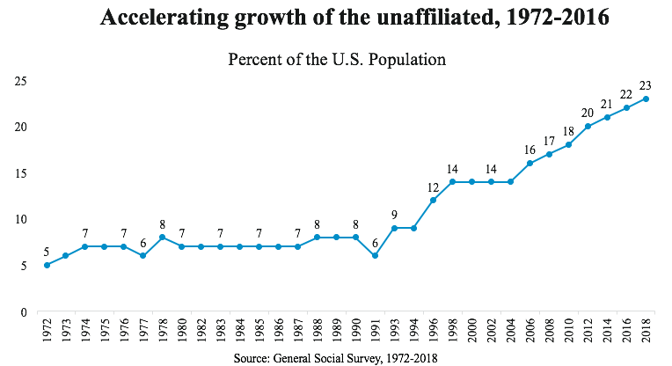
Help us combat religious misinformation by shining a light on facts on the Secular Web. Please pitch in what you can to keep the Secular Web online today.
November 29, 2021
Added the fifteenth Freethinker Podcast YouTube interview with Steve & Tally Cass of Monster on Sunday (2021) to the Freethinker Podcast page under Resources on the Secular Web.
Join host Edouard Tahmizian in this 20-minute Freethinker Podcast interview with Steve Cass and Tally Cass of the rock band Monster on Sunday as they canvass their current projects to empower nonbelievers, their forthcoming album Black Sheep, raising children as freethinkers, feeling gratitude in a purposeless universe, atheist rock songs and the inspiration for the name of their band, living life by rational principles, free will vs. determinism, and more! Tune in for a taste of the impact of freethought on the music scene.
November 17, 2021
Added the fourteenth Freethinker Podcast YouTube interview, in which John MacDonald and Edouard Tahmizian Talk About Jesus (2021), to the Freethinker Podcast page under Resources on the Secular Web.
Join Internet Infidels social media manager Edouard Tahmizian and Vice President of Internet Infidels John MacDonald for an interesting talk about how little biblical scholars claim to know about Jesus (namely, that he was baptized by John the Baptist and crucified), about whether Jesus even knew John the Baptist, and about the relationship between Jesus and Moses in the Gospel of Matthew as an illustration of how Gospel authors retooled Old Testament stories for new theological purposes in the New Testament. Check out this interview for a quick overview of an important aspect of early Christian history and an update on Secular Web Kids.
November 14, 2021
Added Review of Arguing About Gods (2021) by Taylor Carr to to the Theistic Cosmological Arguments, Argument to Design, and Pascal’s Wager pages under Arguments for the Existence of a God, as well as the the Evidential Arguments from Evil page under Arguments for Atheism, in the Modern Documents section of the Secular Web Library.
Graham Oppy’s Arguing About Gods is another entry in the long line of treatments of the philosophical arguments in support and rejection of “orthodoxly conceived monotheistic gods,” albeit one that brings a depth of discussion and a fair-headed consideration of reasons and motives that helps to set it apart from many other entries. In this review, Taylor Carr finds Arguing About Gods distinctive in its consideration of both theistic and atheistic arguments with equal precision and discretion, with Oppy ultimately finding them all to admit of enough room for disagreement that none can be truly called successful.
For those interested in the philosophical arguments over God, this book deserves a place of honor next to J. L. Mackie’s The Miracle of Theism or even David Hume’s Dialogues Concerning Natural Religion. Not only has Arguing About Gods aided Carr in his appreciation of the case for unbelief, it has also contributed to a more sympathetic understanding of the theistic outlook for him, which ought to be true of any scholarly and well-balanced survey of arguments for and against orthodoxly conceived monotheistic gods.
New in the Kiosk: Thinking and Unthinking Faith (2021) by Michael D. Reynolds
Ross Douthat is a conservative American writer whose recent opinion piece in the New York Times constitutes a digest of present-day Christian apologetics, one written by a respected layman and published on the front page of a major newspaper. As such, that piece cries out for a reply. This essay thus constitutes Michael Reynolds’ response to and analysis of the common apologetic themes that Douthat parrots.
November 1, 2021
Added the thirteenth Freethinker Podcast YouTube interview with Bill Gaede (2021) to the Freethinker Podcast page under Resources on the Secular Web.
Join Freethinker Podcast host Edouard Tahmizian in this shy of half-hour interview with Bill Gaede, cohost of the Rational Science podcast, where they explore an understanding of mathematical physics alternative to physical interpretations of quantum mechanics (on phenomena like action at a distance) and general relativity (on phenomena like gravity) that Gaede calls the rope hypothesis, in which “shape” is a primary physical property. Tune in for Gaede’s explanation of how magnets attract and a short history of his previous life as an industrial spy during the Cold War.
October 30, 2021
Added the Internet Infidels Discussion Board to the Discussion Forums page under Resources on the Secular Web.
Our bustling discussion forum is back, baby! If you like to discuss or debate the issues that matter most, check out our Religion, Philosophy, Science, World Issues & Politics, and The Community forums to pine in on the existence of God, biblical criticism, non-Abrahamic religions, evolution/creation, science & pseudoscience, morals & principles, philosophical discussions, world history, computers & technology, politics, media, popular culture, humor, and much more!
October 24, 2021
Added the twelveth Freethinker Podcast YouTube interview with a mystery guest (2021) to the Freethinker Podcast page under Resources on the Secular Web.
Join host Edouard Tahmizian in this 5-minute interview with a mystery guest about the meaning of the word “secular,” about why he is not a Christian and doesn’t buy the empty tomb narratives as evidence for Jesus’ resurrection, about what human and animal suffering can tell us about the existence or nonexistence of God, about whether beauty in the world points to the existence of God, and more! Check out the mystery guest’s answers to these deep questions put in words that everyone can understand.
Added the eleventh Freethinker Podcast YouTube second interview with Richard Carrier (2021) to the Freethinker Podcast page under Resources on the Secular Web.
Join Freethinker Podcast host Edouard Tahmizian for this roughly half-hour interview with prominent historian and freethinker Richard C. Carrier about whether or not the Jewish polemic in Matthew’s gospel alluded to by Justin Martyr corroborates the existence of a historical Jesus, about what (assuming that there was a historical Jesus) happened to Jesus’ body after his death, about what reasons we have to think that the Josephus quote mentioning Jesus was entirely (rather than partially) forged, and about why the empty tomb narratives were invented, or why contemporaneous sources never call out the fictional nature of Jesus, if Jesus never existed, among other things. Check out this very informative interview!
October 21, 2021
Added the tenth Freethinker Podcast YouTube interview with Aron Ra (2021) to the Freethinker Podcast page under Resources on the Secular Web.
Join host Edouard Tahmizian in this 15-minute interview with Aron Ra, regional director for American Atheists, author of Foundational Falsehoods of Creationism, host of the Ra-Men podcast, and director of the Phylogeny Explorer Project as they discuss Aron Ra’s phylogeny challenge to creationists, how both archeology and genetics testify to the ahistoricity of the Noah’s Ark legend, and how religious belief is too closely tied to individuals’ identities to promote the search for truth.
October 11, 2021
Added the ninth Freethinker Podcast YouTube interview with Dan Barker (2021) to the Freethinker Podcast page under Resources on the Secular Web.
Join Edouard Tahmizian in this nearly half-hour interview with Dan Barker, co-president of the long-running Freedom from Religion Foundation, about how the fine-tuning argument for a designer fallaciously equivocates order/organization with intentional design, the best evidence for evolution, the historical reliability of the canonical Gospels and their divergent resurrection accounts, the historicity of Jesus, and more! Check out this fantastic interview with a preacher-turned-atheist who’s done his homework on a wide range of issues.
October 9, 2021
Added A Critique of the Penal Substitution Interpretation of the Cross of Christ (2021) by John MacDonald to the Biblical Criticism and Christian Worldview pages under Christianity in the Modern Documents section of the Secular Web Library.
In this essay John MacDonald attempts to recover the oldest meaning of the cross of Jesus and that of Jesus’ resurrection in their historical context. The paper argues that penal substitution, the popular conservative evangelical interpretation of the cross, is incorrect, and furthermore that it results in interpretive absurdities when applied to the text/evidence. Penal substitution claims that a just God lacks the ability to forgive, and so requires punishment for sin, where the innocent Jesus was substituted for us sinners and brutally bore the punishment for our sins, wiping our sin debt clean. By contrast, this essay presents a nonpenal substitution participation crucifixion model, where Jesus is understood to be our willing victim as a catalyst for opening our eyes to our hidden “satanic influenced vileness” and for encouraging repentance. The oldest meaning of the resurrection of Jesus will also be shown to be what Jesus’ disciples took to be evidence for overcoming death in a blessed way, and empowering us to live righteously. The cross/resurrection argument will further be contextualized in a Second Temple framework of apocalypticism and demonology/superstition to show that the original meaning of the cross and resurrection is so divorced from most modern Christian frameworks and beliefs that many modern Christians would reject the heart of what their ancient counterpart would hold as fundamental to living a good and holy Christian life. The upshot is that the usual modern conservative interpretations of the cross and resurrection bear no, or at least merely superficial, relation to the original ancient ones.
October 8, 2021
Added the eighth Freethinker Podcast YouTube interview with John Dominic Crossan (2021) to the Freethinker Podcast page under Resources on the Secular Web.
In this roughly hour-long interview with leading biblical scholar John Dominic Crossan, host Edouard Tahmizian delves into Crossan’s intriguing exploration of how Paul recast the Judaic concept of a general resurrection at the end of time as process that occurs through time, the obscenity of the notion that God oversaw Jesus’ murder so that Jesus could take the punishment for our sins to absolve us from having to receive it, what higher criticism has revealed about the use of “artistic license” in the composition of the canonical Gospels, and whether Jesus was one of many contemporaneous leaders experimenting with nonviolent resistance in response to Roman rule. Check out this intriguing interview with a world-class scholar on all of these issues and more!
October 7, 2021
Added the seventh Freethinker Podcast YouTube interview with Richard Carrier (2021) to the Freethinker Podcast page under Resources on the Secular Web.
In this nearly hour-long interview with the prominent historian and freethinker Richard C. Carrier, Freethinker Podcast host Edouard Tahmizian and fellow Internet Infidels board member John MacDonald talk with Carrier about his conversion from Christianity to Taoism before he adopted metaphysical naturalism, his mystical experiences, the literature on the historicity of Jesus and Jesus mythicism, the original intent of the authors of the canonical Gospels, and much more! Tune in for this fascinating discussion with a long-running scholar and freethought activist.
Added the sixth Freethinker Podcast YouTube video on Edouard Tahmizian’s Secular Web Paper on Determinism (2021) to the Freethinker Podcast page under Resources on the Secular Web.
In this 20-minute overview of his Secular Web paper “God is Either the Efficient or Final Cause of Evil,” Edouard Tahmizian outlines his argument that if the biblical account outlined in Genesis is true, then God is ultimately the source of all evil since he is causally responsible for any original sin that humanity inherited from Adam and Eve’s initial transgression in the Garden of Eden.
October 1, 2021
New in the Kiosk: A Lesson Learned (2021) by Bob Harriet
Based on conversations with religious family members, Bob Harriet outlines key takeaway points about rational deliberation about religion with the faithful. He concludes, for instance, that fundamentalists reside in a bubble that cannot be penetrated from the outside by philosophical arguments, the results of biblical scholarship, or other such academic concerns. Thus, unless freethinkers particularly enjoy engaging in argument for its own sake, or have other reasons for offering up arguments, it is best to simply live and let live given (as Harriet sees it) the futility of attempts to change the beliefs of the faithful.
September 16, 2021
Added the fifth Freethinker Podcast YouTube interview with Bob Seidensticker (2021) to the Freethinker Podcast page under Resources on the Secular Web.
In this twenty-minute dialog, host and Internet Infidels social media manager Edouard Tahmizian talks with Bob Seidensticker, a retired Microsoft computer programmer and blogger for the last decade at the Patheos blog Cross Examined: Clear Thinking about Christianity. Join Edouard and John as they discuss historical Jesus studies, John’s deconversion and antitheism, the best arguments against the existence of God, the evidence for biological evolution, the lack of manuscripts of the canonical Gospels contemporaneous with the events they depict, and John’s forthcoming book 2-Minute Christianity: 50 Big Ideas Every Christian Should Understand.
September 8, 2021
Added the fourth Freethinker Podcast YouTube interview with David Madison (2021) to the Freethinker Podcast page under Resources on the Secular Web.
In this half-hour long dialog, Edouard Tahmizian (host and board member of Internet Infidels) talks with Dr. David Madison, a pastor-turned-atheist who received his Ph.D. in biblical studies from Boston University School of Theology, Madison recounts how his early obsession with discerning history from legend in the Bible eventually led him to become an atheist. His challenge to theists today is to provide even one verifiable fact about God that all theists agree on, a challenge made particularly daunting by the fact that theists cannot even agree about which revealed text to consult in order to answer it. Madison also talks about the societal damage wrought by Jesus’ alleged words on the unacceptability of divorce, about whether he would return during his immediate followers’ lifetimes, about the historical unreliability of the canonical Gospels, and much more. Tune in for this fascinating discussion!
September 7, 2021
Added the third Freethinker Podcast YouTube interview with David Fitzgerald (2021) to the Freethinker Podcast page under Resources on the Secular Web.
In this half-hour dialog with Jesus mythicist David Fitzgerald, a one-time member of the now defunct Committee for the Scientific Examination of Religion, host Edouard Tahmizian explores Fitzgerald’s reasons for denying the historicity of Jesus, which were born out of trying to differentiate the historical person from the legendary accretions that built up around him.
September 3, 2021
Introducing the Secular Web’s first Freethinker Podcast interview on YouTube: an interview with James McGrath (2021) added to the Freethinker Podcast page under Resources on the Secular Web.
In this 45-minute dialog with Dr. James F. McGrath, Clarence L. Goodwin Chair in New Testament Literature at Butler University, host (and Internet Infidels social media manager) Edouard Tahmizian probes the penal substitutionary model of atonement, which Dr. McGrath rejects in favor of the participation model.
Added the second Freethinker Podcast YouTube interview with Dennis R. MacDonald (2021) to the Freethinker Podcast page under Resources on the Secular Web.
In this over half-hour dialog with Dr. Dennis R. MacDonald, John Wesley Professor of New Testament and Christian Origins at the Claremont School of Theology, host Edouard Tahmizian explores Dr. MacDonald’s work on the concept of mimesis and on reconstructing the historical Jesus.
August 31, 2021
Added God is Not the Source of Morality (2010) by Raymond D. Bradley to the Moral Arguments and Divine Command Theory pages under Arguments for the Existence of a God in the Modern Documents section of the Secular Web Library.
In this overview of why we should accept that God is not the source of morality, Raymond D. Bradley first outlines four kinds of crimes that God willingly admits to causing, committing, condoning, or commanding, if the holy scriptures are to be believed: crimes against humanity, war crimes, licensing moral mayhem and murder, and crimes of torture. Since any one of these would contravene morality, a being responsible for them could hardly be said to be a source of morality. There is an explicit contradiction between God’s moral perfection and his scriptural crimes since, as Bradley says, “a morally perfect being would not do anything that is morally wrong.” So which core belief are traditional theists willing to give up to avoid this contradiction?
New in the Kiosk: The House of David and the Chinese Zhou Dynasty: A Comparative Study (2021) by Robert Shaw
Kings David and Solomon are said to have ruled over a huge kingdom that stretched from the Euphrates River to as far as the border of Egypt (according to the Bible). Archeological confirmation of the existence of such an expansive kingdom is inconclusive, however. Some apologists hold that evidence for their reign would not have survived some three millenia later. In this essay, however, Robert Shaw considers a similarly sized civilization, contemporaneous with that of David and Solomon, to explore what remnants of a three-thousand-year-old polity can reasonably be expected to be discovered today.
August 17, 2021
Added Worse than Even Our Greatest Fears: A Two-Thirds Religious Right Majority on the Supreme Court (2021) (Off Site) by Edward Tabash to the Religious Discrimination and Government Promotion of Religion page under the Separation of Church and State page in the Modern Documents section of the Secular Web Library.
In this nearly hour-long speech to the Center for Inquiry, constitutional lawyer and secular activist Edward Tabash warns of the consequences of the horrific two-thirds religious right-wing majority on the United States Supreme Court: a rapid move toward ever-greater legal privileges that only the religious can enjoy. Religious objectors are quickly becoming the only members of society who are now permitted to discriminate against third parties. The Court is allowing them to use their faith to avoid complying with our country’s anti-discrimination and employment protection laws.
July 31, 2021
Added Does the God of Evangelical Christianity Exist? The Drange-McHugh Debate (2003-2004) [ Index ] by Theodore M. Drange and Christopher McHugh to the Atheism: Debates and Theistic Arguments: Debates pages in the Modern Documents section of the Secular Web Library.
The “lost” Drange-McHugh debate on the existence of the God of evangelical Christianity was originally conducted in the Formal Debates & Discussions forum of the Internet Infidels Discussion Board (IIDB) from November 30, 2003 to May 15, 2004, and has been restored to the Secular Web proper so that it would once again be available to all on the world wide web.
New in the Kiosk: Why I am an Apostate (2021) by James McCartney
In this largely autobiographical account of why he is now an apostate, James McCartney reflects on the difference between a mere skeptic and former believer who undergoes a kind of deconversion over time. McCartney recounts how his first school teacher, his diligence at Presbyterian Sunday School, and a poem by Robert Burns led him to reject the doctrines of the Presbyterian Church in Ireland, and those of other churches like it.
June 30, 2021
Added The Failure of Mathematical Formulations of Hume’s Maxim (2021) by Stephen Nygaard to the Argument from Miracles and Resurrection pages in the Modern Documents section of the Secular Web Library.
Several commentators have attempted to reduce Hume’s maxim about miracles to a formula in the language of probability theory. This paper examines two such attempts, one of which is based on the probability of the alleged miracle conditioned by the testimony for it, and the other on its unconditional probability. The conditional probability leads to a formula that is valid—though only when qualified—but not useful, while the unconditional probability results in an invalid formula. The utility of expressing Hume’s maxim in terms of probability theory is shown to be questionable, and an alternative approach is presented.
Recommended reading: The Non-Canonical Gospels (2009) by Paul Foster
Biblical scholar Paul Foster’s edited volume The Non-Canonical Gospels brings together a collection of chapters written by leading experts in the field on the most significant of the noncanonical Gospels, focusing on the most hotly contested issues surrounding each text. An accessible introduction also underscores the significance of the noncanonical texts both for the original readers and for contemporary audiences. The Gospel of Thomas, the Gospel of Peter, and the Gospel of Mary are treated first due to their impact on historical Jesus research. The resulting discussions by scholars holding an eclectic range of views should clarify a number of popular misconceptions and allow for a more informed and stimulating debate.
June 19, 2021
New in the Kiosk: On the Existence of Barbers and God (2021) by James R. Henderson
A popular advocacy video on YouTube attempting to rebut arguments from evil has been disseminating among Christian religious organizations for about a decade. In an attempt to show that arguments from evil for the nonexistence of God fail, the video likens them to arguments from (human) longhairs to the nonexistence of barbers. In this article, James R. Henderson refutes the suggested theodicy that an all-powerful, all-knowing, and perfectly good God allows apparently gratuitous evils to occur because God wants more human beings to come to Him of their own free will.
May 31, 2021
Added The Origins of the Beginning (2021) by Jason Gibson to the Biblical Criticism page under Christianity in the Modern Documents section of the Secular Web Library.
Up to the present day, a large number of the followers of Abrahamic religions have insisted that the accounts of creation found in the book of Genesis are a literal historical account of past events. Do they have any basis in actual history? Are they original to the Hebrew people? If not, what or who inspired them? In this thorough examination of the history and mythology of the cultures surrounding ancient Israel, Jason Gibson compares the oldest creation myths of Mesopotamia with those found in Genesis to demonstrate a clear connection between ancient Hebrew beliefs and the Sumerian myths that predated them.
May 6, 2021
This National Day of Reason, give Enlightenment values a voice in a world drowning in alternative “facts” by pitching in to help keep the Secular Web online today!
- Honor reason by encouraging others to give proper weight to vetted claims.
- Honor science by always testing, testing, testing claims against the evidence.
- Honor critical thinking by asking friends to give reasons for their views, and push back when reason warrants it.
Check out our volunteer opportunities at various levels of commitment, too! (especially you, redditors)
March 31, 2021
Added Science, Morality, and the Death of God (2021) by Raymond D. Bradley to the Naturalism page under Nontheism, the Evidential Arguments from Evil page under Arguments for Atheism, the Argument to Design and Argument from Holy Scripture pages under Arguments for the Existence of a God, the Creationism page, and the Biblical Criticism page under Christianity, in the Modern Documents section of the Secular Web Library.
In this greatly expanded version of his contribution to The Antipodean Philosopher, Raymond D. Bradley uses H. L. Mencken’s classic “Memorial Service” as a jumping off point to explain why he is an atheist, and not an “agnostic,” about the existence of any members of the category “gods.” Since which gods happen to predominate in the society into which one was born depends upon accidents of birth, how can anyone justifiably have confidence that any of the gods on Mencken’s list actually exist? Turning to our own Western monotheistic tradition, Bradley goes on critique the intellectual and moral defense that believers have mounted for the biblical God of Judaism, Christianity, and Islam, with particular emphasis on “intelligent design” and “fine-tuning” arguments and how the pastorate feign ignorance about what their own biblical scholarship has uncovered about the all-too-human origins of their “revealed” sacred texts.
New in the Kiosk: An Epicurean Approach to Secularizing Rites of Passage (2021) by Hiram Crespo
Ritual is one of the most universally enjoyed human experiences, but it is often tangled up in supernatural claims that are insulting to our intelligence. Hiram Crespo, founder of the Society of Friends of Epicurus, discusses how the contractarian theory of Epicurean philosophy may be applied to the creation of rites of passage that retain their utility while being purged from superstition.
Recommended reading: Finite Human, Infinite Humanity: A History of the Universe and Theory of Everything (2021) by Richard Brown
Debates about God are highly emotional, but something is always missing—actual evidence that atheists, agnostics, and believers can all agree with. This book presents that evidence as part of humanity’s quest to understand our universe—scientific materialism and religious spiritualism. Rudimentary beliefs conceived thousands of years ago are traced through time to today’s modern views showing that science and religion are tightly intertwined: if science is the study of nature, then religion was the first science.
February 28, 2021
New in the Kiosk: Dating the Exodus: A Historical Conundrum (2021) by Robert Shaw
The story of Moses and the Exodus continues to be seen as a historical fact by many Americans, and its events are commemorated with a ‘Seder’ meal in over a million households every year. In this article, Robert Shaw considers whether or not the story can be placed comfortably into the timeline of Egyptian history as we currently understand it.
January 31, 2021
Added Review of The Case against Miracles (2020) by Gregory Michna to the Argument from Miracles, Resurrection, and Christian Apologetics and Apologists pages in the Modern Documents section of the Secular Web Library.
In The Case Against Miracles, John Loftus continues his counterapologetic project by focusing on miracle claims. Although ostensibly a multicontributor response to Lee Strobel’s work, it passes over the point-by-point response format and instead provides a range of arguments that miracle claims should be met with incredulity. David Corner argues that apologists cannot even meet the basic criteria of showing that an alleged miracle has occurred, that it cannot be explained by natural causes, and that it is not simply a natural anomaly to established facts. Matt McCormick argues that the performance of miracles is inconsistent with God’s traditional divine attributes. John Loftus argues that alleged miracles must be demonstrably impossible on naturalistic grounds while simultaneously meeting a high bar of evidence that they actually occurred. Darren Slade notes a major shortcoming in Craig S. Keener’s overt enthusiasm for recording miracle stories without being able to verify them independently. Slade recommends that miracle investigators instead employ forensic and law enforcement methods like Criteria-Based Content Analysis and the ADVOKATE criteria for assessing eyewitness testimony. Other pieces argue that since the New Testament suggested an imminent return of Christ, the absence of Christ’s return is evidence for the prophetic failure of the text; that the Bible is not an accurate source of history; and that specific miraculous claims within the biblical text contradict scientific discoveries. Loftus’ penultimate chapter primarily serves as a response to Michael Licona’s recent apologetic monograph on the resurrection of Jesus.
New in the Kiosk: Does God Exist? (2021) by James A. Haught
Does God exist? Perhaps, if you mean something metaphorical by “God,” you might be able to honestly answer in the affirmative. Otherwise, the most we can say is “I don’t know.” But honest people can go farther and say that the existence of unseen spirits is unlikely. When you get down to it, the only evidence of God’s existence is that holy men, past and present, say he exists. But if their assertions about God are as valid as their assertions about witches, their trillion-dollar empires rest on fantasy.
December 21, 2020
We have been molding minds for a quarter century. You made this possible. Thank you!
Help us continue to undo the damage wrought by millenia of dogma by pitching in to keep the Secular Web online today.
Added a substantially revised edition of The Case Against Faith: A Critical Look at Lee Strobel’s The Case for Faith (5th ed., 2020) by Paul Doland to the Christian Apologetics and Apologists, Christian Worldview, Arguments for the Existence of God: Reviews/Critiques, Faith and Reason, Argument from Miracles, Creationism, and Logical Argument from Evil pages in the Modern Documents section of the Secular Web Library.
Lee Strobel’s The Case for Faith aims to answer the “toughest objections to Christianity” through interviews with well-known Christian apologists. In the introduction, Strobel lists what he calls Christianity’s “Big Eight Conundrums”—including many of the questions that Secular Web author Paul Doland continually asked himself when he was still a Christian. Though Strobel generally does a good job of explaining the objections, the more Doland contemplated Strobel’s interviewees’ responses, the less satisfying he found those responses to be. This point-by-point critique aims to explain why Doland found each of these responses to be weak at best or preposterous at worst, and he was consequently forced to conclude that Strobel may have actually produced a case against faith. This latest edition includes extensive revisions to the section of Objection 2 concerning the rationality of belief in miracles.
New in the Kiosk: Were the Ancient Israelites Henotheistic? (2020) by Jason Gibson
Most people (whether they are religious or not) either assume or were taught that the Israelites were, and had always been, monotheistic: that they believed in only one God and thus worshiped Yahweh only. Is this idea based on truth, tradition, or maybe assumption? In this paper, Jason Gibson attempts to uncover the truth—a truth that most people are unaware of, and one that, were it common knowledge, could signal the end of all of the Abrahamic religions. Were the ancient Israelites henotheistic? If acknowledged, the answer could change the world as we know it.
November 30, 2020
Added Better Never to Have Created: A New Logical Problem of Evil (2020) by Horia Plugaru to the Logical Arguments from Evil page under Arguments for Atheism in the Modern Documents section of the Secular Web Library.
In this paper Horia Plugaru argues that theism is necessarily false because attributes usually ascribed to God, such as the property of being morally perfect, are incompatible with God’s alleged creation of sentient beings. Using the resources of contemporary debates on the ethics of procreation, Plugaru develops this new logical argument against theism on the foundation of David Benatar’s axiological asymmetry, which, on top of elegantly explaining four commonly held judgments, entails that sentient beings are always harmed by coming into existence. Since God is said to be responsible for bringing sentient beings into existence, even though he had no need to do so, he cannot be morally perfect; and if moral perfection is taken to be a defining attribute of God, then God cannot exist. After formally presenting the argument, Plugaru defends its crucial premises against possible objections in order to show just how much force the argument has against them.
Recommended reading: Atheism Considered: A Survey of the Rational Rejection of Religious Belief (2020) by C. M. Lorkowski
Atheism Considered is a systematic presentation of challenges to the existence of a higher power. Rather than engage in polemic against a religious worldview, C. M. Lorkowski charitably refutes the classical arguments for the existence of God, pointing out flaws in their underlying reasoning and highlighting difficulties inherent to revealed sources. In place of a theistic worldview, he argues for adopting a naturalistic one, highlighting naturalism’s capacity to explain world phenomena and contribute to the sciences. Lorkowski demonstrates that replacing theism with naturalism, contra popular assumptions, sacrifices nothing in terms of ethics or meaning. Instead, morality ultimately proves more important than religion and does not rely on it.
October 31, 2020
Added Why God Does Not Exist Because This World Does (2020) by Richard Schoenig to the to the Evidential Arguments from Evil page under Arguments for Atheism in the Modern Documents section of the Secular Web Library.
Two of the most salient beliefs that most theists hold are that God is maximally good and loving, and that the eternal postmortem experience of the beatific vision of God is the summum bonum for all human beings. Given these two foundational theistic tenets, in this paper Richard Schoenig argues that God would have created humans in what he calls heaven world, and immediately and directly offered to all of them the option of experiencing that highest good—thereby skipping the pain, suffering, and confusion which suffuses this world. The argument developed in the paper concludes that there are no good reasons why God would not have created heaven world rather than this world. If so, then the existence of this world rather than heaven world constitutes adequate evidence that God does not exist.
New in the Kiosk: Trust Science (2020) by James A. Haught
Science’s answers to the ultimate mysteries of existence are almost as baffling and logic-defying as the mumbo-jumbo of churches. They can seem nearly as absurd as the miracle claims of religion. But there’s a crucial difference: science is honest. Nothing is accepted on blind faith. Every claim is challenged, tested, double-tested, and triple-tested until it fails or survives. New evidence often alters former conclusions. Honest thinkers have little choice but to trust science as the only reliable search for believable answers.
September 30, 2020
Added No Better than Strobel: A Reply to God and Science’s Case for Faith (2020) by Paul Doland to the Christian Apologetics and Apologists, Christian Worldview, Arguments for the Existence of God: Reviews/Critiques, Faith and Reason, Argument from Miracles, Creationism, and Logical Argument from Evil pages in the Modern Documents section of the Secular Web Library.
In his earlier Secular Web critique of Lee Strobel’s The Case for Faith, Paul Doland concluded that by raising tough questions for Christianity but failing to adequately respond to them, Strobel (and his interviewees) inadvertently ending up producing a strong case against faith. A rejoinder to Doland’s critique was subsequently published on the God and Science website. In this response to that rejoinder, Doland defends his original conclusion that neither The Case for Faith in particular, nor Christianity in general, provide believable and coherent answers to the sorts of questions that Strobel originally raised. Nor, for that matter, does the attempt by the God and Science website to rehabilitate Strobel’s answers to Christianity’s toughest questions.
New in the Kiosk: The Bible Tells Me So… or Does It? (2020) by Robert Shaw
The Bible has long been lauded as a moral guidebook for humankind. In this article, Robert Shaw asks whether the Bible offers any guidance to help us deal with the more complex issues that we face in the modern era. At a time when many minds are focused on the forthcoming US presidential election, Shaw also considers whether the Bible gives any counsel as to how countries should be governed, and what types of political leaders are biblically preferred.
August 31, 2020
Added God is Either the Efficient or Final Cause of Evil (2020) by Edouard Tahmizian to the to the Evidential Arguments from Evil page under Arguments for Atheism, the William Lane Craig and R. C. Sproul pages under Christian Apologetics and Apologists, and the Christian Worldview page under Christianity in the Modern Documents section of the Secular Web Library.
Where did evil in the world come from? In this article Edouard Tahmizian considers God’s causal influence on the origin of evil. He aims to show that, if biblical hard determinism is true, God would be the efficient cause of Adam and Eve’s transgression—the original sin that the rest of humanity inherited when the first humans, Adam and Eve, purportedly ate fruit from the tree of knowledge of good and evil according to the Book of Genesis. Moreover, he argues, even if biblical hard determinism is not true and all events could have turned out differently, God would still be the final cause of Adam and Eve’s sin, making him at least somewhat causally responsible for the sin of Adam and Eve that we all purportedly inherited. In the end, Tahmizian’s analysis implies that God is ultimately the source of all evil.
New in the Kiosk: The Pandemic Disproves God (2020) by James A. Haught
The pandemic gripping the world raises the age-old philosophical dilemma called “the problem of evil”—which asks why a supposedly all-loving God does nothing to stop horrors like diseases, tsunamis, earthquakes, hurricanes, and the like. If there’s an all-merciful father-creator, why did he make breast cancer, childhood leukemia, cerebral palsy, natural disasters, and predator animals that rip peaceful grazers apart?
July 31, 2020
Added The Justified Lie by the Johannine Jesus in its Greco-Roman-Jewish Context (2020) by John MacDonald to the Biblical Criticism and Character of Jesus pages under Christianity in the Modern Documents section of the Secular Web Library.
In this article John MacDonald examines the possible lie by Jesus in John 7:8-10. The article begins by providing an analysis of the context of lying and deception in the ancient world. Given this background, it moves on to examine (mainly) the insights of Tyler Smith, Adele Reinhartz, Dennis MacDonald, and Hugo Méndez/Candida Moss about the Fourth Gospel and deception. Here John MacDonald explores the thesis that John’s Jesus does in fact lie, and that this lie is meant to be understood by the inner-circle reader. Jesus lying to his brothers is the method by which he is able to go up and preach to the crowd; the lie leads to belief or makes belief possible.
New in the Kiosk: Why I am a Humanist (2020) by Leslie Allan
In this article explaining why he self-identifies as a humanist, Leslie Allan first explains what he found attractive enough about humanism to adopt its label. Then he outlines what he takes to be humanism’s three guiding principles. Finally, he explores a humanist view of what gives our lives meaning and purpose.
Recommended reading: A Debate on God and Morality: What is the Best Account of Objective Moral Values and Duties? (2020) by William Lane Craig and Erik J. Wielenberg
In 2018 William Lane Craig and Erik J. Wielenberg participated in a debate at North Carolina State University addressing the question: “God and Morality: What is the Best Account of Objective Moral Values and Duties?” Craig argued that theism provides a sound foundation for objective morality whereas atheism does not. Wielenberg countered that morality can be objective even if there is no God. A Debate on God and Morality includes the full debate plus endnotes with extended discussions that were not included in the debate. It also includes five chapters by other philosophers who have written substantive responses to the debate: J. P. Moreland, David Baggett, Mark Linville, Wes Morriston, and Michael Huemer. A Debate on God and Morality provides crucial resources for better understanding moral realism’s independence from theistic foundations.
June 30, 2020
Added The Moral Argument for God’s Existence, the Natural Moral Law, and Conservative Metaphysical Naturalism (2004) by Arnold T. Guminski to the Moral Arguments page under Arguments for the Existence of a God, the Naturalism page under Nontheism, and the William Lane Craig, J. P. Moreland, and Paul Copan pages under Christian Apologetics and Apologists in the Modern Documents section of the Secular Web Library.
Some Christian philosophers and apologists have vigorously mounted a moral argument for God’s existence made apart from the standard nonmoral grounds. The moral argument is based upon the idea of natural moral law (fundamental moral principles and norms apprehended as such by persons of good will as universally binding and not based upon supernatural revelation or divine positive law). In this expanded version of a talk given to the University of Colorado Theology Forum, Arnold T. Guminski aims to show why those naturalists and theists who hold that the natural moral law obtains should conclude that the moral argument for the existence of God is unsound. Particular attention is given to the writings of J. P. Moreland, William Lane Craig, and Paul Copan.
June 14, 2020
New in the Kiosk: Religion as Parasite, Parasite as Religion (2020) by Anthony Campbell
Skeptics sometimes describe religion as a parasite on the human mind. In this article, Anthony Campbell looks at some of the implications of this way of thinking for understanding religion. He then considers whether biological parasitism may literally play a part in the formation of religious belief before bringing out some of the implications of these ideas for our understanding of why religion exists.
May 31, 2020
Added Two Varieties of ‘Possible’ and the Ontological Argument (2020) by James Henderson to the Ontological Arguments page under Arguments for the Existence of a God in the Modern Documents section of the Secular Web Library.
The ontological argument for the existence of God has a long and well-discussed history. First clearly articulated by St. Anselm in 1078, it almost immediately generated lively debate, debate that continues to the present day. Attacks on the argument have been launched by Gaunilo, St. Thomas Aquinas, David Hume, Immanuel Kant, and others, and those attacks have forced supporters of the argument (including, but not limited to, Alvin Plantinga, William Alston, and David Bentley Hart) to present different formulations of it. This has sharpened the lines of demarcation between the two sides and made the issues involved clearer. In this article, James R. Henderson addresses an aspect of the debate that has been largely neglected—exactly what it means to “exist in the mind” in Anselm’s sense. Henderson ultimately concludes that the coherence of the concept of God needs to be established before the ontological argument can be given any weight.
April 30, 2020
Added Same Old, Same Old: Dallas Willard and the Unending Quest to Prove the Existence of God (2020) by Keith Parsons to the Theistic Cosmological Arguments and Argument to Design pages under Arguments for the Existence of a God, as well as the Biblical Criticism page under Christianity and the Dallas Willard section of Criticisms of Christian Apologetics and Apologists, in the Modern Documents section of the Secular Web Library.
As skeptics see it, recent theistic arguments are pretty much old hat. Their basic modus operandi has always been the same: represent some aspect of the universe as requiring an explanation that no naturalistic hypothesis can provide, and then propose God as the only possible or most satisfactory solution. Skeptics retort that either no explanation is required, naturalistic accounts suffice, or God provides no uniquely satisfactory explanation. The details may change, but the pattern remains the same. The theistic pattern is exemplified in the work of Dallas Willard, particularly his three-stage argument for the existence of God. Willard argues that God is needed because the natural universe is not enough. In this response, Keith Parsons provides the standard retort: naturalism suffices to answer all legitimate questions, and the appeal to God is either useless or obscurantist.
New in the Kiosk: The World’s Walk Through the Valley of the Shadow of Death (2020) by Robert Shaw
The current COVID-19 pandemic has led many, whether believers or not, to consider how widespread suffering can be reconciled with a belief in a loving God. In this article, Robert Shaw considers the arguments advanced by people of faith to square this circle, such as the idea that the novel coronavirus has been sent by God as a punishment.
Recommended reading from the Bookstore: C. S. Lewis and the Search for Rational Religion (2007) by John Beversluis
C. S. Lewis was one of the most influential Christian apologists of the 20th century. An Oxford don and former atheist who converted to Christianity in 1931, he gained a wide following during the 1940s as the author of a number of popular apologetic books, such as Mere Christianity, Miracles, and The Problem of Pain. But do Lewis’ arguments survive critical scrutiny? In this revised and expanded edition of the 1985 book, philosopher John Beversluis concludes that Lewis’ “case for Christianity” fails. Beversluis examines Lewis’ argument from desire, moral argument, and argument from reason for God’s existence, as well as his attempt to come to terms with the argument from evil against the existence of God. In addition, Beversluis considers Antony Flew’s criticisms of Christian theology, which were developed late in Lewis’ life, and Lewis’ crisis of faith after the death of his wife. Finally, in this second edition, Beversluis replies to critics of the first edition. As the only critical study of C. S. Lewis’ apologetic writings, this readable and intellectually stimulating book should be on the bookshelves of anyone interested in the philosophy of religion.
March 31, 2020
New in the Kiosk: Thank God for the Atheist (2020) by H. J. van der Meer
In this article, H. J. van der Meer points out that although much of the world believes in some sort of divine being(s), believers seem perfectly happy to use scientific creations like modern medicines, artificial fertilizers, or mobile phones. He points out that these products could only have arisen from a manner of thinking that has led us to understand the natural world as a product of evolutionary processes. Although this scientific (or naturalistic) view of the world is incomplete and the world is not fully comprehensible, the worldview is the logical consequence of the methodology. Nevertheless, many Christians believe in a ‘god of the gaps’ that is called upon when scientific explanations fail, and they may even advocate Intelligent Design creationism. At least traditional (young-earth) creationists, Jews, and Muslims, he notes, are less hypocritical in their rejection of scientific theories about the evolution of life and the universe: they stick to their belief in a divine Creator in the teeth of the evidence. But what is it that causes people to cling so firmly to their religion, and become so suspicious of science, in the first place?
March 16, 2020
Added Amicus Brief to the U.S. Supreme Court Against Religious Discrimination (2020) (PDF) by Edward Tabash to the Religious Discrimination and Government Promotion of Religion page under the Separation of Church and State page in the Modern Documents section of the Secular Web Library.
Edward Tabash and Center for Inquiry attorney Nicholas J. Little just filed an amicus brief with the U.S. Supreme Court in Our Lady of Guadalupe School v. Morrissey-Berru, scheduled for oral argument relatively soon, to curb the power of religious organizations to discriminate against their employees. Tabash and Little argue that religious institutions should not be able to bypass complying with otherwise universally applicable employment discrimination laws when hiring or firing employees who are not clergy or whose jobs do not involve proselytizing the faith.
January 31, 2020
Added The Presumption of Atheism Revisited (2020) by Charles Echelbarger to the Evidentialism: Atheism, Theism, and the Burden of Proof page under Atheism and the Other Theistic Arguments page under Theism in the Modern Documents section of the Secular Web Library.
Whether deserved or not, Antony Flew acquired a reputation for wrongheadedly using Karl Popper’s falsifiability criterion against theological statements such as “God exists” or “God loves us.” He also famously maintained that God debates should proceed under a presumption of atheism, with theistic debaters bearing the entire burden of proof while atheistic debaters simply tore down their arguments. In this paper Charles Echelbarger aims to make sense of why Flew seemed to be opposed to atheist debaters bearing a burden of proof by additionally offering positive arguments for atheism. Echelbarger concludes that a presumption of atheism may be justified if an atheist debater provides justified doubts that “God exists” expresses a proposition that could be true or false at all, such as if the concept of God definitionally includes the incoherent notion of an agent that acts outside of time. Theological statements may be unfalsifiable precisely because they possess such undetected conceptual incoherence. Though flawed in presentation, Flew’s basic insight is more important than has often been acknowledged, and it is still highly relevant to current discussions in the philosophy of religion.
New in the Kiosk: Miraculous Cures? (2020) by Anthony Campbell
Many claims for miraculous cures concern recovery from cancer. These are highly impressive and dramatic, and to many people they seem to provide incontrovertible evidence for a miracle. But how often does cancer remit spontaneously outside a religious context? And how do such spontaneous remissions come about? While medical events that could not be accommodated within the realm of the natural can easily be imagined, such as the regrowth of an amputated limb or the restoration of sight lost through glaucoma, in this article Anthony Campbell divulges that he is unaware of the documentation of any such case.
January 12, 2020
Updated the Call for Papers page entries on Atheism and Theistic Arguments and added about two dozen books of interest for review.
Added books of interest surveying arguments for and against the existence of God, distinguishing science from pseudoscience, characterizing the relationship between science and religion, railing against “scientism,” defending evolutionary biology, arguing for and against miracles, evaluating design arguments, confronting the problem of animal pain and horrendous evils, contemplating the meaning of life, utilizing probability theory and inductive inference, rethinking the philosophy of religion, and outlining the historically destructive influence of Christianity on society. Also added an item concerning objections to J. L. Schellenberg’s argument from inculpable nonbelief and Schellenberg’s responses to them and reiterated the call for a response to Darek Barefoot’s argument against metaphysical naturalism based on intentionality, representation, and the ontological status of logical laws.
You can view older entries via the What’s New Archive.